 Birch Bay Exterior
 Building Decks That Actually Hold Up in Lynden
Lynden sits inland from the Strait of Georgia and Puget Sound, but the same marine weather pattern that soaks the rest of Whatcom County reaches the fields and neighborhoods here too. Long stretches of driving rain in the fall and winter, humid mornings, and shaded north-facing yards that never quite dry out add up to real stress on outdoor structures. A deck that isn't built with that in mind will show it within a few seasons — soft spots, dark staining, moss creeping up the boards, and fasteners that start to bleed rust.
We build and repair custom decks for homeowners in Lynden and the surrounding Whatcom County area, and most of what separates a deck that lasts twenty-plus years from one that needs major repair by year eight comes down to decisions made before the first board goes down: footing depth, flashing details, fastener selection, and airflow underneath the structure. This page walks through what a correctly built deck looks like for this specific climate, what our process involves, and what to check on a deck you already have.
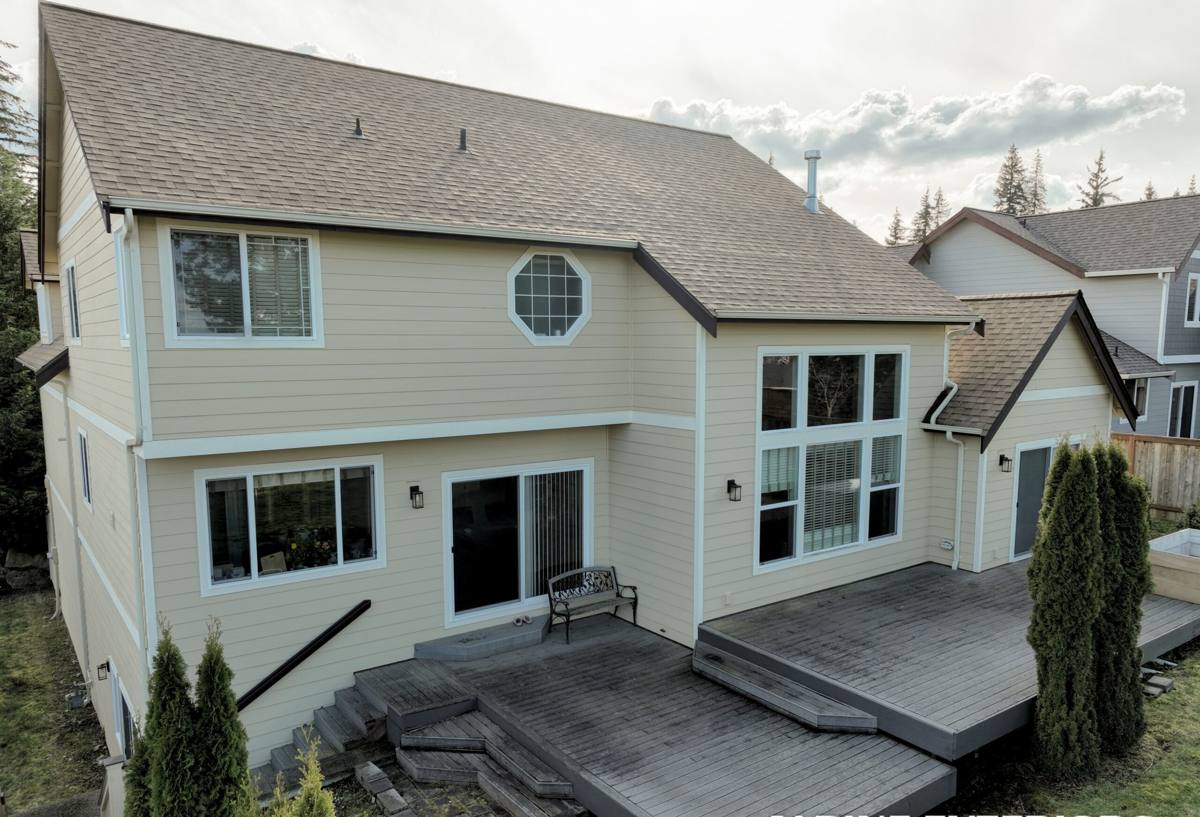
What Lynden's Climate Actually Does to a Deck
Driving rain and standing moisture
Storms coming off the water tend to push rain sideways, not straight down. That means ledger boards, rim joists, and any horizontal surface that isn't properly flashed or sloped will collect water it was never designed to shed. Over time this is how rot starts at the house-to-deck connection — one of the most structurally important joints on the whole deck.
Moss and organic growth
Whatcom County's long wet season gives moss and algae plenty of time to establish, especially on decking that stays shaded or doesn't get much airflow underneath. Moss holds moisture directly against the wood surface, which accelerates decay and makes boards slick and unsafe long before they look structurally bad.
Freeze-thaw and seasonal movement
Winters here aren't brutal, but Lynden does see periodic hard frosts and the occasional snow or ice event. Water that's soaked into end grain or fastener holes expands when it freezes, which widens cracks and loosens connections a little more each cycle. It's a slow problem, which is exactly why it gets ignored until a board fails.
What a Correctly Built Deck Involves
A deck is a structure first and a surface second. The parts nobody sees are what determine whether it's still safe in fifteen years.
- Footings sized and set below frost depth for the soil conditions on your lot, not just poured to a minimum code depth
- Ledger board flashing that properly sheds water away from the house band joist, including flashing tape and a drip edge — not just caulk
- Joist spacing and beam sizing engineered for the actual decking material and span, not a generic layout reused on every job
- Corrosion-resistant fasteners and hardware rated for treated lumber and ground or moisture exposure
- Airflow underneath the deck so the structure can actually dry out between rain events instead of staying damp
- Proper decking gaps sized for the specific material, since wood and composite expand and contract differently
Choosing Materials for This Climate
There's no single "best" decking material — it depends on your budget, how much upkeep you want to do, and how the deck is used. Here's how the common options actually compare for a wet Whatcom County yard.
| Material | Moisture Behavior | Maintenance | Typical Lifespan |
|---|---|---|---|
| Pressure-treated lumber | Resists rot when sealed regularly; end grain and cut edges are vulnerable if left untreated | Annual cleaning and re-sealing recommended | 15-20 years with upkeep |
| Cedar or other natural wood | Naturally decay-resistant but still needs finish protection against constant damp | Regular staining/sealing; more sensitive to moss if shaded | 15-25 years with upkeep |
| Composite decking | Doesn't rot, but capped boards can trap surface moisture and grow moss/algae if not cleaned | Occasional washing; no staining or sealing | 25-30+ years |
| PVC decking | Fully synthetic, least affected by standing moisture | Low; periodic washing | 25-30+ years |
We install both wood and composite/PVC systems and will walk you through the honest trade-offs for your project — composite and PVC cost more upfront and require correct fastening (hidden clips, proper gapping) to perform well, while quality wood costs less initially but needs a real maintenance commitment to hit its full lifespan in this climate.
Our Custom Deck Process
1. On-site assessment and design
We look at your yard's drainage, sun and shade exposure, and how the deck will attach to your house before we talk materials or layout. A deck on a shaded, damp side of the house gets designed differently than one in full sun.
2. Structural planning
Footings, beam sizes, and ledger attachment are sized for your specific span and load — not pulled from a generic plan. This is also where we plan flashing details at every point water could get behind or under the structure.
3. Permitting
Most custom decks in Whatcom County require a building permit, particularly if the deck is attached to the house or elevated. We handle the permit process and build to the code requirements that apply to your project.
4. Construction
Footings and framing go in first, with every ledger and beam connection flashed and fastened correctly before decking is installed. We don't cut corners on the parts that get covered up.
5. Walkthrough
Before we consider the job done, we walk the finished deck with you, cover basic care for whatever material you chose, and answer questions about railings, stairs, or future add-ons like lighting or a pergola.
Common Problems We See on Existing Lynden Decks
A lot of our deck work isn't new builds — it's repairing or replacing decks that were built without this climate in mind.
- Ledger boards rotted from missing or failed flashing at the house connection
- Undersized or shallow footings that have shifted or heaved
- Moss buildup on shaded boards that's degraded the surface and made it slippery
- Rusted or corroded fasteners staining the decking and weakening connections
- Railings and stair stringers that no longer meet current safety spacing requirements
- Decking installed with no gap for material expansion, causing buckling or cupping
If your deck is showing any of these signs, it's usually cheaper to address them directly than to keep patching around a structural issue.
Permits and Code Considerations in Whatcom County
Attached and elevated decks generally require a building permit, an inspection at the footing stage, and compliance with current guardrail height, baluster spacing, and stair requirements. Setback rules from property lines also apply and vary by lot and zoning. Skipping permits on a deck project can create real problems later — at resale, with insurance, or if the structure needs repair work down the line and there's no record it was built to code. We pull the permits and coordinate inspections as part of the build, so you're not managing that on top of everything else.
Maintenance That Actually Matters Here
Whatever material you choose, a few habits make the biggest difference in how long a deck lasts in this climate:
- Sweep debris and standing leaves off the deck surface regularly, especially in fall
- Rinse or wash the deck surface periodically to prevent moss and algae from establishing
- Check and clear the gap between boards where debris can trap moisture
- Inspect ledger flashing and the house connection point once a year for staining or gaps
- Re-seal or re-stain wood decking on the schedule the finish manufacturer recommends, not "when it looks bad"
- Check under the deck periodically for standing water, blocked drainage, or signs of pest activity
Why a Crew That Already Works in Lynden Matters
Framing details that work fine in a dry climate aren't automatically right here. A crew that regularly builds and repairs decks throughout Whatcom County already knows which ledger flashing details actually keep water out through a wet winter, how deep footings need to go for local soil and frost conditions, and which fastener and hardware combinations hold up instead of rusting out in a few years. That's less guesswork for you and fewer surprises once the deck has been through its first real Pacific Northwest winter.
We're a local crew, and we stand behind the decks we build with real workmanship, not a sales pitch. If you're planning a new custom deck or need an honest look at repairing one you already have, we'd be glad to take a look. Reach out for a free, no-pressure estimate using the form below.