 Birch Bay Exterior
 Siding in Custer Has to Answer to the Weather First
Custer sits close enough to the water that homes here deal with a version of coastal exposure that inland Whatcom County houses don't. Salt-laden air moves through on the prevailing winds off Birch Bay and the Strait, driving rain comes in sideways during fall and winter storms, and the shaded, damp stretches of many Custer lots stay wet long after a storm has passed. That combination — salt, saturation, and shade — is exactly the mix that wears down the wrong siding material fastest and turns a decent installation into a maintenance headache within a few years.
When we talk about "siding installation for Custer," we don't mean a generic Whatcom County pitch. We mean sizing the water management details, the fastening schedule, and the material choice specifically to what this stretch of the county throws at a house year after year.
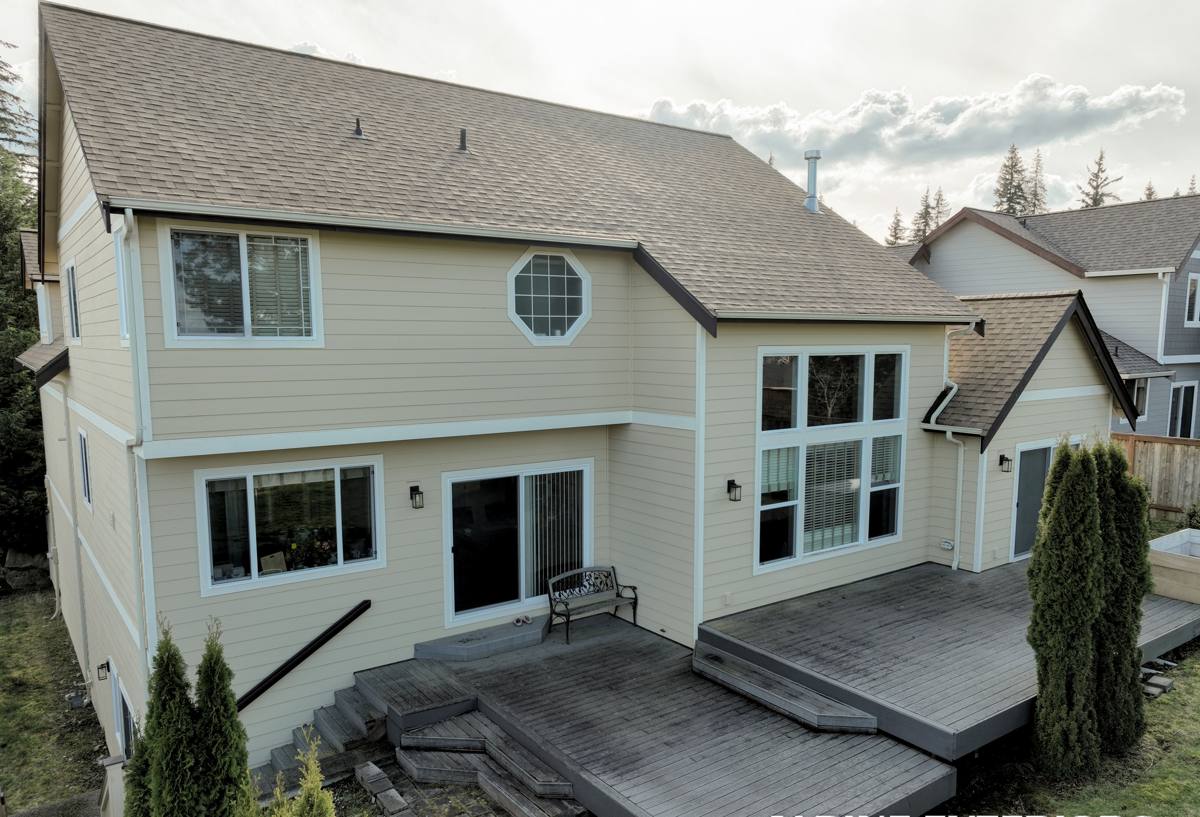
What Custer's Climate Actually Does to a House
Salt Air and Metal Fasteners
Proximity to Birch Bay and the Strait means airborne salt settles on exterior surfaces more than it would twenty or thirty miles inland. Over time, salt exposure accelerates corrosion on unprotected or under-spec fasteners and trim metal. It doesn't just affect paint — it affects the hardware holding the siding to the wall, which is why fastener spec is one of the first things we check on any Custer job, not an afterthought.
Driving Rain and Wind-Driven Moisture
Birch Bay's exposure means rain frequently arrives at an angle rather than straight down. Wind-driven rain finds every gap in flashing, every short kickout, every place where siding was cut tight instead of properly lapped. A siding system can look fine from the curb and still be letting moisture behind the cladding at the corners, the window heads, or the bottom course near grade.
Moss, Shade, and Slow-Drying Surfaces
Many Custer properties have tree cover or sit close enough to neighboring structures that portions of the exterior stay in shade for long stretches of the day, especially on north-facing walls. Combined with our long wet season, that shade keeps surfaces damp longer, which is exactly the environment moss and algae need to establish. Siding that can't handle sustained moisture exposure — either because the material absorbs water or because the finish can't stand up to being wet for days at a time — shows it first in these shaded zones.
Why We Install Only James Hardie Fiber Cement Here
We don't offer a menu of siding brands in Custer. We install James Hardie fiber cement, full stop, and the climate factors above are a big part of why.
- Non-combustible core: Fiber cement doesn't feed a fire the way wood-based products can, which matters for insurance conversations and for peace of mind.
- Engineered for the Pacific Northwest: Hardie's HZ5 product line is formulated for climates with sustained moisture exposure and freeze-thaw cycling, which describes a Whatcom County winter well.
- Factory-applied ColorPlus finish: The color is baked on in a controlled factory process, not brushed on at the jobsite, which gives it a more consistent, longer-lasting bond than field-applied paint — a real advantage when a wall stays damp for days at a time.
- Dimensionally stable: Fiber cement doesn't swell and shrink with moisture the way wood-based sidings can, so it holds paint lines and joints tighter over the years.
We get asked why we don't also offer LP SmartSide, vinyl, or cedar. The honest answer is that each of those has real trade-offs — vinyl can warp and doesn't hold up to impact the way fiber cement does, engineered wood products are more sensitive to moisture intrusion at cut edges and seams, and cedar demands a maintenance commitment most homeowners don't want to sign up for. In a climate like Custer's, those trade-offs show up faster than they would somewhere drier. We'd rather install one product well than several products with compromises we'd have to explain later.
What Correct Siding Installation Involves
The material is only part of the equation. A James Hardie installation is only as good as the water management system underneath it, and that's where most siding failures actually originate — not in the panel itself.
Weather-Resistive Barrier and Drainage Plane
Every installation starts with a properly lapped weather-resistive barrier. In a wind-driven-rain environment like Custer, lap direction and overlap width aren't cosmetic details — they determine whether water that gets behind the cladding drains back out or finds its way into the wall assembly.
Flashing at Every Penetration
Windows, doors, hose bibs, light fixtures, vents — every penetration through the siding plane is a potential entry point. Correct flashing, including head flashing with an end dam and proper kickout flashing where rooflines meet walls, is non-negotiable in a climate that sees this much horizontal rain.
Fastening to Hardie Spec
James Hardie publishes specific fastener requirements — type, length, spacing, and placement relative to panel edges. Given the salt air exposure in Custer, using the correct corrosion-resistant fastener isn't optional; it's the difference between siding that holds tight for decades and streaking rust stains within a few years.
Clearance and Grade Details
Hardie's warranty and installation instructions call for minimum clearances from grade, roof lines, decks, and other horizontal surfaces. On sloped or tree-covered Custer lots where water can pool or splash back, we pay close attention to these clearances because they're one of the most common places we find problems on older installations.
| Detail | Why It Matters in Custer |
|---|---|
| Fastener corrosion resistance | Salt air accelerates corrosion on standard hardware near the water |
| Flashing at windows and roof lines | Wind-driven rain finds gaps that vertical rain never would |
| Grade and horizontal-surface clearance | Damp, shaded lots keep splash-back moisture around longer |
| Panel and trim caulking/sealant | Sustained moisture exposure breaks down inferior sealants faster |
| Ventilation behind the cladding | Slow-drying, shaded walls need a working drainage plane, not just a barrier |
Our Process for a Custer Siding Project
1. On-Site Assessment
We walk the property, note sun and shade exposure, existing moisture damage, grade conditions, and any areas where prior siding or trim has already shown signs of the wear patterns common to this area.
2. Tear-Off and Substrate Check
Once the old siding is off, we inspect the sheathing underneath. Any rot, soft spots, or water staining gets addressed before a single new panel goes up — installing over a compromised substrate just hides a bigger problem.
3. Weather Barrier and Flashing Installation
This is where most of the long-term performance of the job gets decided, and it happens before any Hardie product is visible.
4. Hardie Panel Installation to Spec
Fastening, spacing, and clearances follow James Hardie's published instructions, adjusted for the specific exposure of the wall in question — a north-facing shaded elevation gets the same attention as a wind-exposed one.
5. Trim, Caulking, and Final Walkthrough
We finish with trim and sealant work at joints and penetrations, then walk the completed job with the homeowner.
Why a Crew That Already Works Custer Matters
Siding installation isn't just following a manual — it's judgment calls about how much flashing overlap a particular wall needs, whether a given elevation needs extra attention because of shade or wind exposure, and how a specific lot's drainage patterns affect where water ends up. A crew that has already worked on homes in Custer and around Birch Bay has seen how these climate factors actually play out on real walls, not just in a spec sheet. That local pattern recognition is what keeps small details from getting missed.
It also matters for the practical side of a project — knowing local permitting expectations, being available for a warranty check or a follow-up question without a long drive, and having a reputation in the immediate area that we have to stand behind.
Signs Your Custer Home May Need New Siding
- Visible cracking, warping, or soft spots, especially on shaded or north-facing walls
- Paint that's peeling or bubbling faster than expected, which often signals moisture trapped behind the siding
- Persistent moss or algae growth that comes back quickly after cleaning
- Rust streaking near fasteners or trim, a common sign of corrosion in salt-exposed areas
- Rising energy bills that may point to a compromised weather barrier letting in drafts
- Visible gaps or separation at seams, corners, or window trim
Get a Straight Answer for Your Custer Home
Every property in Custer has its own mix of sun, shade, wind exposure, and grade conditions, and that mix should shape the actual installation plan, not just the material choice. If you're weighing a siding replacement or want a second opinion on an existing installation, we're glad to take a look and give you a straightforward, no-pressure estimate — no scare tactics, just what we'd actually recommend for your specific property.