 Birch Bay Exterior
 Siding Built for Life on Cottonwood Beach
Cottonwood Beach sits right up against the water in the Birch Bay area of Whatcom County, and that location shapes everything about how siding performs there. Homes closest to the shoreline take a steady diet of salt-laden air and wind-driven rain, while the tree-shaded lots set back from the water deal with shade, damp ground, and a moss season that can run most of the year. A siding job that would hold up fine twenty miles inland doesn't automatically hold up here. We install siding in Cottonwood Beach the way this specific stretch of coastline requires — not the way a generic spec sheet describes.
This page is about one service in one place: full siding installation for Cottonwood Beach homes. Not a general overview of siding, and not a page about some other neighborhood with different exposure. What follows is what we've learned installing and inspecting siding on this shoreline, what a correct job actually involves, and why the crew doing the work matters as much as the material going on the wall.
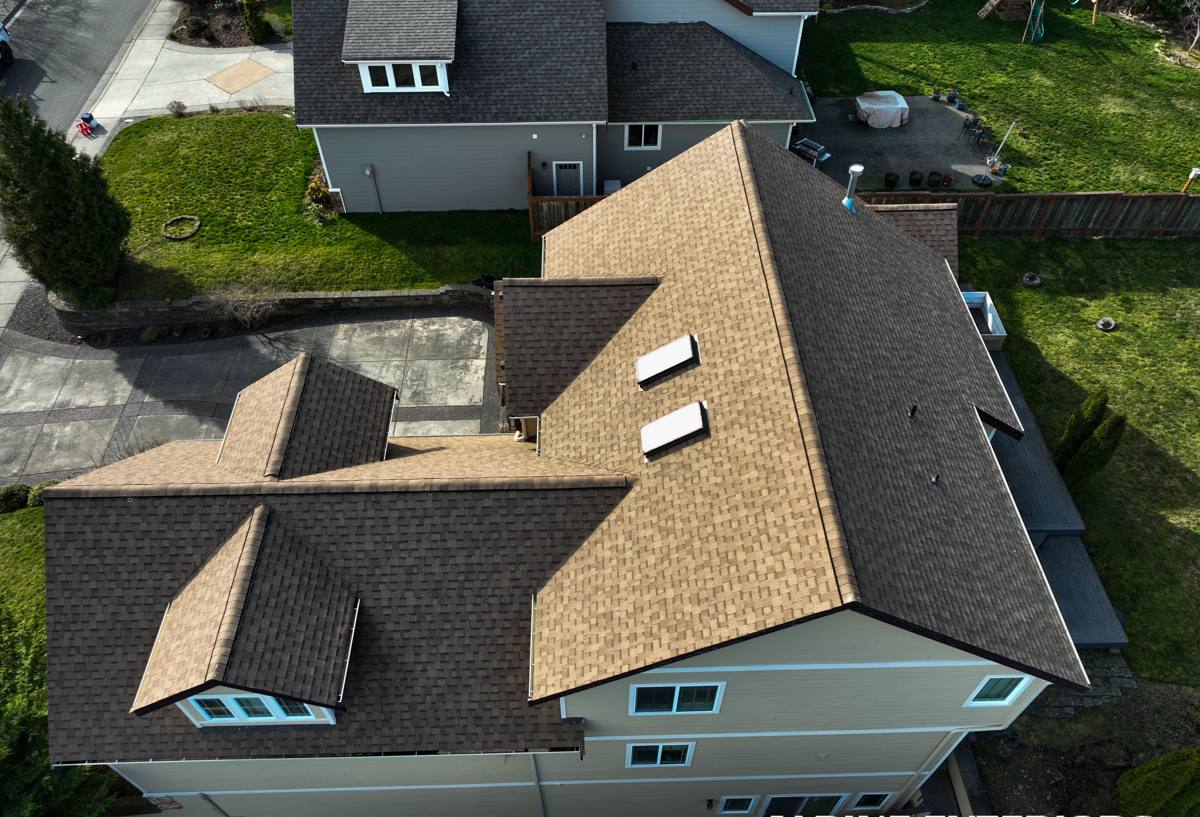
What Cottonwood Beach's Climate Does to Siding
Three conditions drive almost every siding failure we see near Birch Bay:
- Salt air. Airborne salt from the water accelerates corrosion on fasteners, trim flashing, and any metal component that isn't rated for a marine-influenced environment. It also breaks down cheaper paint films faster than inland weathering would.
- Driving rain. Storms off the water push rain sideways, not straight down. That means water gets forced into laps, joints, and butt seams that would stay dry in a calmer inland setting — so the water-resistive barrier and flashing details behind the siding matter more here than almost anywhere else in the county.
- A long moss season. Whatcom County's damp, mild climate keeps moss and algae active for much of the year, especially on north-facing walls and anything shaded by trees or a neighboring structure. Moss holds moisture against the siding surface and, on the wrong material, that moisture doesn't stay on the surface — it gets in.
None of these conditions are dramatic on their own. The problem is that they don't let up. A siding system on Cottonwood Beach is under low-grade stress essentially year-round, and small installation mistakes that would take a decade to show up elsewhere can show up in a few years here.
Why We Only Install James Hardie Fiber Cement
We standardized on James Hardie fiber cement siding for every home we work on, including the ones in Cottonwood Beach, and we don't install vinyl, LP SmartSide, or other engineered wood products. That's not a marketing position — it's a decision based on what actually holds up under salt air and sustained moisture exposure.
Fiber cement is non-combustible and doesn't have an organic wood component for moisture to break down over time the way engineered wood siding does. James Hardie's HardieZone HZ5 product line is specifically engineered for the wetter, cooler climate zone that covers Western Washington, and it comes with a factory-applied ColorPlus finish baked on under controlled conditions — a more consistent, longer-lasting bond than field-applied paint, which matters a lot when salt air is working against your finish from day one. Hardie also backs its products with a strong, transferable warranty, which gives homeowners real protection instead of a policy full of exclusions for coastal exposure.
We get asked why we don't offer vinyl as a cheaper option. Vinyl can look fine on day one, but it expands and contracts more than fiber cement, its seams and J-channels give wind-driven rain more opportunities to get behind the cladding, and it's more vulnerable to the freeze-thaw and pressure-washing wear that comes with treating moss buildup. On a shoreline lot, those are the exact weaknesses that get exploited fastest.
What Correct Installation Involves
The siding itself is only part of the system. Most of the failures we get called out to inspect in Cottonwood Beach trace back to what's behind the boards, not the boards themselves. A correct installation includes:
The water-resistive barrier and flashing
A continuous, properly lapped weather-resistive barrier is the actual waterproofing layer of the wall — the siding is the first line of defense, not the only one. Every window, door, and penetration needs correctly integrated flashing so water sheds outward instead of pooling behind the trim. On a home taking direct wind-driven rain, this detail is where most long-term problems either get prevented or get built in.
Fastener and clearance standards
James Hardie specifies fastener type, spacing, and penetration depth for a reason, and a marine environment is exactly where cutting corners on fasteners shows up early as staining, streaking, or loosened boards. We also hold correct clearances from grade, roofing, and decking so the bottom edge of the siding isn't sitting in a moisture trap.
Caulking and joint treatment
Butt joints, trim intersections, and penetrations get sealed to Hardie's specification, not just "caulked and moved on." In a wind-driven rain environment, a skipped or undersized joint is a guaranteed intrusion point within a few seasons.
Our Process for a Cottonwood Beach Siding Project
- On-site assessment. We walk the exterior, check the current siding and any water damage already present, and note exposure — how much direct salt air and driving rain each elevation actually takes, since it's rarely uniform on a shoreline lot.
- Removal and sheathing check. Old siding comes off and we inspect the sheathing underneath for rot or moisture damage before anything new goes up. This step catches problems that a surface-level look at old siding won't show.
- Water-resistive barrier and flashing installation. This is the step we won't rush, for the reasons above.
- James Hardie installation to spec. Fastener pattern, clearances, and joint treatment follow manufacturer specification, which is also what keeps the warranty valid.
- Trim, caulking, and final detailing. Every joint and penetration gets closed out properly, not just visually finished.
- Walkthrough. We go over the finished work with you before calling the job done.
Signs a Cottonwood Beach Home Needs New Siding
- Persistent moss or algae staining that comes back within a season or two of cleaning
- Soft spots, bubbling, or visible swelling, especially near the base of walls or under windows
- Paint or finish that's peeling or chalking faster than it should for its age
- Visible gaps at seams, trim, or corners that weren't there a few years ago
- A musty smell or interior wall staining that suggests moisture is getting past the exterior
Any one of these on its own isn't necessarily an emergency, but on a shoreline property they're worth having looked at sooner rather than later — the exposure here doesn't give small problems much time to stay small.
Comparing Siding Options for This Location
| Factor | James Hardie Fiber Cement | Vinyl | Engineered Wood (e.g. LP SmartSide) |
|---|---|---|---|
| Salt air / corrosion resistance | Non-combustible, stable material; factory finish resists breakdown | Won't corrode, but seams and fasteners are more exposed to wear | Wood-based core is vulnerable to prolonged moisture exposure |
| Wind-driven rain performance | Rigid, tight-fitting laps when installed to spec | More seams and channels for water to work into | Depends heavily on maintaining an intact factory coating |
| Moss and moisture tolerance | Doesn't break down from surface moisture the way organic materials can | Moisture can sit behind panels without visible warning signs | Coating breaches allow moisture into the wood-based substrate |
| Finish longevity | Factory-applied ColorPlus finish, warrantied | Color can fade unevenly in strong coastal light | Relies on maintained factory coating; touch-ups needed over time |
| Fire resistance | Non-combustible | Combustible | Combustible |
What to Ask Before Hiring a Siding Contractor Here
Not every contractor who installs siding has actual experience with shoreline exposure, and that gap tends to show up years later, not on installation day. Before you hire anyone for a Cottonwood Beach project, it's worth asking:
- Have you installed siding on other homes in Cottonwood Beach or along Birch Bay specifically?
- What water-resistive barrier and flashing details do you use, and can you explain why?
- Do you install to the manufacturer's published fastening and clearance specifications?
- What does the material warranty cover, and does it stay intact with your installation method?
- Will the same crew that quotes the job actually be the crew doing the installation?
A contractor who can answer these specifically, rather than generically, is one who actually understands the difference between siding that survives this coastline and siding that just gets installed on it.
Why Local Installation Experience Matters
Whatcom County's coastline isn't uniform — a lot two blocks from the water can face different wind and moisture exposure than one right on the beach, and shaded, tree-covered parcels behave differently than open, sun-exposed ones. A crew that's already worked in Cottonwood Beach has seen how these micro-conditions actually play out on real houses, not just in a general climate zone rating. That experience shapes decisions on-site — where extra flashing attention is worth it, which elevations need the most careful joint treatment, and what a homeowner should realistically expect for long-term upkeep given their specific lot.
If you're planning a siding project for a Cottonwood Beach home, we're happy to take a look, walk you through what we're seeing, and put together a straightforward, no-pressure estimate — no obligation, just an honest read on what your home needs. The form below is the easiest way to get started.