 Birch Bay Exterior
 Building Decks That Hold Up on the Cherry Point Shoreline
Cherry Point sits right on the water along Whatcom County's stretch of the Salish Sea, and that location is exactly why decks here age differently than decks built ten or twenty miles inland. Salt-laden air, wind-driven rain coming straight off the strait, and a wet season that runs long and gray all put extra stress on outdoor structures. A deck that would be low-maintenance in a drier, more sheltered part of the county can start showing corrosion, soft spots, and moss buildup within a few seasons here if it wasn't built with that exposure in mind.
We're not talking about exotic engineering. We're talking about material choices, fastener selection, and construction details that account for the specific conditions this stretch of coastline throws at a structure year after year. That's the difference between a deck that needs real attention every few years and one that quietly does its job for decades.
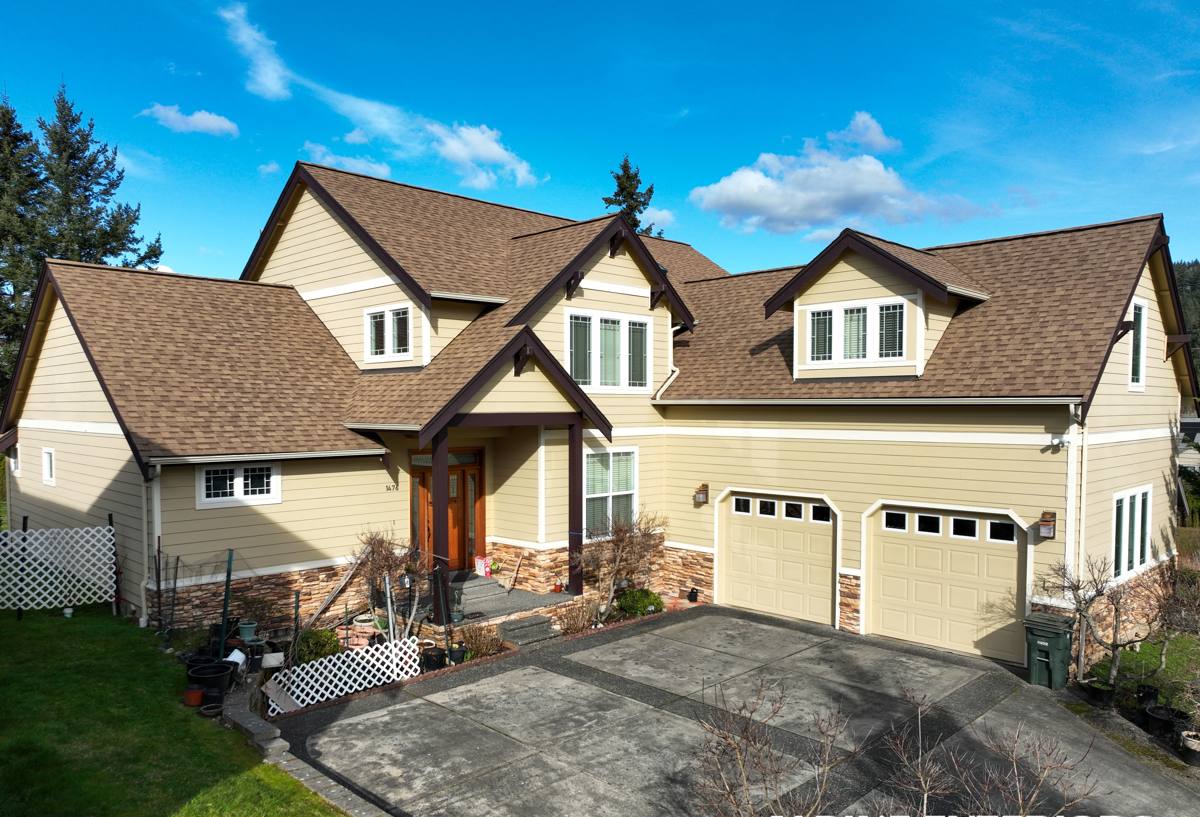
What Salt Air and Constant Moisture Actually Do to a Deck
It helps to understand the mechanism, not just the symptom. Salt air accelerates corrosion in any metal fastener, bracket, or connector that isn't rated for it. Once corrosion starts at a nail head or screw shank, it weakens the connection long before it's visible from the surface. Combine that with near-constant moisture from rain and fog, and you get a second problem: wood that never fully dries out between storms, which is exactly the environment mold, rot fungus, and moss need to establish themselves.
Fasteners and Hardware
Standard electro-galvanized fasteners are not adequate for this environment. We use stainless steel or hot-dip galvanized fasteners and structural hardware rated for coastal or ACQ-treated lumber exposure, because the connection points are almost always where a coastally-built deck fails first.
Decking Material Behavior
Wood species and composite formulations respond differently to sustained moisture. Some absorb water into the fiber and swell, cup, or split as they dry unevenly. Others resist water absorption but can trap moisture underneath if airflow beneath the boards isn't planned for. Matching the material to the site's actual sun and wind exposure matters more here than in a drier neighborhood.
Choosing the Right Decking Material for This Site
There's no single "best" decking material for every Cherry Point property — it depends on your budget, how much upkeep you want to do, and how exposed the site is to wind and salt spray. Here's how the common options actually compare in this climate.
| Material | Salt/Moisture Resistance | Maintenance Needs | Typical Lifespan |
|---|---|---|---|
| Pressure-treated fir/hem-fir | Fair — needs sealing to perform well | Annual cleaning, re-sealing every 1-2 years | 10-15 years with upkeep |
| Cedar | Good natural resistance, but softens with neglect | Regular cleaning, periodic oil or sealant | 15-20 years with upkeep |
| Composite decking | Very good — doesn't absorb water like wood | Periodic washing to prevent surface moss/algae | 20-30 years, varies by brand |
| PVC/capped polymer | Excellent — fully sealed against moisture | Low; occasional washing | 25+ years |
Composite and capped polymer boards generally cost more up front but ask less of you over time, which matters in an area where moss and moisture are constant rather than seasonal. Cedar and treated lumber are still solid choices if you're willing to stay on top of cleaning and sealing on a real schedule — the material isn't the problem, neglect is.
Framing and Structure: Where Most Deck Failures Actually Start
Footings and Ledger Attachment
A deck is only as good as what's underneath it. Footings need to be sized and set below frost depth per Whatcom County code, and the ledger board — the point where the deck attaches to the house — needs proper flashing to keep water from tracking behind it into the house wall. This is the single most common failure point we see on older decks in wet coastal areas: a ledger that was never properly flashed, quietly rotting the rim joist and wall sheathing behind it for years before anyone notices.
Joist Spacing and Airflow
Tighter joist spacing than the code minimum adds stiffness and reduces bounce, but it's just as important to leave the underside of the deck open enough for air to move through. A deck framed too close to grade, or boxed in without ventilation, holds moisture underneath long after the surface has dried, which speeds up rot in the framing where you can't see it.
Moss, Algae, and Drainage: Designing for the Long Wet Season
Whatcom County's moss season isn't a few weeks — it's most of the year on a shaded, damp site. You can't eliminate moss and algae growth entirely on an exterior wood or composite surface near the water, but you can design a deck so it doesn't take over.
- Proper board spacing so water drains through instead of pooling on the surface
- Deck orientation and any structure above (pergolas, roof overhangs) planned to allow some sun exposure where possible
- Stairs and low areas graded so water sheds away from the structure, not toward it
- Fasteners and connectors rated for continuous coastal moisture exposure
- Railing post bases and any ground-contact framing set up to resist standing water
None of this makes a deck maintenance-free. It just means the maintenance you do — a seasonal wash-down, a periodic check of fasteners — actually keeps up, instead of fighting a design that was never suited to the site in the first place.
Permits and Code Requirements
Most new decks and significant deck rebuilds in unincorporated Whatcom County require a building permit, particularly once you're above a certain height off grade or attaching structurally to the house. Requirements can vary based on deck size, height, and whether it's a repair versus new construction. We handle the permit process as part of the job so you're not the one tracking down requirements or waiting on inspections — that's on us, and it's part of doing the job correctly rather than cutting a corner that shows up later when you go to sell the house.
Our Deck Building Process
We approach every Cherry Point deck project the same methodical way, whether it's a full rebuild or new construction:
- On-site assessment of exposure, drainage, existing structure (if replacing a deck), and how the site handles wind and rain
- Material and layout recommendations based on your budget and how much maintenance you actually want to do long-term
- Permit application and engineering where required by Whatcom County
- Demolition of the old structure (if applicable) and inspection of ledger, rim joist, and framing behind it for hidden water damage
- Framing with corrosion-resistant hardware and fasteners suited to coastal exposure
- Decking installation with attention to drainage, spacing, and airflow underneath
- Final walkthrough covering what maintenance the specific materials we used will actually need
Why It Matters to Hire a Crew That Already Works This Coastline
A deck built to a generic spec — the kind that works fine in a drier, more sheltered part of the state — is often under-built for what Cherry Point actually experiences. The details that matter here (fastener grade, ledger flashing, board spacing, material selection) aren't things you can spot on a finished deck by looking at it. They show up years later as soft framing, corroded hardware, or a ledger that's been leaking behind the siding the whole time.
Working regularly in Birch Bay and along the Cherry Point shoreline means we're not guessing at how salt air and sustained moisture affect a structure over time — we see it on the decks we get called to repair or rebuild. That experience shapes the choices we make on every new build, from the footings up.
Keeping Your Deck in Shape After It's Built
Even a well-built deck in this climate needs some seasonal attention: clearing debris and standing water off the surface, washing off algae and moss buildup before it gets a foothold, and periodically checking fasteners and railing connections for early corrosion. A short annual check catches small issues — a loose baluster, a spot where water's pooling — before they turn into structural repairs. We're glad to walk you through a maintenance routine suited to whatever material you choose, since cedar, composite, and PVC decking each ask for something a little different.
If you're planning a new deck or need to replace one that's showing its age, we'd be glad to take a look and give you a straightforward, no-pressure estimate — just fill out the form below.