 Birch Bay Exterior
 Why Blaine's Location Is Hard on Exterior Siding
Blaine sits right up against the Salish Sea, close enough to Semiahmoo Bay and the open water of Whatcom County's coastline that homes here deal with a different set of pressures than siding built for a typical inland neighborhood has to handle. Salt-laden air moves in off the water and settles on exterior walls day after day. Combined with the long stretch of driving rain that defines a Pacific Northwest winter, and the moss and algae growth that thrives in shaded, damp conditions for much of the year, siding in Blaine is under near-constant assault even when nothing dramatic ever happens to it.
Most siding materials aren't designed with this exact combination in mind. Salt air accelerates corrosion on fasteners and trim metal. Wind-driven rain finds its way into seams, laps, and butt joints that would stay dry in a calmer climate. And the moss season — which in Whatcom County can run from fall through spring — keeps north- and shade-facing walls damp for weeks at a time, creating ideal conditions for organic growth to take hold in anything with the slightest bit of porosity or surface texture.
None of this means a Blaine home is doomed to siding problems. It means the material choice and the installation details matter more here than they would in a drier, calmer part of the country. That's the lens we bring to every siding replacement we quote in this area.
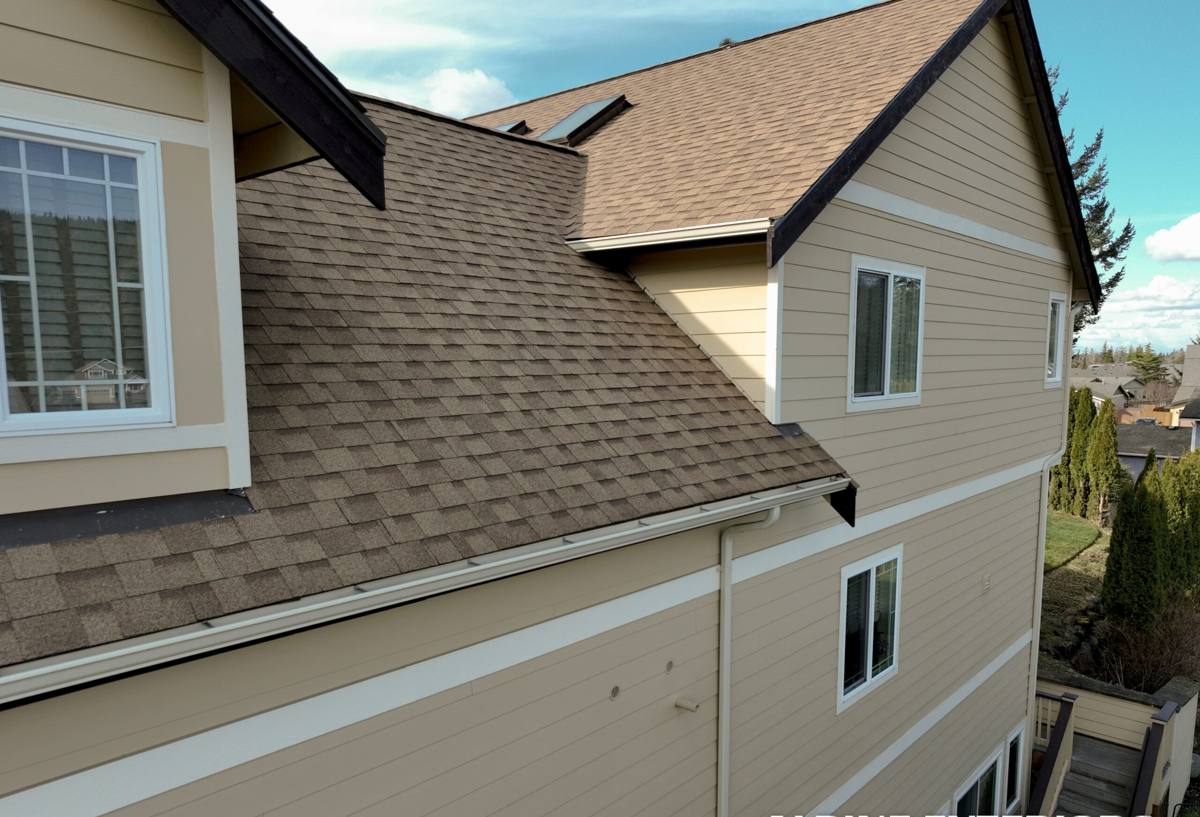
Signs a Blaine Home's Siding Has Reached the End of Its Life
Siding failure on the coast rarely announces itself with one obvious symptom. It shows up as a combination of smaller issues that, taken together, mean the assembly behind the siding is no longer doing its job.
- Soft or spongy spots when you press on the siding, especially near the bottom courses and around windows and doors
- Persistent black or green streaking that comes back within weeks of being cleaned
- Paint that's blistering, peeling, or chalking faster than it should between repaints
- Visible cupping, warping, or separation at seams and laps
- Rising utility bills or noticeably colder walls in winter, which can point to moisture-damaged insulation behind the cladding
- Any sign of rot at trim boards, corner boards, or the bottom edge of the siding near grade
Any one of these on its own might just call for a repair. Several of them together, especially on a home that's had vinyl, older fiber cement, or untreated wood products on it for fifteen-plus years, usually means it's time to talk about full replacement rather than another round of patching.
What a Correct Siding Replacement Actually Involves
A siding replacement is not just swapping old panels for new ones. In a climate like Blaine's, the work that happens underneath the siding matters as much as the siding itself.
Tear-Off and Inspection
Once the old siding comes off, we inspect the sheathing, framing, and any existing water-resistive barrier before anything new goes up. This is the point where hidden rot, compromised sheathing, or past improvised repairs get found — and it's much cheaper to deal with them now than to bury them under a new wall system and find out later.
Water-Resistive Barrier and Flashing
Given how much wind-driven rain this area sees, the drainage plane behind the siding is arguably the most important part of the whole job. That means a properly lapped weather-resistive barrier, correctly integrated flashing at every window, door, and roofline intersection, and attention to details like kick-out flashing where a roof meets a wall. Skipping or rushing this step is the single biggest reason siding jobs fail early, regardless of what material goes on top.
Installation to Manufacturer Spec
Fiber cement siding has specific fastening patterns, clearance requirements from grade and roof lines, and caulking guidance that has to be followed to keep the manufacturer's warranty valid and to keep water from finding a way in. We install to those specifications as a baseline, not as an upsell — it's simply what a correct install looks like.
Why We Install Only James Hardie Fiber Cement
We made a decision years ago to standardize on James Hardie siding and stop installing vinyl, LP SmartSide, and other fiber cement or wood-composite alternatives. That's not a marketing position — it's a reflection of what holds up best against the specific conditions this region throws at a home.
James Hardie's fiber cement is non-combustible, resists moisture-driven swelling and rot far better than wood-based siding products, and comes with a factory-applied ColorPlus finish that holds color longer than field-applied paint typically does — a real advantage against salt air and UV exposure. Hardie also engineers specific product lines for wetter, harsher climates, which lines up directly with what a Whatcom County coastal property needs. The warranty is transferable and backed by a large, established manufacturer, which matters if you ever sell the home.
We're not going to tell you every other siding product on the market is junk — plenty of them work fine in the right setting. But for what Blaine homes are up against, we've settled on one material we trust enough to stand behind, and that's what we put on every home we side.
Our Process, Start to Finish
- Free on-site estimate where we walk the exterior, check existing siding and trim condition, and talk through what we're seeing
- Written proposal covering material, scope, and a realistic timeline before any work is scheduled
- Tear-off and full inspection of sheathing and framing once the job starts
- Repair of any rot or damage found before new materials go on — no covering up problems
- Water-resistive barrier and flashing installed at every penetration and transition
- James Hardie siding installed to manufacturer spec, including fastening, clearances, and joint treatment
- Final walkthrough with you before we consider the job done, and a clean site when we leave
We keep the process straightforward on purpose. Homeowners in this area have usually already dealt with one contractor who cut corners on the parts they couldn't see, and we'd rather over-explain what we're doing than leave you guessing.
Comparing Siding Materials in a Coastal Climate
| Material | Moisture Behavior | Salt Air / UV Resistance | Maintenance Burden |
|---|---|---|---|
| James Hardie Fiber Cement | Engineered resistance to swelling and moisture damage | Factory ColorPlus finish holds up well | Low — occasional wash, repaint on a long cycle |
| Vinyl | Doesn't rot, but can warp or crack in temperature swings | Colors fade and chalk over time in strong UV and salt exposure | Low, but replacement (not repair) when damaged |
| Wood/Engineered Wood (LP SmartSide, cedar) | Vulnerable to moisture intrusion if any detail fails | Needs consistent repainting/resealing to hold up | Higher — regular inspection and refinishing needed |
| Older Fiber Cement (unfinished or field-painted) | Good moisture resistance if installed correctly | Field paint fades and needs recoating sooner than factory finish | Moderate — repainting cycles add up |
This isn't about declaring one product universally best — it's about matching the material to what your specific wall is going to face year after year. In Blaine, that combination of salt, rain, and prolonged dampness is exactly why we lean as hard as we do on factory-finished fiber cement.
Cost Factors for a Blaine Siding Replacement
Every home is different, so we won't quote a number without seeing the house, but the main things that move the price on a siding replacement in this area are fairly consistent:
- Total square footage of wall area and the home's overall shape and number of corners
- Condition of the sheathing and framing once old siding comes off — hidden rot repair adds cost but is essential
- Amount of trim, fascia, and detail work around windows, doors, and rooflines
- Siding profile and color selection, since some Hardie lines and finishes carry different material costs
- Site access and how much of the home is reachable without specialized equipment
- Whether existing flashing and water-resistive barrier can be reused or need full replacement
The single biggest cost swing on coastal homes tends to be hidden moisture damage discovered at tear-off. It's impossible to know the exact extent until the old siding is off, which is why we build inspection into the process rather than treating it as a surprise change order.
What to Ask Before Hiring a Siding Contractor in Blaine
- Do you carry current licensing and insurance specific to Washington State, and can you provide proof?
- How do you handle flashing and water-resistive barrier details at windows, doors, and roof intersections?
- What happens if you find rot or damaged sheathing once the old siding is removed?
- Are you installing to the manufacturer's specifications closely enough to keep the product warranty intact?
- Have you worked on homes in this specific coastal area, and do you understand the moss, salt air, and rain exposure here?
A contractor who answers these clearly and specifically, without vague reassurances, is usually one who's done the work enough times to know exactly what it takes.
Why Local Experience in Blaine Matters
A siding crew that mostly works inland or in drier parts of the state can still do a technically fine install and still end up with a home that struggles in five years, simply because they didn't weight the flashing details, drainage plane, and material choice the way a coastal job demands. Working regularly in Blaine and the surrounding Birch Bay area means we're used to seeing what salt air and moss season actually do to a wall over time, not just in a manufacturer's brochure. That experience shapes small decisions throughout the job — where we add extra flashing attention, how we sequence work around weather, what we flag during the estimate walk — that don't show up as line items but do show up in how the siding performs a decade from now.
If your Blaine home's siding is showing its age, or you just want a straight answer about whether it's a repair or replacement situation, we're glad to come take a look. The estimate is free, there's no pressure attached to it, and you'll walk away with a clear picture of what your home actually needs.