 Birch Bay Exterior
 Siding Built for Birch Bay Village's Waterfront Climate
Birch Bay Village sits close enough to the water that salt air is part of daily life, not an occasional nuisance. Add Whatcom County's driving winter rain and a moss season that can stretch from fall through spring, and you have a combination that is genuinely hard on exterior building materials. Siding here doesn't just need to look good on installation day — it needs to hold up to years of salt-laden wind, saturated wood trim, and shaded north walls that never fully dry out.
We install James Hardie fiber cement siding exclusively, and Birch Bay Village is exactly the kind of neighborhood where that decision pays off. This page covers what local homes actually need from a siding installation, what correct work looks like on the ground, and how we run the job from first look to final walk-through.
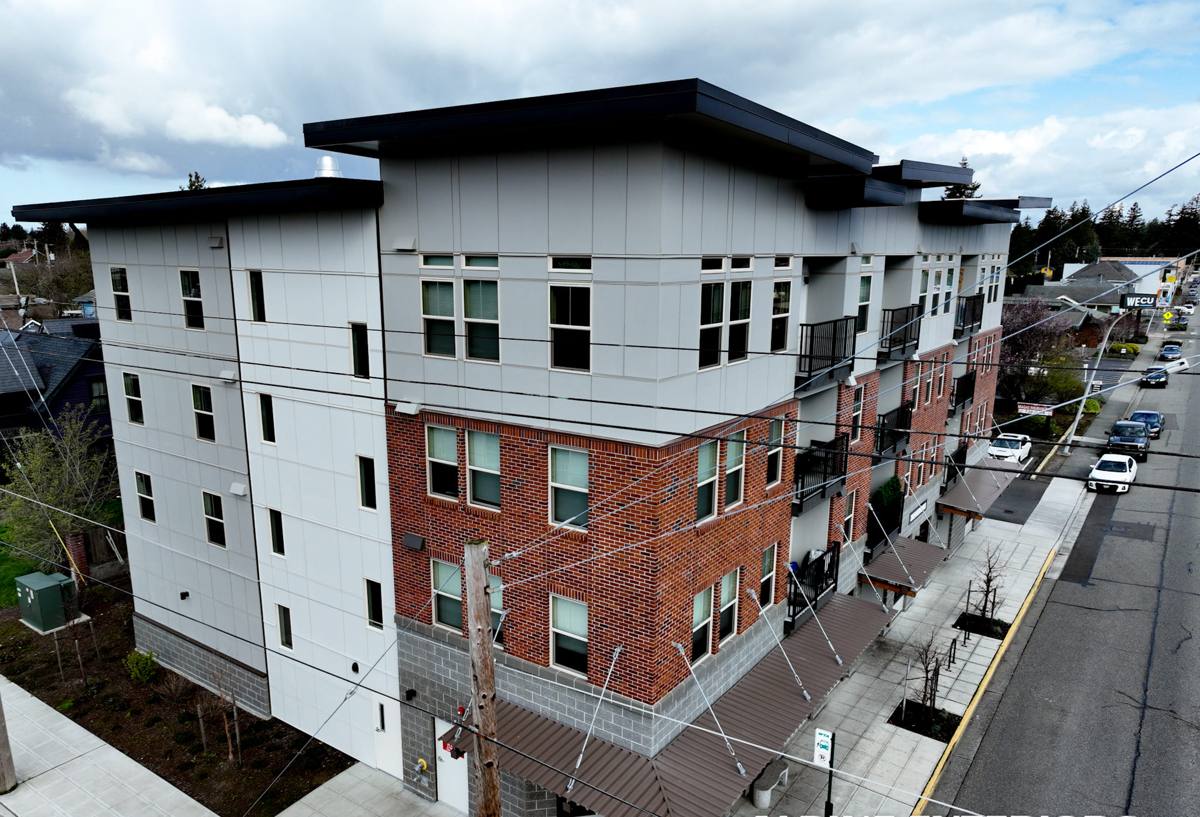
What Birch Bay Village's Climate Does to Siding
Salt Air and Coastal Wind
Homes closer to the water take a steady, low-grade beating from salt-carrying air. Over time, salt exposure accelerates corrosion on fasteners and metal flashing, and it can degrade paint and coatings that weren't formulated to handle it. Materials and finishes that work fine forty miles inland don't always perform the same way a few blocks from Birch Bay itself.
Driving Rain
Whatcom County storms often come in sideways, not straight down. That matters more than most homeowners realize — it means water gets pushed into laps, seams, and butt joints that would stay dry in a calmer climate. A siding system depends as much on how it's installed and flashed as on what it's made of.
The Long Moss Season
Shaded walls, roof lines, and anything under tree cover in this area can stay damp for months at a stretch. Moss and algae don't just look bad — sustained moisture against a wall surface is exactly what breaks down materials that aren't dimensionally stable or properly finished. A long moss season is a good proxy for how much moisture a wall is actually dealing with year-round.
Why We Only Install James Hardie in This Kind of Climate
James Hardie fiber cement is engineered specifically around moisture, and that's the property that matters most in a neighborhood like Birch Bay Village. It's non-combustible, dimensionally stable when wet, and finished at the factory with ColorPlus Technology — a baked-on finish that's more consistent and more resistant to fading and moisture intrusion than field-applied paint. Hardie's HZ5 product line is engineered for the kind of freeze-thaw and moisture cycling the Pacific Northwest sees, which is exactly the profile of a marine-influenced climate like this one.
We don't install vinyl, LP SmartSide, primed spruce, or cedar, and it's worth being straightforward about why. Vinyl can warp and become brittle with age, and its seams give wind-driven rain more opportunities to work behind the cladding. Wood-based products, including engineered wood, still rely on an intact factory or field coating to keep moisture out — once that coating is compromised, water can get into the substrate itself. Cedar is a beautiful, legitimately traditional material, but it demands a maintenance schedule (staining, sealing, moss treatment) that most homeowners underestimate, and a missed cycle in a wet climate shows up fast. None of these are bad products in every setting. They're just not what we're willing to put on a home a few blocks from saltwater with a long, damp moss season working against it every year.
What a Correct Siding Installation Involves
The siding material is maybe half the equation. The other half is the water management system underneath it — and that's where most siding failures actually start, regardless of what brand of siding is on the outside.
- Weather-resistive barrier: A continuous, correctly lapped house wrap or building paper behind the siding, with no gaps at seams or penetrations.
- Flashing at every penetration: Windows, doors, hose bibs, light fixtures, and vents all need proper flashing so water is directed out and down, never trapped behind the cladding.
- Rainscreen or drainage gap: A ventilated gap between the siding and the wall assembly lets any moisture that does get behind the boards drain and dry out instead of sitting against the sheathing.
- Correct fastening: Hardie specifies fastener type, spacing, and placement for a reason — under-fastened or over-driven boards are a common source of cracking and premature failure.
- Proper clearances: Siding held off decks, roof lines, and grade by the manufacturer's minimum clearances so it isn't sitting in standing water or trapped moisture.
- Caulking and joint treatment: Butt joints and trim connections sealed with the right products in the right places — not everywhere, since over-caulking can trap moisture just as badly as under-caulking.
Skip any one of these and it doesn't matter how good the siding material is — water will find the weak point eventually, and in a climate this wet, "eventually" tends to arrive sooner than homeowners expect.
Signs a Birch Bay Village Home May Need New Siding
| What You're Seeing | What It Usually Means |
|---|---|
| Persistent moss or dark streaking on siding | The wall isn't drying out between rain events — often a drainage or clearance issue |
| Soft spots or visible swelling | Moisture has gotten into the substrate, common with wood-based siding once the coating fails |
| Cracked or warped boards | Fastening or expansion issues, or a material not suited to sustained moisture cycling |
| Peeling or chalky paint | Field-applied coatings breaking down faster than a factory finish would |
| Rust streaks near fasteners | Salt-air corrosion on metal components, more common on homes closer to the water |
| Gaps opening at seams or trim | Material movement or shrinkage, letting wind-driven rain behind the cladding |
Our Process for a Birch Bay Village Installation
1. On-Site Assessment
We walk the home in person and look at what's actually driving the current siding's condition — sun exposure, shade patterns, wind direction, and how close the home is to the water. That context shapes product selection and detailing decisions, not just the sales pitch.
2. Tear-Off and Sheathing Check
Once the old siding is off, we inspect the sheathing and framing underneath for rot or hidden moisture damage before anything new goes up. This is the point where problems that have been building for years finally become visible — and it's much cheaper to address them now than after new siding is closed up over them.
3. Water Management Layer
House wrap, flashing, and drainage gap installation happen before a single piece of Hardie board goes up. This layer is the part homeowners never see again once the job is done, which is exactly why it has to be right the first time.
4. Hardie Installation
Boards, panels, or trim are installed to James Hardie's fastening and clearance specifications, with attention to butt joints, corners, and penetrations — the details that determine how the wall performs in a driving rainstorm five years from now, not just how it looks on installation day.
5. Final Walk-Through
We go over the finished work with the homeowner, confirm clearances and sealant lines, and make sure everything matches what was scoped at the start.
Why Local Installation Experience Matters
A crew that already works in Birch Bay Village knows which walls take the worst of the wind, which lots stay shaded and damp longest, and how far salt exposure typically reaches inland from the water. That's not something you get from a spec sheet — it comes from doing the work in this specific area, on homes dealing with this specific climate. It shows up in small decisions: where to be extra careful with flashing, which sides of a house need the most attention to drainage, and how to set expectations for a homeowner about what maintenance (if any) their new siding will actually need.
What to Check Before Hiring Anyone for Siding Work
- Are they licensed and insured to do siding work in Washington State?
- Do they specify a full water management system (house wrap, flashing, drainage gap), not just the visible siding?
- Will they put the product, installation method, and warranty terms in writing?
- Do they have experience installing in coastal or marine-influenced climates specifically?
- Are they a manufacturer-recognized installer for the siding brand they're proposing?
Cost Factors for Birch Bay Village Siding Projects
| Factor | Why It Affects Cost |
|---|---|
| Home size and wall complexity | More corners, dormers, and trim details mean more labor and cut waste |
| Condition of existing sheathing | Rot or moisture damage found during tear-off may need repair before new siding goes on |
| Siding profile and accessories | Lap width, trim style, and corner details vary in material and labor cost |
| Access and site conditions | Steep lots, limited staging area, or proximity to neighboring structures affect labor time |
| Scope of tear-off | Full removal versus partial re-side changes both material and disposal costs |
Every home is different, and the only way to get numbers that mean anything is a look at the actual house. If you're in Birch Bay Village and thinking about new siding, we're happy to come take a look and put together a free, no-pressure estimate using the form below.