 Birch Bay Exterior
 Why Metal Roofing Makes Sense in Birch Bay Village
Birch Bay Village sits close enough to the water that homes here take a different kind of weathering than roofs a few miles inland. Salt-laden air off the Strait of Georgia, wind-driven rain that comes in sideways during winter storms, and shaded, tree-lined lots that stay damp long after a storm passes all add up over the life of a roof. Asphalt shingles can handle a lot of this, but they're also the material most prone to moss colonization and granule loss under these exact conditions. Metal roofing was built for weather like this, which is why we see more homeowners in Whatcom County's coastal neighborhoods asking about it every year.
This page is specifically about metal roofing for homes in Birch Bay Village — not a general overview of metal roofing everywhere. The exposure here, the moisture patterns, and the mix of waterfront and tree-shaded lots all change what a correct installation looks like.
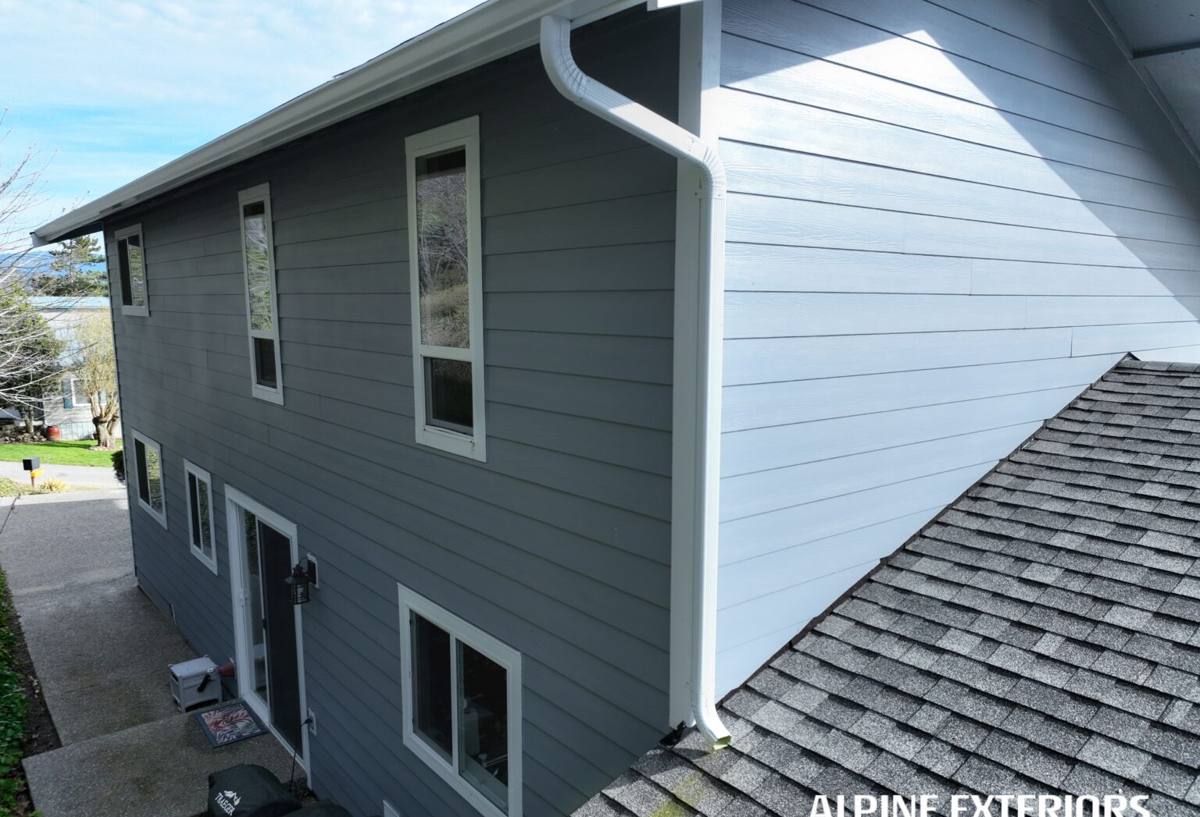
What Coastal Exposure Actually Does to a Roof
Three things drive most of the roofing problems we see in this part of Birch Bay:
Salt Air and Corrosion
Airborne salt accelerates corrosion on any exposed metal — fasteners, flashing, gutters, and the roofing material itself if it isn't rated for a marine environment. This doesn't mean metal roofing is a bad choice near the water; it means the specific alloy, coating, and fastener hardware matter more here than they would on a home 15 miles inland. Get those choices wrong and you'll see premature rust streaking and fastener failure well before the panels themselves would ever wear out.
Driving Rain
Storms coming off the water tend to push rain horizontally, not just straight down. That means water gets forced up under laps, around penetrations, and into valleys in a way that gentler rainfall doesn't. A roof detailed for average rainfall — rather than wind-driven rain — is where leaks show up first, usually at flashing points rather than in the field of the roof.
Moss and Shade
Wherever tree cover keeps a roof slope shaded and damp, moss and algae take hold. On asphalt shingles, moss actually feeds on the organic material in the shingle and lifts it as it grows. Metal doesn't give moss the same foothold, and smooth, painted panel surfaces shed spores and debris far more easily than a shingle's rough texture — which is one of the main reasons metal roofing holds up better on the shaded, tree-lined lots common throughout Birch Bay Village.
Choosing the Right Metal Roofing System
Not all metal roofing is the same product wearing different colors. The panel profile, the base metal, and the coating all affect how a roof performs in a salt-air environment.
| Option | Coastal Suitability | Maintenance | Typical Use Case |
|---|---|---|---|
| Standing seam (concealed fastener) | Excellent — no exposed screws to corrode or back out | Very low | Full roofs, especially waterfront-facing slopes |
| Exposed-fastener panel | Good, if fasteners and washers are coastal-rated and gaskets are checked periodically | Low, but fastener seals should be inspected over time | Budget-conscious full roofs, outbuildings, shops |
| Stone-coated steel | Good — coating adds a protective layer over the steel | Low | Homeowners who want a shingle or shake look with metal performance |
| Galvalume steel (uncoated finish) | Fair — performs well but benefits from a painted topcoat this close to the water | Low to moderate | Secondary structures, garages |
| Aluminum | Excellent — naturally corrosion-resistant, doesn't rust | Very low | Homes with the heaviest direct salt exposure |
For most Birch Bay Village homes, we point people toward standing seam in either steel with a quality PVDF (Kynar-type) paint finish, or aluminum for lots that sit closest to the water. The upfront cost is higher than exposed-fastener panels or asphalt, but the concealed-fastener design removes the single most common failure point on a coastal roof: exposed screws that back out or corrode over fifteen to twenty years. As a broad range, expect standing seam metal roofing installed in this area to run roughly in the low-to-mid teens per square foot, with exposed-fastener systems and stone-coated steel typically landing lower — exact numbers depend on roof complexity, pitch, and panel choice, which is why we always quote from an actual look at the roof rather than a phone estimate.
Fasteners, Flashing, and Underlayment: Where Roofs Actually Fail
A metal roof rarely fails because the panels wore out. It fails at the details around the panels. In a driving-rain, salt-air environment like Birch Bay Village, we pay particular attention to:
- Fastener material — stainless steel or coated fasteners matched to the panel metal, not generic hardware-store screws that will corrode faster than the roof around them.
- Dissimilar-metal contact — keeping metals that react with each other (like uncoated steel touching aluminum, or copper runoff draining onto steel) separated, since galvanic corrosion can eat through a panel from contact with the wrong metal, not just from the air.
- Valley and eave protection — self-adhered ice-and-water membrane at eaves, valleys, and around penetrations, so wind-driven rain that gets past the panel laps still has nowhere to go but back out.
- Closures and sealants — closed-cell foam closures at ridges and eaves to block wind-driven rain and pests, with sealants rated for UV and salt exposure rather than general-purpose caulk.
- Flashing at penetrations — chimneys, plumbing vents, and skylights are where most leaks originate on any roof; on a coastal home, the flashing metal and fasteners here need to match the corrosion resistance of the field panels, not be an afterthought.
None of this shows up in a photo of the finished roof, which is exactly why it's the part that separates a roof that performs for decades from one that leaks within a few winters.
Ventilation and Moisture Control Under the Metal
Metal roofing is not, by itself, a moisture problem — but installed without proper ventilation, any roof can trap condensation in the attic, especially with the humidity levels typical of this part of Whatcom County. We install metal roofing with attention to intake and exhaust airflow (ridge venting paired with soffit or eave intake), and we use the correct underlayment — usually a synthetic, high-temp underlayment rather than older felt products — so the assembly can handle both the outside weather and the moisture generated inside the home. On homes with older or inadequate attic ventilation, we'll flag it before the roof goes on, because fixing it after the fact means pulling panels back up.
How Our Metal Roofing Process Works
1. On-Site Assessment
We walk the roof, check the decking condition, look at existing ventilation, and note wind and rain exposure specific to your lot — a waterfront-facing slope in Birch Bay Village gets different attention than a shaded, tree-covered slope a few streets back.
2. Tear-Off and Deck Prep
Old roofing comes off, decking is inspected and repaired where needed, and any rot or soft spots — common where moss has held moisture against a roof for years — get addressed before anything new goes down.
3. Underlayment and Ice-and-Water Protection
Self-adhered membrane goes at eaves, valleys, and penetrations, with synthetic underlayment across the rest of the deck.
4. Panel Installation
Panels are installed with fastening and clip spacing appropriate for wind exposure, with attention to consistent seam alignment and proper overlap direction relative to prevailing wind and rain.
5. Flashing, Trim, and Closures
Ridge caps, valley flashing, and penetration flashing are installed and sealed with coastal-rated materials.
6. Final Walkthrough
We walk the finished roof with you, check gutters and drainage paths (heavy rain here needs somewhere to go), and clean up the site.
What Little Maintenance a Metal Roof Needs
- Rinse debris and salt residue off periodically, especially after windstorms — a garden hose is usually enough.
- Keep gutters clear so water doesn't back up under the eave edge during heavy rain.
- Trim back overhanging branches to reduce shade-driven moss and debris buildup on and around the roof.
- Have flashing points and sealant checked every few years, since sealant has a shorter service life than the metal itself.
- After major windstorms, a quick visual check for lifted trim or debris impact is worthwhile.
Compared to asphalt shingles — which need moss treatment, granule inspection, and more frequent full replacement in this climate — that's a short list.
Why Hiring a Crew That Already Works Birch Bay Village Matters
Roofing crews that mostly work inland don't spend much time thinking about galvanic corrosion, salt-rated fasteners, or how a west-facing slope near the water takes rain differently than a sheltered one. We work throughout Birch Bay and the surrounding Whatcom County coastline regularly, so those aren't special considerations for us — they're standard practice. That includes knowing the permitting expectations for the county, understanding how wind exposure varies between waterfront and inland lots within Birch Bay Village itself, and specifying hardware and coatings that hold up to the specific air quality here rather than generic manufacturer defaults built for a national market.
If you're weighing metal roofing for a home in Birch Bay Village, we're glad to take a look and walk you through what your roof specifically needs — no pressure, no obligation. A free estimate is a good way to find out what condition your current roof is in and what a correct metal roofing job would involve for your property.