 Birch Bay Exterior
 Building Decks for Birch Bay Village's Coastal Conditions
Birch Bay Village sits close enough to the water that salt air, wind-driven rain, and a long stretch of damp, low-light months are just part of owning a home here. A deck that works fine in a drier inland neighborhood can start showing problems within a couple of seasons out here — soft spots, lifted fasteners, slick moss buildup, finish that peels faster than it should. None of that is inevitable. It's a function of material choice, framing detail, and how the deck is built to shed water, and it's exactly what we plan around before the first board goes down.
We're a local crew that works Whatcom County exteriors, including Birch Bay Village specifically, so we're not guessing at what the marine layer does to a deck over five or ten years — we've seen it firsthand on decks up and down this stretch of coastline.
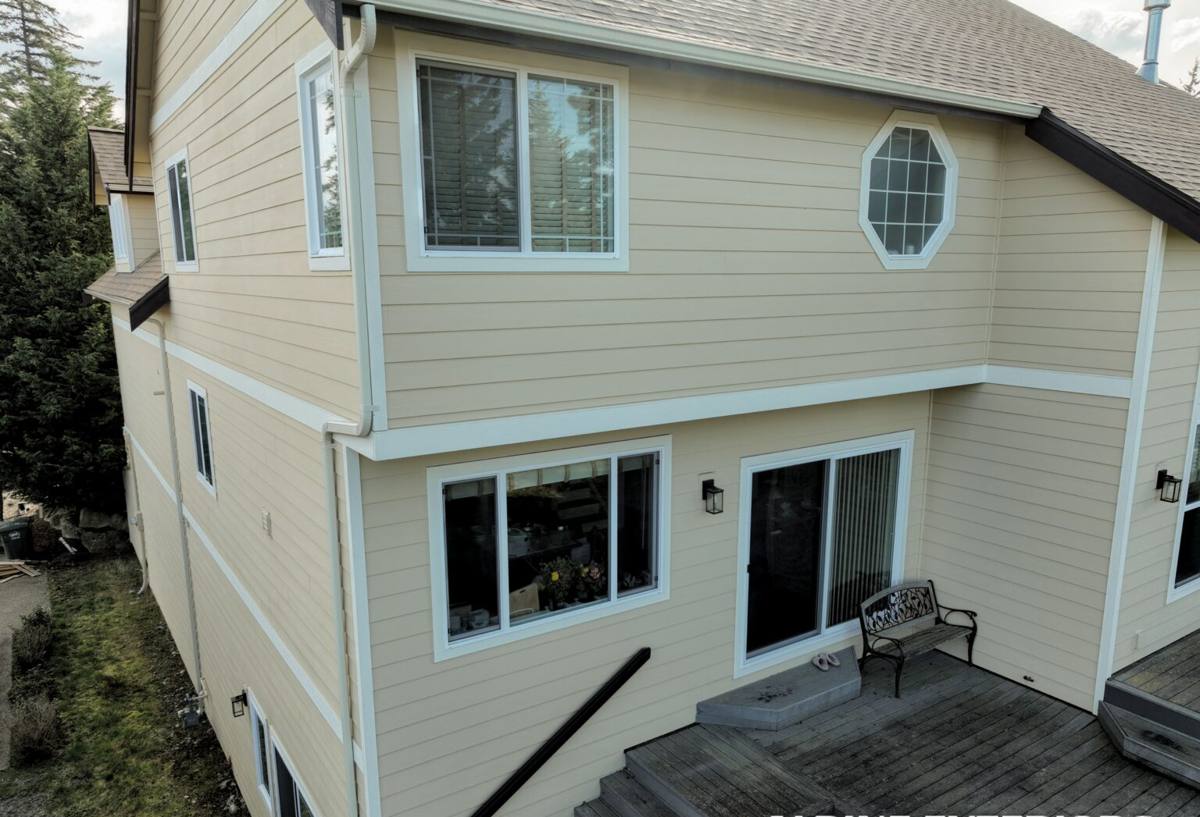
What the Local Climate Actually Does to a Deck
Salt Air
Salt-laden air corrodes exposed metal fasteners, brackets, and connectors faster than it would inland. Cheap or under-spec hardware can start rusting and staining the deck surface within a couple of years. This is a fastener and flashing decision, not just a lumber decision — and it's one of the most common corners cut on decks that weren't built by someone used to coastal conditions.
Driving Rain
Wind-driven rain off the bay doesn't just fall straight down — it gets pushed sideways into ledger boards, stair stringers, and any spot where the deck meets the house. Without correct flashing and a slight drainage slope, water finds its way behind rim joists and siding, which is where rot actually starts. It's rarely the open, sun-exposed deck boards that fail first; it's the hidden framing and connection points.
Moss and Algae Season
Whatcom County's long stretch of overcast, wet months (roughly fall through spring) gives moss and algae plenty of time to establish on any deck surface that stays damp and shaded. Beyond being unattractive, a mossy deck surface is a genuine slip hazard on stairs and landings. Surface texture, gap spacing, and how much sun and airflow a deck gets all affect how fast this builds back up after cleaning.
What a Correctly Built Deck Looks Like Out Here
A deck built for Birch Bay Village conditions isn't a different style of deck — it's the same deck, built with a few details that matter more here than they would in a drier climate:
- Stainless steel or coated, corrosion-rated fasteners and structural connectors — not standard galvanized hardware that wasn't spec'd for a marine environment
- Ledger board flashing that actually directs water away from the house band joist, with a drainage gap rather than a sealed, trapped joint
- A slight, consistent slope away from the house so water doesn't pool against the structure
- Joist tape or a comparable protective layer on top of framing members, so the wood underneath the decking isn't sitting in standing moisture
- Board spacing and airflow underneath the deck sized to let the structure actually dry out between rain events, not just after the driest weeks of summer
- Decking material chosen with moss and algae growth in mind, not just looks
Skip any one of these and the deck can still look fine for a year or two — the problems that show up from cutting corners here tend to be structural and hidden, which is worse than a cosmetic issue you can see and fix early.
Decking Material Options for This Environment
There's no single "correct" material for every Birch Bay Village deck — it depends on budget, how much upkeep you want to do, and how the deck is used. Here's how the common options actually compare in this climate:
| Material | How It Handles Salt Air & Rain | Moss/Algae Behavior | Maintenance |
|---|---|---|---|
| Pressure-treated lumber | Holds up well if fasteners and flashing are correct; the wood itself is treated for moisture | Textured grain can hold moisture and moss if not cleaned regularly | Needs re-staining/sealing every 1-3 years to perform well long-term |
| Cedar | Naturally moisture- and rot-resistant, but still needs correct fastener and flashing detailing | Smoother surface sheds moss somewhat easier, but still needs periodic cleaning | Regular sealing to maintain color and moisture resistance |
| Composite decking | Doesn't absorb moisture into the board itself; performance depends on substructure being built correctly underneath | Some composite surface textures resist algae growth better than others — this varies by product line | Low — periodic washing, no staining or sealing |
| PVC decking | Fully moisture-resistant board material; substructure detailing still matters most for longevity | Generally sheds moss and algae well due to non-porous surface | Low — occasional washing |
We'll talk through these trade-offs honestly based on your budget and how much maintenance you actually want to keep up with — there's no product we push because it's easier for us to install. The framing and flashing underneath matter more to long-term performance than which decking brand sits on top.
Design Considerations Specific to Birch Bay Village
Beyond material selection, a few design choices matter more for homes in this area:
Wind Exposure
Depending on where your lot sits relative to the water and tree cover, wind can be a real factor in railing design, furniture placement, and even how open or wind-sheltered you want the layout to feel. We'll walk the site with you and talk through what actually makes sense for your specific lot.
Sun and Shade Patterns
Douglas fir and cedar cover in this area can put parts of a deck in shade most of the day, which slows drying time after rain and speeds up moss growth. Where reasonable, we'll factor tree cover and orientation into board spacing and layout so the deck isn't fighting the site conditions from day one.
Grade and Drainage
Coastal soils and yard grading around Birch Bay Village vary lot to lot. Before we finalize a footing and framing plan, we look at how water actually moves across your property so the deck isn't sitting somewhere that collects runoff.
Our Process for a Birch Bay Village Deck Project
- Site visit and honest assessment — we look at sun exposure, wind, grade, and how your house's existing flashing and siding meet the deck area before we recommend anything.
- Design and material conversation — we walk through decking material trade-offs, layout, railing style, and stairs based on how you'll actually use the space and your budget.
- Permitting — deck projects in Whatcom County typically require a permit depending on height and size; we handle that process rather than leaving it on you.
- Framing built to coastal spec — corrosion-rated hardware, correct ledger flashing, and drainage detailing as standard practice, not an upcharge.
- Decking installation — installed to the manufacturer's specifications for your chosen material, with attention to gap spacing for drainage and airflow.
- Final walkthrough — we go over basic care and what to expect from your specific material through the wet season before we consider the job done.
Why Hire a Crew That Already Works This Area
A contractor who mostly builds decks in drier inland conditions isn't necessarily going to under-build a Birch Bay Village deck on purpose — but they may not think to spec corrosion-rated hardware, or may not have a feel for how much drainage and airflow a substructure needs to actually survive the local moss season. Those aren't exotic techniques; they're just details that come from having built and later serviced decks in this specific environment.
We work exteriors throughout Whatcom County, and Birch Bay Village is an area we're in regularly. That matters less for bragging rights and more for practical reasons: we know what a deck around here looks like at year five and year ten, not just on installation day, and we build accordingly.
Maintaining Your Deck After It's Built
Whatever material you choose, a few habits go a long way in this climate:
- Sweep debris off the surface regularly, especially fallen needles and leaves that trap moisture against the boards
- Clean moss and algae buildup at the start and end of the wet season rather than letting it establish
- Check and clear drainage gaps between boards so water isn't pooling
- Inspect fasteners and connectors annually for early signs of corrosion or loosening
- Reseal or restain wood decking on the schedule appropriate to your product — don't wait until it's visibly failing
A deck built correctly for this climate still needs basic upkeep — it just won't punish you for a missed season the way an under-built one will.
Get a Free, No-Pressure Estimate
If you're planning a new deck or replacing one that's showing its age in Birch Bay Village, we're happy to come take a look, walk the site with you, and give you an honest read on what your lot and budget call for. There's no pressure and no obligation — just a straightforward conversation with a crew that already knows this stretch of coastline. Use the form below to request your free estimate.