 Birch Bay Exterior
 Window Replacement Built for Bellingham's Weather, Not a National Sales Script
Bellingham sits close enough to Birch Bay and the Strait of Georgia that homes here deal with a specific combination of stress most window installers never have to think about: salty marine air, wind-driven rain that hits siding sideways instead of straight down, and a wet season that stretches long enough to grow moss on anything that stays damp too long. A window that's rated fine for a dry inland climate can still fail here in five or six years if it wasn't installed with this weather in mind. That's the difference between a window replacement that lasts twenty-plus years and one that starts leaking, fogging, or sticking before the warranty paperwork is even filed away.
This page is specifically about window replacement for homes in the Bellingham area — not a general overview of every exterior service we offer. If you're noticing drafts, fogged glass, swollen wood trim, or windows that won't latch right anymore, here's what's actually going on and what a correct fix looks like.
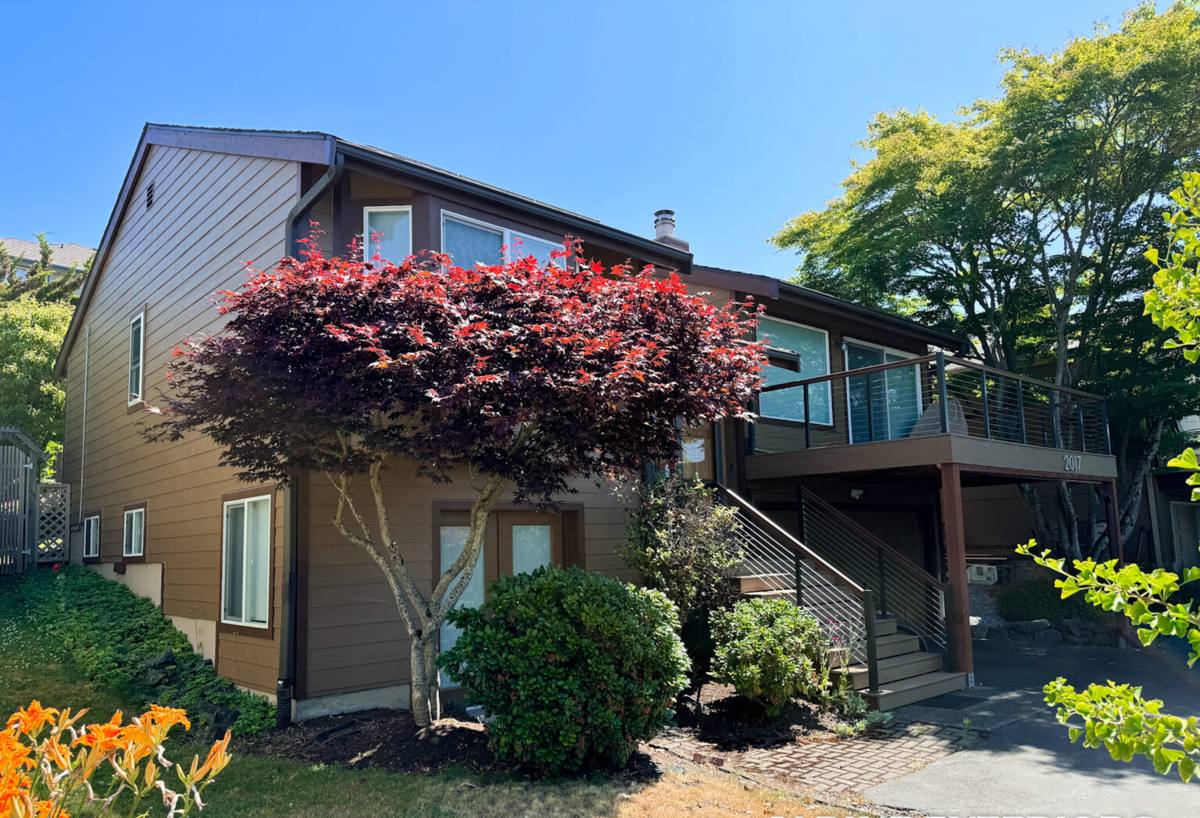
Why Whatcom County Windows Age Differently
Three regional factors do most of the damage to residential windows in this part of Washington:
- Salt-laden air corrodes aluminum hardware, cheap window balances, and unsealed fasteners faster than it would inland — even a few miles from the water.
- Driving rain off the Strait gets pushed horizontally against west- and south-facing walls, which means flashing and sill details matter more here than in a climate where rain mostly falls straight down.
- Extended moss and moisture season keeps wood trim, sills, and cladding around windows damp for weeks at a time, which is exactly the environment moss, rot, and mildew need to take hold.
None of this means Bellingham is an unusually hard place to keep a house in good shape — it just means window replacement has to account for moisture management first and cosmetics second. A beautiful window installed without correct flashing and drainage will still fail here.
Signs a Bellingham Home Actually Needs Replacement
Not every drafty window needs full replacement — sometimes it's a failed seal or worn weatherstripping. But certain signs point to the window unit itself being past the point of repair:
- Fogging or a visible haze between panes (the seal has failed and the gas fill or insulating air gap is gone)
- Soft or spongy wood at the sill or lower corners of the frame
- Visible gaps between the frame and the siding or trim, especially after a wind-driven rain event
- Windows that are difficult to open, close, or lock — often a sign the frame has swelled or shifted
- Moss or dark streaking building up on the sill or the wall directly below the window
- Condensation forming on interior glass regularly, even with normal ventilation
If you're seeing two or more of these on the same window, replacement is usually the more honest recommendation than another round of caulk and weatherstripping.
What a Correct Window Replacement Actually Involves
It Starts Below the Window, Not With the Window
The window unit itself is often the easy part. What actually determines whether a replacement lasts is the work most homeowners never see: the sill pan, the flashing sequence, and how water is directed back out of the wall assembly if it ever gets past the exterior surface. In a climate with this much driving rain, a sill pan with a back dam and proper flashing integration isn't optional — it's the difference between water draining out safely and water finding its way into the wall framing.
Fitting, Not Just Sizing
Replacement windows need to be sized and shimmed correctly so the frame doesn't rack or bind, and so the insulation around the perimeter isn't compressed or left with gaps. Gaps behind trim are a common source of the drafts homeowners complain about long after a "replacement" was done by someone in a hurry.
Sealing for Wind-Driven Rain, Not Just Appearance
Caulk alone doesn't hold up against sideways rain. Correct sealing uses the right materials at each layer — flashing tape, backer rod and sealant where appropriate, and a weather-resistive barrier integration that sheds water rather than trapping it against the frame.
Comparing Frame Materials for This Climate
There's no single "best" window material for every home — it depends on exposure, budget, and how much maintenance you want to take on. Here's an honest breakdown for Whatcom County conditions:
| Material | Upfront Cost | Moisture & Salt Air Performance | Maintenance | Best Fit |
|---|---|---|---|---|
| Vinyl | Lowest | Good — won't rot or corrode; seams can be a weak point if not installed well | Low | Budget-conscious replacement on most wall exposures |
| Fiberglass | Mid to high | Excellent — dimensionally stable, handles temperature and moisture swings without warping | Low | West/south exposures that take the brunt of driving rain |
| Wood-clad (exterior clad, interior wood) | High | Good if cladding and flashing are done right; the wood interior needs the exterior seal to hold | Moderate | Homes prioritizing interior wood appearance |
| Aluminum | Low to mid | Weaker in salt air — prone to corrosion and poor thermal performance unless thermally broken | Moderate to high | Limited use; we're selective about where we recommend it here |
Our standard is to steer most Bellingham homeowners toward vinyl or fiberglass unless there's a specific reason to go another direction — not because other materials can't work, but because these two hold up with the least maintenance burden against salt air and sustained moisture.
Our Process, Start to Finish
- On-site assessment — we look at each window's current condition, exposure direction, and any signs of moisture already in the wall assembly, not just the glass.
- Honest scope and estimate — you get a clear breakdown of what's being replaced and why, including whether any trim, sill, or sheathing repair is needed before new windows go in.
- Removal and inspection — once the old window is out, we check the rough opening for hidden rot or water damage before anything new goes in. This is often where problems that caused the original failure get found.
- Sill pan and flashing installation — built for wind-driven rain, not just a basic bead of caulk.
- Window installation and shimming — set level, plumb, and square, with insulation and sealing done in the correct order.
- Exterior trim and finish work — restoring or replacing trim so it sheds water rather than holding it against the frame.
- Final walkthrough — checking operation, seals, and finish with you before we consider the job done.
Questions Worth Asking Any Contractor Before They Touch Your Windows
- Do you install a proper sill pan and back dam, or just caulk and set the window?
- What happens if you find rot or water damage once the old window is removed?
- Are you licensed and insured to work in Washington, and can you provide proof?
- What's your plan for matching or restoring exterior trim after the new window is in?
- How do you handle warranty coverage — on the window itself versus on your installation labor?
- Have you worked on homes with similar exposure (west- or south-facing, close to the water) before?
If a contractor can't answer the first two questions clearly, that's worth paying attention to — the sill and flashing details are exactly what separates a replacement that lasts from one that doesn't in this climate.
Timing: When to Replace Windows in This Climate
Window replacement can be done at various points in the year, but a dry weather window makes for a cleaner, faster install with less risk of moisture getting into an open wall cavity during the work. We plan around forecasted dry stretches whenever possible, especially for homes with more exposed walls facing prevailing wind and rain. If your windows are actively failing, though, we'd rather get you scheduled and manage the weather around the job than have you wait out an entire wet season with a compromised window.
Why Local Experience in Bellingham and Birch Bay Actually Matters
A window that performs perfectly in a drier, inland climate can still underperform here if the installer isn't accounting for salt air corrosion on hardware, wind-driven rain against exposed walls, or the extended damp season that gives moss and mildew time to take hold. Crews who work this specific stretch of Whatcom County day in and day out make different calls on flashing details, sealant choice, and frame material — not because the products are different, but because the installation standard has to match what the weather actually does here, not what a spec sheet assumes.
If your windows are drafty, fogged, swollen, or just past their prime, we're happy to take a look and give you a straight assessment — no pressure, no upsell script. Fill out the form below for a free estimate, and we'll walk you through exactly what your home needs and why.