 Birch Bay Exterior
 Marietta's Coastal Exposure Puts Extra Demands on a Shingle Roof
Marietta sits close enough to the water that homes here deal with a different set of conditions than roofs just a few miles inland. Salt-laden air drifting off Drayton Harbor and the Strait of Georgia, driving rain that comes in sideways during winter storms, and a long, damp moss season that stretches from fall through spring all add up to more wear on a roof than the average manufacturer warranty assumes. Asphalt shingles remain one of the most practical roofing choices for this part of Whatcom County — they're versatile, cost-effective, and available in grades built for wind and moisture — but only when they're installed and maintained with this specific climate in mind.
A shingle roof that would perform fine in a drier, calmer region can fall short here if the installer treats Marietta the same as anywhere else. The difference shows up in ventilation choices, fastener material, flashing detail, and how the crew handles moss and shade on a property. This page covers what that actually means for a Marietta home, not generic roofing advice.
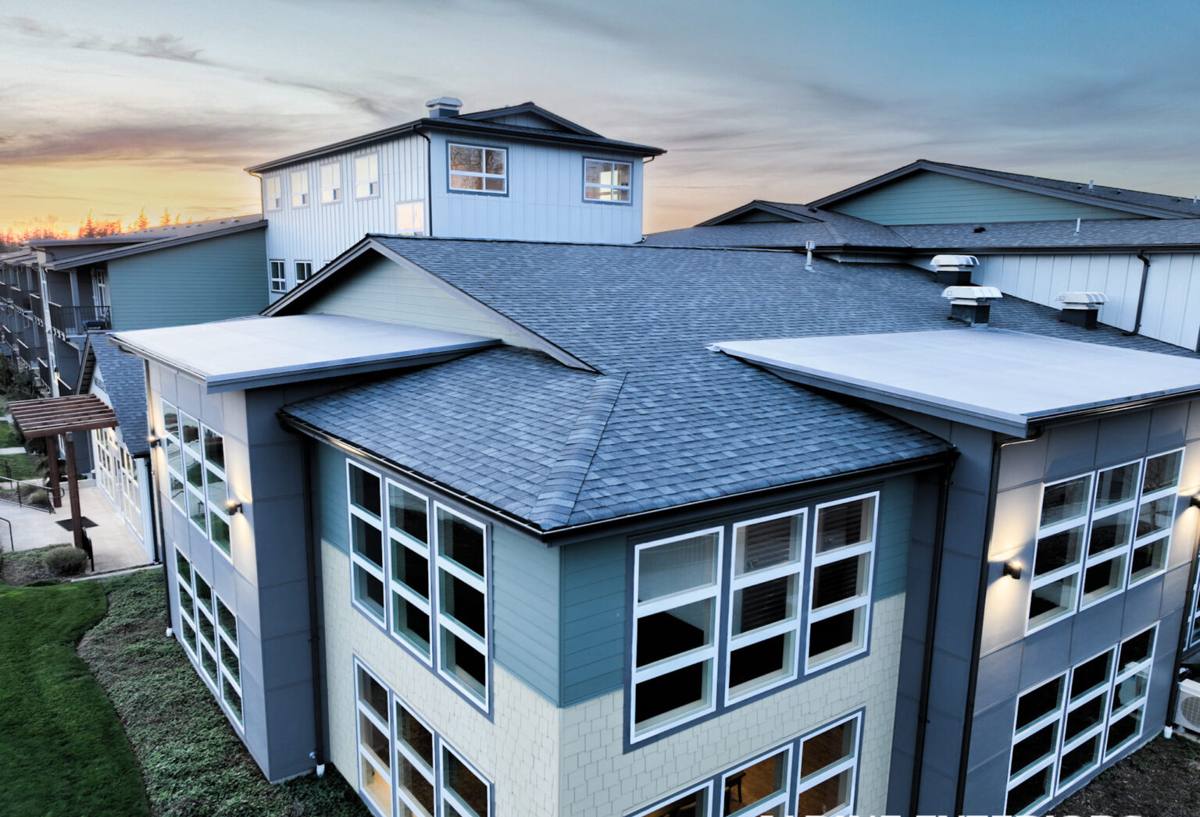
What Salt Air, Wind-Driven Rain, and Moss Actually Do to a Shingle Roof
Salt Air and Metal Components
Airborne salt from nearby saltwater accelerates corrosion on unprotected metal — nail heads, flashing, vent stacks, and gutter hardware are all exposed to it every day the roof is up. Standard electro-galvanized fasteners can start showing rust streaks years before a shingle roof's expected end of life in this kind of exposure. The fix isn't complicated, but it has to be chosen up front: corrosion-resistant fasteners and flashing rated for coastal exposure, not whatever is cheapest at the supply house.
Driving Rain and Wind-Driven Wetting
Storms moving through this part of Washington often bring rain at an angle instead of straight down, which pushes water sideways under shingle tabs, around valleys, and into any gap in the flashing that a calmer climate might get away with. Roofs here need tighter seals at every penetration and valley, and shingles rated for higher wind exposure hold their tab seal better through repeated storm cycles instead of lifting and loosening season after season.
Moss, Shade, and Trapped Moisture
Whatcom County's long wet season, combined with mature tree cover on many Marietta lots, creates ideal conditions for moss and algae to take hold on a north-facing slope or a shaded valley. Moss doesn't just look bad — it holds moisture directly against the shingle surface, works its way under tabs as it grows, and can lift granules loose as it's removed if a roof has gone untreated for years. Left alone long enough, a mossy roof sheds water more slowly and starts wearing from the inside of the shingle mat out.
What a Correct Asphalt Shingle Installation Looks Like
Tear-Off and Deck Inspection
A proper reroof starts with a full tear-off down to the deck, not a layover on top of old shingles. That's the only way to actually see the condition of the sheathing underneath — soft spots, old water staining, and rot don't show up until the old roofing is off. Any damaged decking gets replaced before anything new goes down; shingles installed over a compromised deck will fail early no matter how good the shingle itself is.
Underlayment and Ice-and-Water Barrier
Synthetic underlayment goes down as the primary water barrier beneath the shingles, with self-adhering ice-and-water membrane at eaves, valleys, and around penetrations — the spots most likely to see standing water or wind-driven wetting. In a climate with this much sustained rain, skipping or skimping on this layer is one of the most common causes of slow, hidden leaks that show up as ceiling stains a year or two later.
Attic and Roof Ventilation
Balanced intake and exhaust ventilation keeps the attic space close to outdoor temperature and controls moisture buildup from the inside. Poor ventilation traps humid air against the underside of the roof deck, which accelerates rot and, combined with shade and moisture from outside, gives moss and mildew even more reason to take hold. Ventilation is often the most overlooked part of a reroof, and it's one of the biggest factors in how long the shingles actually last.
Flashing Details
Step flashing at walls and chimneys, proper valley metal, and correctly lapped drip edge all matter more in wind-driven rain than they do in calmer climates. These are small metal pieces, but they're where the majority of real-world roof leaks originate — not from the shingle field itself.
Fastening and Shingle Selection
Corrosion-resistant nails, correct nail placement per the manufacturer's pattern, and a shingle product rated for the wind speeds this area actually sees round out a correct install. Cutting corners on any one of these shows up as a callback within a few years, not decades down the road.
Choosing the Right Shingle for a Marietta Roof
Not every asphalt shingle product is built the same way, and the right choice depends on budget, roof exposure, and how much maintenance a homeowner wants to do over the years.
| Shingle Type | Typical Lifespan | Wind Rating | Best Fit For |
|---|---|---|---|
| 3-tab (standard) | Around 20-25 years | Lower end of the range | Budget-focused reroofs on less exposed slopes |
| Architectural / laminate | Around 25-30+ years | Mid to high | Most Marietta homes — better wind hold and moisture resistance |
| Impact-resistant (Class 4) | Comparable to architectural, often with insurance discounts | High | Exposed lots, homeowners prioritizing long-term durability |
For most properties in this area, we lean toward architectural shingles rated for higher wind exposure — the extra upfront cost over 3-tab is modest compared to the difference in how the tabs hold up through repeated coastal storms. We'll walk through the actual products and warranty structures available for a given roof during the estimate rather than pushing one line across every job.
What Drives the Cost of a Reroof in This Area
Every roof is priced individually, but a few factors consistently move the number more than homeowners expect:
| Factor | Why It Matters |
|---|---|
| Roof pitch and access | Steeper roofs and difficult access slow the work and require more safety setup |
| Number of existing layers | Multiple layers mean more tear-off time and disposal cost |
| Decking condition | Rotted or soft sheathing found during tear-off has to be replaced before shingles go down |
| Shingle grade selected | 3-tab, architectural, and impact-resistant products carry different material costs |
| Ventilation upgrades needed | Adding or correcting intake/exhaust vents adds labor but pays off in roof lifespan |
| Valley and flashing complexity | More valleys, dormers, and penetrations mean more detail work per square |
We don't quote a number until we've actually been on the roof — anything given sight unseen is a guess, and guesses don't help anyone budget accurately.
Our Process From First Call to Final Cleanup
- On-site inspection: we get on the roof, check the deck condition where accessible, and look at ventilation, flashing, and any moss or wear patterns specific to the property.
- Written estimate: a clear breakdown of scope, materials, and price — no vague allowances buried in fine print.
- Scheduling around weather: reroofing work is planned around drier stretches whenever possible, since an open roof deck and incoming rain don't mix.
- Tear-off and deck repair: old roofing comes off, the deck gets inspected and repaired as needed before anything new goes down.
- Installation: underlayment, ice-and-water barrier, flashing, ventilation, and shingles installed to manufacturer specification.
- Site cleanup: magnetic sweep for stray fasteners and full debris removal before we consider the job finished.
- Final walkthrough: we go over the finished roof with the homeowner before closing out the job.
Maintenance That Actually Extends a Shingle Roof's Life Here
A well-installed roof still benefits from basic upkeep, especially given how much moss and moisture this area sees. A few habits make a real difference over the life of the roof:
- Keep gutters clear so water isn't backing up under the eaves during heavy rain
- Trim back tree limbs that shade a roof section and keep it damp longer than the rest of the roof
- Have moss treated before it spreads across a slope, rather than after it's established
- Check attic ventilation isn't blocked by insulation or debris
- Schedule a visual roof inspection after major windstorms, not just once a year
- Address small leaks or missing shingles promptly instead of waiting for the next dry season
Why It Matters That We Already Work in Marietta
A crew that's used to working on this stretch of Whatcom County knows what to expect before they get on the roof — which slopes tend to hold moss, how much wind exposure a given lot actually sees, and what fastener and flashing choices hold up against salt air over time. That familiarity shows up in fewer surprises during the job and a roof that's specified correctly the first time, rather than a generic install that has to be revisited a few years in. Roofing is a trade where the details determine whether a job lasts fifteen years or thirty, and those details change depending on where the house sits.
If you're dealing with an aging shingle roof, visible moss, or just want an honest read on where your roof actually stands, we're glad to take a look. Reach out for a free, no-pressure estimate using the form below.