 Birch Bay Exterior
 Asphalt Shingle Roofing Built for Ferndale's Climate
Ferndale sits close enough to the water that homes here deal with a mix of conditions most inland roofing crews rarely think about: salt-laced air rolling in off Birch Bay and the Strait, driving rain that comes in sideways during winter storms, and a moss season that can run nearly eight months out of the year. A shingle roof that's installed correctly for this stretch of Whatcom County looks a lot like one installed anywhere else in the Pacific Northwest at first glance — but the details underneath, and the maintenance it needs afterward, are not the same as a roof going up in a dry inland climate.
This page is about one job, done right, in one area: asphalt shingle roofing for Ferndale homes. Not a general overview of roofing services, not a sales pitch for a specific manufacturer — just what your roof actually needs here, what a correct installation involves, and why it matters that the crew doing the work already knows this stretch of coastline.
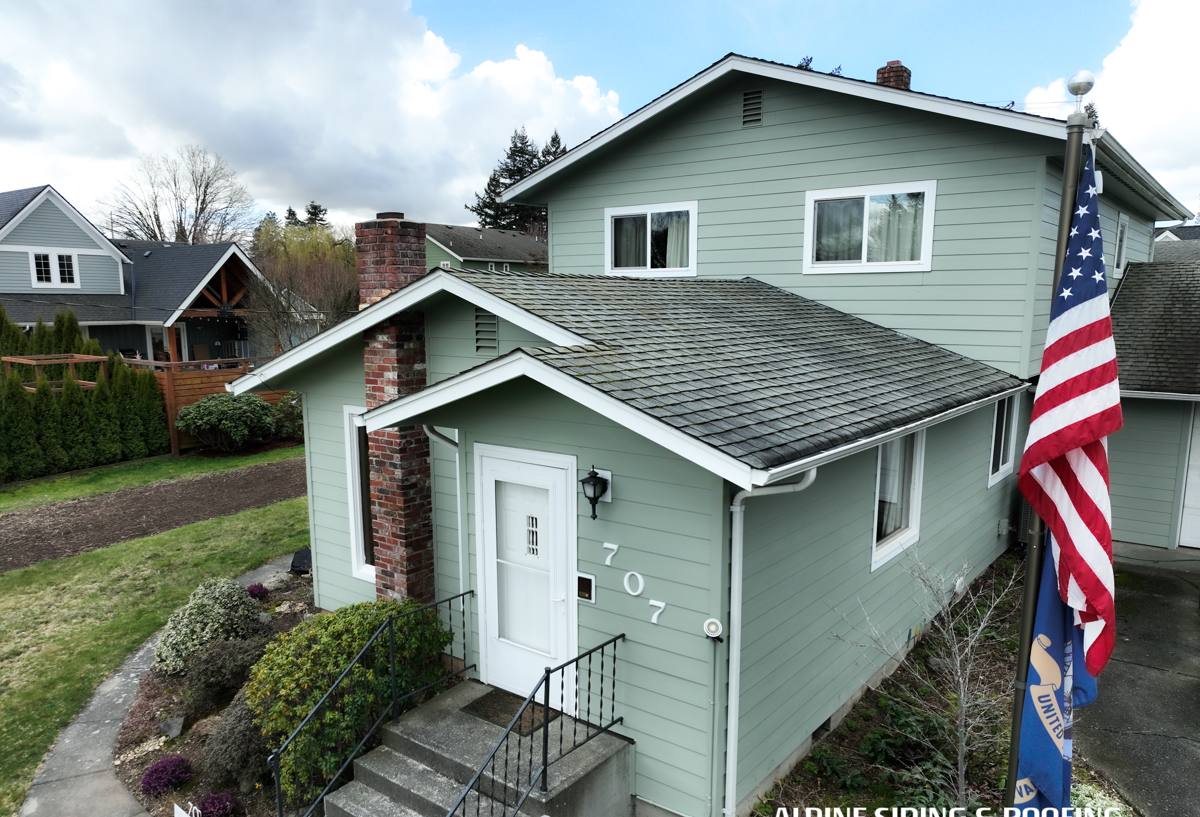
What Ferndale's Climate Does to a Shingle Roof
Salt Air and Moisture
Homes within a few miles of Birch Bay and the coastline get a steady dose of salt-laden moisture in the air. Salt doesn't damage asphalt shingles the way it corrodes bare metal, but it does accelerate wear on exposed metal components — flashing, drip edge, nail heads, and vent caps — if those parts aren't rated and installed for coastal exposure. Over years, that shows up as rust streaking, premature flashing failure, and small leak points that started as a corroded fastener.
Driving Rain
Winter storms here don't just drop rain straight down — wind-driven rain gets pushed sideways and even upward under shingle edges, which is exactly the condition that exposes a sloppy installation. Underlayment gaps, short nails, and poorly lapped flashing that would never leak in a calm rain will leak under wind-driven rain within a season or two.
Moss and Sustained Dampness
Shaded roof sections and north-facing slopes stay damp for long stretches, which is exactly what moss needs to establish. Moss doesn't just look bad — its root structure lifts shingle edges and holds water against the roof deck, and left unmanaged for a few seasons it will shorten the life of an otherwise sound roof. Ferndale's tree cover and mild, wet winters make this one of the more common issues we see on inspections.
What a Correct Installation Actually Involves
A shingle roof is a system, not a single product. Every layer matters, and skipping or shortcutting any one of them is where coastal Whatcom County roofs tend to fail early.
- Deck inspection and repair — any soft, delaminated, or water-stained decking gets replaced before anything goes back down, not covered over.
- Ice and water shield at vulnerable points — eaves, valleys, and roof-to-wall transitions get self-adhering waterproof membrane, not just standard felt.
- Synthetic underlayment across the field — provides a secondary water barrier and holds up better than old-style felt under damp, humid storage and installation conditions.
- Corrosion-resistant flashing and fasteners — a real requirement this close to the water, not an upgrade option.
- Proper nailing pattern and placement — correct nail count, placement in the manufacturer's nailing zone, and depth (not overdriven or underdriven) directly determines wind resistance.
- Balanced attic ventilation — intake and exhaust venting that lets moist air escape instead of condensing against the underside of the deck.
- Valley and penetration detailing — pipe boots, chimney flashing, and valleys done with enough overlap and sealant to handle wind-driven rain, not just straight-down rain.
Any one of these done poorly can undercut everything else. We've seen roofs with premium shingles fail in under ten years because of a skipped ice-and-water membrane at the eaves or an undersized ventilation setup — the shingle brand wasn't the problem.
Choosing the Right Shingle for This Area
Not every asphalt shingle product handles Ferndale's conditions equally well. We steer homeowners toward options with these traits, and away from products that create more maintenance burden than they're worth in a wet coastal climate.
| Factor | Why It Matters Here |
|---|---|
| Algae-resistant granules | Reduces (though doesn't eliminate) the dark streaking common in damp, shaded areas — helps but doesn't replace moss prevention |
| High wind rating | Storms off the Strait bring sustained wind events most winters; a higher rating means more nails per shingle and better sealing |
| Laminated/architectural profile | Thicker, multi-layer shingles resist wind lift and granule loss better than flat 3-tab designs over the long term |
| Manufacturer warranty structure | Matters less than correct installation — most shingle failures we inspect are workmanship issues, not product defects |
We install lines from established manufacturers rather than lesser-known budget products, mainly because parts availability, color-matching for future repairs, and warranty support all hold up better over a 20-30 year roof life. That's a practical standard, not a knock on any specific competitor's material.
Our Process for Ferndale Roofing Projects
- On-site inspection — we walk the roof (or use a drone where pitch or access makes that safer), check the deck from the attic side where possible, and look specifically for the coastal wear patterns described above.
- Written estimate — scope, materials, and pricing laid out clearly, with any deck repair contingencies explained up front rather than discovered mid-job.
- Tear-off and deck prep — full removal of old roofing, deck inspection, and repair of any compromised sheathing before anything new goes down.
- Underlayment and flashing installation — ice-and-water membrane at eaves and valleys, synthetic underlayment across the field, new flashing at all transitions.
- Shingle installation — correct nailing pattern, proper exposure, and manufacturer-spec starter courses and ridge caps.
- Ventilation check — intake and exhaust venting confirmed adequate for the attic volume, adjusted if needed.
- Final walkthrough — we go over the completed roof with the homeowner and answer questions before considering the job done.
Why a Local Crew Matters for This Job
Roofing crews that work primarily inland don't run into salt air corrosion or wind-driven rain intrusion often enough to build habits around them. A crew based in Birch Bay and working Ferndale regularly already knows which flashing details need extra attention on a coastal-exposure roof, which slopes on a given lot are going to stay damp and need moss management, and how local wind patterns off the water affect fastening and shingle choice. That's not a marketing point — it's the difference between a roof that's technically installed to code and one that's actually built for where it sits.
It also matters for warranty service and future maintenance. A crew that's still working in the area in five or ten years can come back for a flashing repair, a moss treatment, or a storm-damage inspection without you starting over with a new company each time.
Maintenance That Extends Roof Life in Ferndale
- Clear gutters and downspouts at least twice a year — clogged gutters back water up under the shingle edge, especially during heavy fall rain.
- Have moss treated (not power-washed, which can strip granules) before it establishes a thick mat, particularly on shaded, north-facing slopes.
- Trim back overhanging branches to reduce shade, debris buildup, and physical abrasion on the shingle surface.
- After major wind events, do a visual check from the ground for lifted or missing shingles rather than waiting for a leak to show up inside.
- Schedule a professional inspection every few years, especially once a roof passes the 10-year mark, to catch flashing or fastener wear before it becomes a deck-level problem.
What Roof Problems Commonly Look Like Here
Homeowners in Ferndale most often call us about one of a handful of issues, and most trace back to the coastal conditions above rather than simple age:
- Dark streaking or moss patches on shaded slopes
- Small ceiling stains after a wind-driven storm, often near a valley or chimney
- Granules collecting in gutters after a windy winter, signaling accelerated shingle wear
- Rust staining around vent boots or flashing on older roofs
- Curling or lifted shingle edges on the roof's windward side
None of these are unusual for a coastal Whatcom County roof, but none of them should be ignored either — catching them early is almost always cheaper than waiting for a full replacement.
Get a Straight Answer About Your Roof
If you're not sure whether your Ferndale roof needs a repair, a maintenance visit, or a full replacement, we're glad to take a look and give you an honest read on where it stands. There's a free, no-pressure estimate form below — reach out and we'll walk you through what we see and what it would take to fix it right.