 Birch Bay Exterior
 Deck Building in Terrell Creek: Built for Marine Air, Not Just Backyards
Terrell Creek sits close enough to Birch Bay and the Strait of Georgia that decks here take a different kind of beating than decks built twenty miles inland. It's not just rain volume — it's the combination of salt-laden air, near-constant humidity, and long stretches of gray weather that keep wood and hardware wet longer than they were designed to stay. A deck that's built the same way you'd build one in Spokane or Yakima will not hold up the same way out here. We build decks for this specific stretch of Whatcom County, and that shapes almost every material and fastener decision we make.
This page covers what a deck actually needs to survive Terrell Creek's climate, what a correct build looks like from the ground up, and how we run the job from first estimate to final walkthrough.
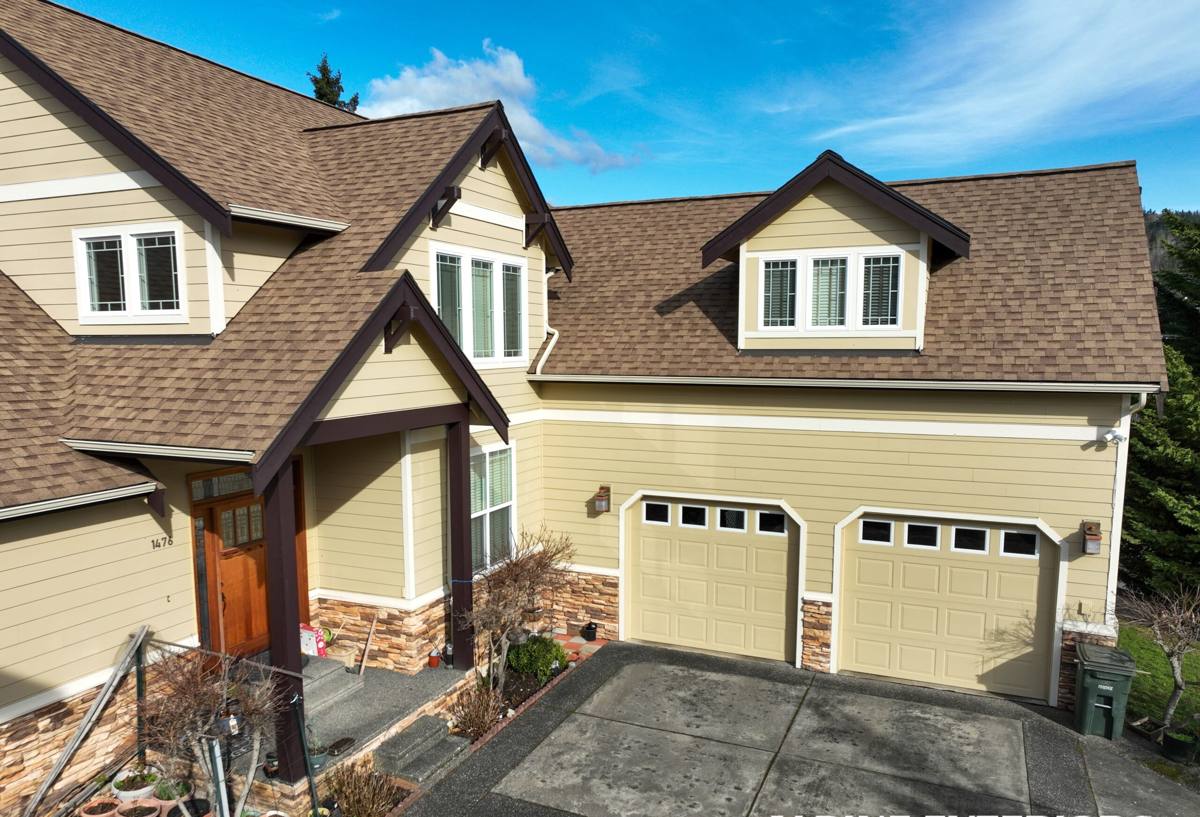
What the Terrell Creek Climate Does to an Ordinary Deck
Three things drive almost every deck problem we see in this area:
- Salt air corrosion. Even a mile or two off the water, airborne salt accelerates rust on fasteners, joist hangers, and railing hardware that would last decades elsewhere.
- Driving rain and standing moisture. Wind-driven rain gets up under railings and into end grain and joints that a vertical rain wouldn't reach. Anything without a way to shed or drain that water stays damp for days after a storm passes.
- A long moss and algae season. Shade, humidity, and mild temperatures mean moss and algae can establish on horizontal wood surfaces almost year-round, not just in a short "wet season." Once established, that growth holds moisture against the deck boards and accelerates rot underneath it.
None of these are dramatic, one-time failures. They're slow, cumulative damage — a fastener that rusts a little more each year, a joist that stays 2% wetter than it should for months at a stretch. That's exactly why the details matter more here than in a drier climate: small shortcuts compound.
Decking Material Comparison for Salt-Air Exposure
There's no single "best" decking material — every option is a trade-off between upfront cost, maintenance, and how it behaves in a wet, salty climate. Here's how the common choices stack up for a Terrell Creek property specifically.
| Material | Moisture/Salt Behavior | Maintenance | Honest Trade-Off |
|---|---|---|---|
| Pressure-treated fir/hem-fir | Treated core resists rot, but cut ends and fastener holes need re-sealing | Annual cleaning, re-stain/seal every 2-3 years | Lowest upfront cost, but the most maintenance-dependent option long-term |
| Cedar | Naturally rot- and insect-resistant; still needs finish to hold color and shed water | Cleaning plus finish renewal every 2-3 years | Good look and feel, but softer — dents and wears faster in high-traffic areas |
| Composite (capped) | Excellent moisture resistance; won't absorb water or rot | Periodic washing to keep moss/algae from gripping the surface texture | Higher upfront cost, but far less time spent on upkeep over the deck's life |
| Uncapped/older-generation composite | Can absorb moisture at cut edges and fastener points over time | Moderate — needs edge sealing we handle during install | We use it selectively and only with proper edge treatment, not as a default |
For most Terrell Creek homeowners, the real decision isn't "which material is best" — it's "how much maintenance am I actually going to keep up with." We'll walk through that honestly during your estimate rather than pushing whatever has the best margin.
The Substructure Is Where Most Deck Failures Start
Homeowners usually ask us about decking boards first, but the framing underneath is what actually determines how long a deck lasts. We see the same failure pattern repeatedly on older decks in this area: the boards on top look fine, but the joists, ledger board, and posts underneath are compromised because water got trapped where it couldn't dry out.
A correct substructure for this climate includes:
- Ledger board flashing that actually sheds water away from the house rim joist, not just a bead of caulk
- Joist tape or cap flashing on every joist top, so fastener penetrations don't become entry points for water
- Proper footing depth and post bases that hold posts up off standing water, not buried in contact with wet soil
- Adequate airflow underneath the deck so the framing can actually dry between rain events, instead of staying damp for weeks
None of this is visible once the deck is finished, which is exactly why it's tempting to skip. It's also exactly why it matters — a deck with a corroding ledger connection is not something you can fix later without tearing the surface back off.
Fasteners, Flashing, and Hardware That Actually Hold Up
Salt air is hard on metal, and a lot of deck hardware that's rated "exterior grade" is really rated for inland exterior use, not coastal exposure. We spec stainless steel or heavy hot-dip galvanized fasteners and structural hardware for Terrell Creek builds, not the standard coated screws and hangers that are fine sixty miles east but start showing rust streaks here within a couple of years.
The same goes for railing hardware and any structural connectors — post-to-beam brackets, hurricane ties, joist hangers. These carry real load, and a corroded connector isn't just cosmetic; it's a structural liability over time. It costs more upfront to spec the right hardware. It costs far more to replace a railing system or re-flash a ledger board five years early because the fasteners gave out first.
Our Deck Building Process From Design to Final Walkthrough
1. On-Site Assessment and Design
We walk the site, talk through how you'll actually use the space, and account for drainage, slope, and sun/shade exposure specific to your lot. In Terrell Creek, that assessment always includes where prevailing wind and rain will hit the structure hardest.
2. Material and Layout Selection
We go over the decking, railing, and hardware options above in plain terms — cost, maintenance, and how each performs in this climate — so you're choosing based on real trade-offs, not a sales pitch.
3. Permitting
We handle the permit application and coordinate any required inspections through Whatcom County so you don't have to chase paperwork.
4. Framing and Substructure
This is the stage described above — flashing, joist protection, footings, and hardware. It's also the stage where inspections happen, and we don't cover it up until it's been checked.
5. Decking, Railing, and Finish Work
Boards, railings, stairs, and any finish or sealant go on last, with attention to gaps and fastener placement that allow for drainage and seasonal wood movement.
6. Final Walkthrough
We walk the finished deck with you, point out anything you should know about care and maintenance for your specific materials, and answer questions before we call the job done.
Permits, Setbacks, and Whatcom County Requirements
Most new decks and significant deck rebuilds in Whatcom County require a building permit, and setback rules can affect how close a deck can sit to property lines or, depending on the parcel, shoreline and critical area buffers. Requirements vary by property, and we don't guess on this — we confirm what applies to your specific lot before finalizing a design, and we handle the permit submission as part of the job rather than leaving it on you.
Keeping a Terrell Creek Deck Ahead of Moss and Rot
Even a well-built deck needs some seasonal attention in this climate. A simple maintenance rhythm makes a real difference in how long the structure lasts:
- Sweep debris off the deck surface regularly — trapped leaves and needles hold moisture and feed moss growth
- Rinse or gently wash the surface at least once or twice a year to knock back early moss and algae before it establishes
- Check that gaps between boards are clear so water can drain through instead of pooling
- Inspect railing posts and stair connections annually for movement or rust staining around hardware
- Re-seal or re-stain wood decking on the schedule appropriate to that material — don't wait until it's visibly gray and dry
- Keep an eye on the area underneath the deck for standing water or poor airflow, especially after a wet winter
None of this is complicated, but skipping it is the single biggest reason decks in this area age faster than they should.
Why Local Deck-Building Experience Matters in Terrell Creek
A lot of the decisions on this page — hardware grade, flashing detail, material trade-offs — aren't things you'd know to ask about unless you'd already seen what goes wrong without them. That's the value of a crew that already works this specific area: we're not learning how salt air and moss season affect a deck on your project. We build to that standard by default, because we've seen what happens when a deck isn't built for it.
If you're planning a new deck or looking at repairing or replacing one in Terrell Creek, we're happy to take a look and give you a straightforward, no-pressure estimate. There's a form below — reach out and we'll go from there.