 Birch Bay Exterior
 James Hardie Siding for Sumas Homes
Sumas sits inland in our Whatcom County service area, but the weather that reaches it doesn't stay coastal-only — driving rain moves through in wind-driven bursts, salt-carrying marine air pushes further inland than most homeowners expect on stronger weather systems, and a long moss season settles into shaded and north-facing walls for much of the year. A Sumas home's siding is working harder than it looks from the street. We install James Hardie fiber cement siding throughout this part of our service area, and Sumas is one of the communities where we've put in enough jobs to know exactly what local exposure does to a wall assembly over time.
This page covers one thing specifically: James Hardie siding installation for Sumas properties — what the climate demands of it, what a correct installation actually involves, and why we send a crew that already knows this area rather than treating every job as a blank slate.
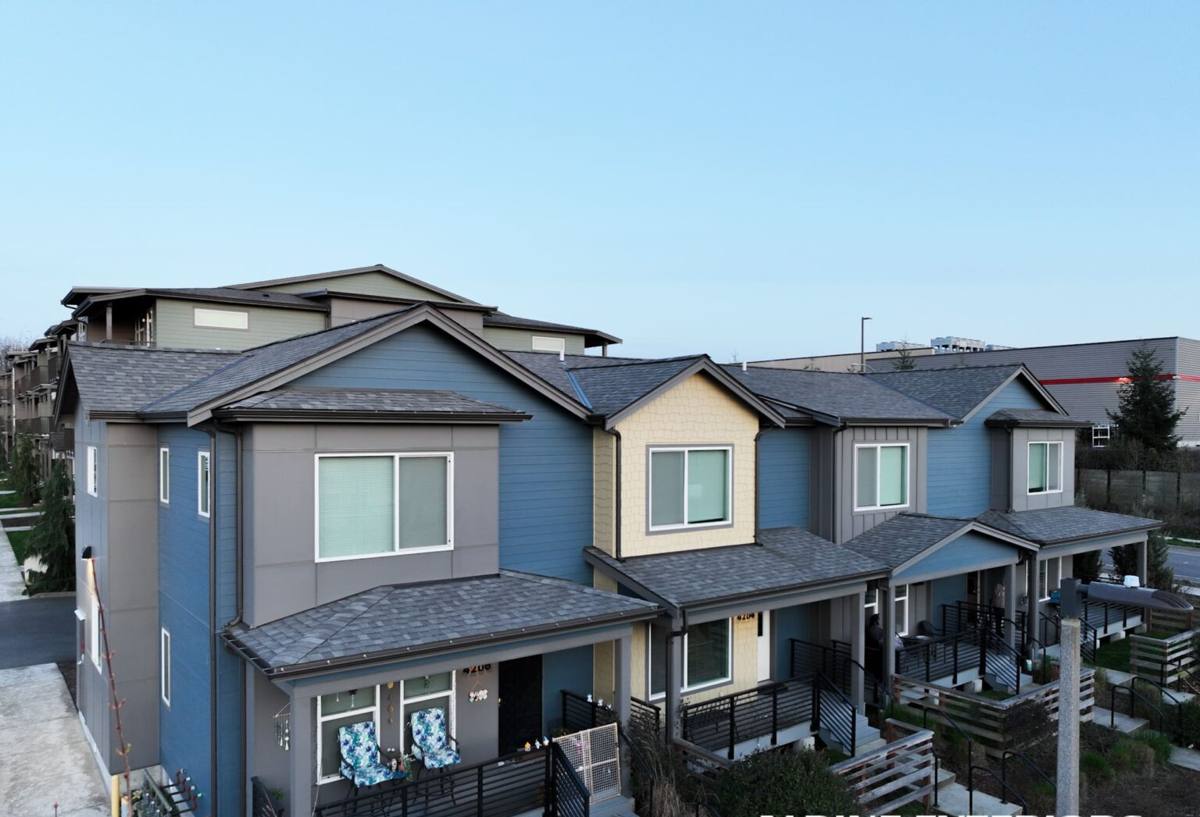
What Sumas Weather Does to Siding
Salt Air and Wind-Driven Moisture
Weather systems moving through this part of Whatcom County carry salt-laden air further inland than most homeowners assume, and combined with wind, that moisture doesn't just fall on a wall — it gets driven into it sideways. Fasteners, trim, and any seam that isn't detailed to shed water horizontally are the first places that exposure shows up as staining, corrosion, or soft spots.
Driving Rain and Wall Assembly Exposure
Rain here rarely falls straight down for long. Wind pushes it sideways into siding, corner boards, and window trim, which puts more load on lap joints, caulking, and flashing than a simple annual rainfall total would suggest. Siding that's only built and installed for vertical rain exposure tends to fail first at these horizontal contact points.
A Long Moss and Mildew Season
Mild temperatures and persistent dampness add up to a moss and mildew season that runs long in this region, especially on shaded or north-facing walls. It shows up as green staining or organic growth, and it's not just cosmetic — sustained growth holds moisture directly against the siding surface, which is exactly the condition that leads to hidden rot behind a wall that looks fine from ten feet away.
Why James Hardie Is the Only Siding We Install
We install James Hardie fiber cement exclusively — not LP SmartSide, not vinyl, not Cemplank, not Allura, not primed spruce, and not cedar. That's a professional standard we hold to on every job, including Sumas homes, because of what we've seen those other materials do under sustained regional moisture and wind exposure over time.
- Non-combustible core: Fiber cement doesn't feed a fire the way wood-based or wood-derived siding products can.
- Factory-applied ColorPlus finish: Color is baked on under controlled factory conditions instead of brushed on in the field, resisting fading and chalking far longer than site-applied paint.
- Climate-engineered HZ formulations: Hardie builds specific product lines for regions with sustained moisture exposure, which fits this area's driving rain and long wet season.
- Dimensional stability: Fiber cement doesn't swell, cup, or warp the way engineered wood siding can after repeated wet-season moisture cycles.
- Strong transferable warranty: Hardie backs correctly installed product with a solid warranty structure, giving homeowners real protection rather than a sales claim.
Each of the products we don't install has a place in the broader market, and plenty of homeowners elsewhere are satisfied with them. We made a professional call that one system we trust completely, installed correctly, serves a Sumas homeowner better long-term than a cheaper option that quietly shifts maintenance risk back onto them.
Choosing the Right Hardie Product Line
| Product | Best Use | Why It Fits a Sumas Home |
|---|---|---|
| HardiePlank lap siding | Most single-family homes | Traditional lap profile sheds wind-driven rain when overlap and flashing are done correctly |
| HardiePanel vertical siding | Gables, accent walls, modern styling | Clean lines that hold up well against sustained moisture without extra horizontal seams |
| HardieShingle siding | Craftsman-style homes, accent sections | Textured look without the moisture absorption of real wood shingle |
| HardieTrim boards | Corners, window and door casing, fascia | Factory finish resists the same wind-driven moisture that wears down painted wood trim |
The right profile and color come down to the individual home, but the underlying decision — Hardie, installed to spec — stays the same across every Sumas project we take on.
What Correct Hardie Installation Involves
Fastening and Clearance
Fastener type, spacing, and depth all affect how well siding holds up to wind load, and clearance from grade and hard surfaces keeps the bottom edge of the siding from sitting in standing moisture. Both details matter more on an exposed Sumas lot than on a sheltered, well-drained site.
Joints, Seams, and Flashing
Every lap joint, corner, and window or door opening is a place where wind-driven rain can get behind the siding if it isn't detailed correctly. That means proper overlap on lap siding, factory-mitered or correctly sealed corners, and flashing that actually sheds water rather than relying on caulk to hold the line.
Drainage Behind the Panels
A drainage plane behind the siding gives any moisture that does get past the surface a way out instead of trapping it against the sheathing. On a wall that takes this much sustained rain and humidity, that detail is what keeps a small amount of incidental moisture from turning into hidden rot over a few wet seasons.
A Hardie product installed loosely will still develop problems in this climate — the material only performs the way it's engineered to when every one of these details gets followed, not just the ones that are easy to see once the siding is up.
Repair, Partial Re-Side, or Full Replacement
Not every Sumas home with aging or damaged siding needs a full tear-off. A wind-damaged section, an isolated area of trim failure, or impact damage can often be repaired and matched into existing Hardie siding. But if water has been tracking behind the wall for a while, or the home still has an older, non-Hardie product reaching the end of its service life, patching it usually just delays a larger job while moisture keeps working on the sheathing underneath. We'll walk the home and tell you honestly which situation you're actually in before recommending anything.
Our Process for Sumas Siding Projects
- On-site walk-through of the existing siding, trim, and any visible moisture or growth issues
- Honest assessment of whether the home needs repair, partial re-siding, or a full replacement
- A written scope specifying product line, profile, color, and installation detailing before any work starts
- Installation following Hardie's published fastening, clearance, and flashing specifications
- A final walk-through so you can see the finished work and ask questions before we call the job done
Cost Factors for Hardie Siding in Sumas
| Factor | What It Affects | Why It Matters Here |
|---|---|---|
| Tear-off vs. overlay | Labor scope and substrate access | Tear-off reveals hidden moisture damage common under older siding in this climate |
| Substrate condition | Repair costs before new siding goes on | Long-term trapped moisture can rot sheathing that needs replacing before Hardie goes up |
| Product line and profile | Material cost and finish options | Lap, panel, and shingle profiles carry different material and labor requirements |
| Trim and detail work | Labor time around openings and corners | More window, door, and corner detail means more flashing and fastening work |
| Site access | Labor time and equipment needs | Rural and larger-lot properties can have different staging needs than in-town homes |
Exact pricing depends on the specific home, which is why we walk the property in person and give a real, written number instead of quoting off a generic price sheet.
Why a Local Crew Matters in Sumas
A crew that already works this part of our Whatcom County service area understands how salt-carrying air, wind-driven rain, and a long moss season behave on real walls here, not just on a manufacturer's spec sheet. That experience shapes decisions on install day — which wall orientations need extra flashing attention, how tight the fastening pattern should be for local wind exposure, and where a few extra minutes of detail work now saves a callback after the next storm season. We'd rather send people who've already solved these problems on homes near yours than have every crew relearn the same lessons on your project.
Before You Hire Anyone for Siding Work in Sumas
- Ask what siding product they install and why, and whether they'll put a written warranty behind it
- Confirm current Washington contractor licensing and active liability insurance
- Ask specifically how they detail flashing at joints, corners, and window and door openings
- Ask whether they've worked in your specific area recently, not just "the region" broadly
- Get a written scope of work — product line, profile, color, and timeline — before signing anything
If your Sumas home needs new James Hardie siding, a repair, or just an honest look at what's happening behind an aging wall, we're glad to take a look. Reach out using the form below to schedule a free, no-pressure estimate.