 Birch Bay Exterior
 Roofing in Semiahmoo Isn't Generic Roofing
Semiahmoo sits right where the Strait of Georgia meets Birch Bay, and that location shapes everything about how a roof ages here. Homes on this stretch of Whatcom County take a steady diet of salt-laden air, wind-driven rain that finds every weak seam, and a wet season that can stretch from October well into spring. A roofing system that performs fine twenty miles inland can fall behind fast this close to the water. When we replace a roof in Semiahmoo, we're not just swapping old shingles for new ones — we're building a system suited to a specific microclimate, on a spit of land where the weather comes from every direction at once.
This page is about one job, done right, in one place: full roof replacement for homes in and around Semiahmoo. Not a repair patch, not a general overview of roofing services — the real considerations that go into a correct tear-off and reinstall on this particular coastline.
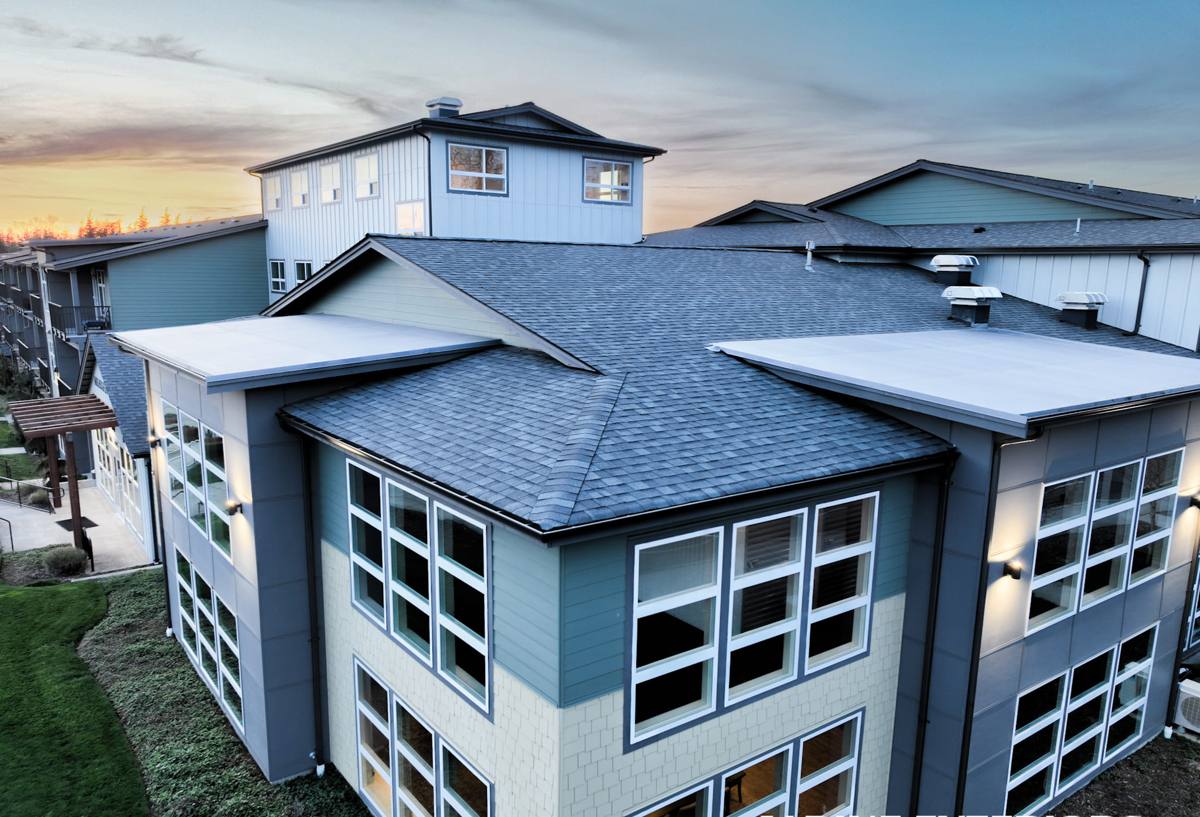
What Semiahmoo's Climate Does to a Roof
Salt Air and Metal Fatigue
Airborne salt accelerates corrosion on anything metal — flashing, fasteners, vents, gutters, even the metal components inside some shingle products. Standard fasteners and thin flashing that would last decades elsewhere can start showing rust streaks or pitting in a fraction of that time on waterfront and near-waterfront lots. This is one of the most overlooked factors in roof longevity out here, because the damage starts small and hidden, then shows up as leaks years later.
Driving Rain and Wind
Semiahmoo gets exposed to wind coming off open water, and that wind pushes rain sideways, not just down. Sideways rain finds gaps that gravity-only rain never would — under shingle tabs, around poorly sealed penetrations, at wall-to-roof transitions. A roof built for a sheltered inland lot doesn't automatically hold up to that kind of wind-driven exposure.
Moss and Prolonged Moisture
Whatcom County's long wet season keeps roof surfaces damp for extended stretches, and shaded, north-facing slopes barely dry out at all in winter. That's exactly the environment moss thrives in. Moss isn't just cosmetic — it lifts shingle edges, holds moisture against the roof deck, and works its way into seams over time. A roof replacement that doesn't account for moss risk from day one is inviting the same problem right back.
What a Correct Roof Replacement Involves Here
A proper tear-off and reinstall isn't just about the shingles you see. In a coastal, high-moisture environment like Semiahmoo, the details underneath matter more than the material on top.
- Full tear-off, not overlay: Roofing over old material traps moisture and hides deck damage — not acceptable on a roof that's already dealing with coastal humidity.
- Deck inspection and repair: Once the old roofing is off, we check the sheathing for soft spots, rot, or delamination before anything new goes down. This is the step you can't do from the ground, and it's the one that determines whether the new roof actually lasts.
- Ice-and-water shield at vulnerable zones: Eaves, valleys, and penetrations get self-adhering underlayment as a second line of defense against wind-driven rain, not just standard felt.
- Corrosion-resistant flashing and fasteners: Given the salt exposure, we specify materials suited to that environment rather than whatever's standard inland.
- Proper attic ventilation: Balanced intake and exhaust ventilation keeps moisture from condensing inside the attic, which matters even more when the outside air is already humid most of the year.
- Sealed penetrations: Every pipe boot, vent, and skylight curb gets checked and properly flashed — these are the most common leak points on any roof, and driving rain exploits them faster.
Choosing Materials for a Waterfront Microclimate
There's no single "best" roofing material for every home — the right choice depends on the home's exposure, roof pitch, budget, and how much long-term maintenance the owner wants to take on. Here's how the common options stack up specifically for Semiahmoo's conditions.
| Material | Salt Air Performance | Moss Resistance | Typical Lifespan | Maintenance Trade-Off |
|---|---|---|---|---|
| Architectural asphalt shingle | Good with corrosion-resistant flashing/fasteners | Moderate — benefits from algae-resistant granules | 25-30 years | Lowest upfront cost, periodic moss/debris cleaning recommended |
| Standing seam metal | Very good with marine-grade coatings and fasteners | High — sheds moisture, little for moss to grip | 40-60+ years | Higher upfront cost, installation sensitivity around fastener selection |
| Synthetic/composite shingle | Good | Moderate to high depending on product | 30-50 years | Mid-range cost, product-specific warranty terms |
| Cedar shake | Requires diligent maintenance near salt air | Lower — organic material holds moisture | 20-30 years with upkeep | Highest maintenance burden in this climate |
We don't push cedar shake on waterfront Semiahmoo homes as a rule — not because it's a bad product, but because organic material sitting in a persistently damp, salt-air environment demands a maintenance schedule most owners don't want to keep up with. That's an honest trade-off conversation we'll have with you, not a sales pitch either direction.
Why a Crew That Already Works Semiahmoo Matters
Roofing crews unfamiliar with waterfront exposure sometimes spec the same materials and details they'd use on a sheltered inland roof twenty miles away — and the roof underperforms because of it. A crew that's already done work in Semiahmoo knows which slopes hold moss longest, which fastener grades actually hold up to the salt exposure, and where wind-driven rain tends to find its way in on homes with this kind of coastal exposure. That local pattern recognition doesn't show up in a spec sheet — it comes from having been on these roofs before.
It also matters for permitting and inspection. Whatcom County has its own permitting process for reroofing, and a crew that's pulled permits here before moves through that process without delays that catch out-of-area contractors off guard.
Our Process for a Semiahmoo Roof Replacement
- On-site inspection: We walk the roof (not just look from the driveway) to assess deck condition, ventilation, flashing points, and moss/moisture patterns specific to your home's orientation and shading.
- Written estimate: A clear scope of work and cost breakdown — no vague allowances, no surprise add-ons buried in fine print.
- Material selection conversation: We walk through the trade-offs above based on your budget, roof pitch, and how much long-term maintenance you want to take on.
- Tear-off and deck assessment: Old roofing comes off, and we show you what we find underneath before closing anything up.
- Installation with coastal-grade details: Corrosion-resistant fasteners and flashing, proper underlayment at vulnerable zones, and ventilation balanced for the home.
- Final walkthrough: We go over the finished roof with you, including what maintenance (if any) it'll need going forward.
Signs a Semiahmoo Roof Needs Replacing, Not Patching
Not every roofing problem calls for full replacement, and we won't tell you it does when a repair is the honest answer. But there are signs that point toward replacement rather than another patch:
- Granule loss heavy enough that shingles look bald in patches, especially on the side facing prevailing wind and rain
- Multiple past repairs in different spots, suggesting the whole system is aging out rather than one localized issue
- Persistent moss growth that keeps returning after cleaning, especially on shaded slopes
- Visible rust or corrosion streaking from flashing or fasteners
- Soft spots or sagging noticeable from the attic or under foot on the roof deck
- Leaks appearing in new locations each wet season rather than staying isolated to one spot
If you're seeing one or two of these, a repair might still make sense. If you're seeing several at once, that's usually the roof telling you it's at the end of its useful life for this environment.
What Homeowners Ask Us Before Committing
Most Semiahmoo homeowners want to know how long the job will take, what happens if the crew finds deck damage once the old roofing is off, and whether the new roof will actually hold up better against the moss and moisture patterns they've already dealt with for years. Timeline depends on roof size and weather windows — Whatcom County's wet season can extend a schedule if we have to wait out storms for a safe, dry install. Deck damage, when we find it, gets priced and discussed with you before we proceed, not buried into a change order after the fact. And on performance, the honest answer is that no roof is maintenance-free in this climate, but the right material and installation details reduce how often you're dealing with moss, leaks, or corrosion compared to a roof that wasn't built with this coastline in mind.
If your roof is showing its age or you just want an honest read on where it stands, we're happy to take a look. Reach out for a free, no-pressure estimate using the form below — we'll walk the roof, tell you what we actually see, and give you a straight answer on what it needs.