 Birch Bay Exterior
 Roof Repair Built for Sandy Point's Coastline
Sandy Point sits right on the water in Whatcom County, and that location is exactly what makes roofing here different from roofing ten miles inland. Homes get hit with salt-laden air off the Strait of Georgia, wind-driven rain that finds its way under anything loose, and a moss season that runs longer than most homeowners expect. A roof that would coast along fine in a drier, more sheltered part of the county can develop real problems here within a few years if it isn't maintained with that exposure in mind.
We work on roofs throughout Birch Bay and the surrounding Whatcom County coastline, and Sandy Point's mix of older cottages, remodeled full-time residences, and vacation homes gives us a good picture of how coastal weather actually wears down a roof over time — not in theory, but in the failure points we see repeatedly on service calls.
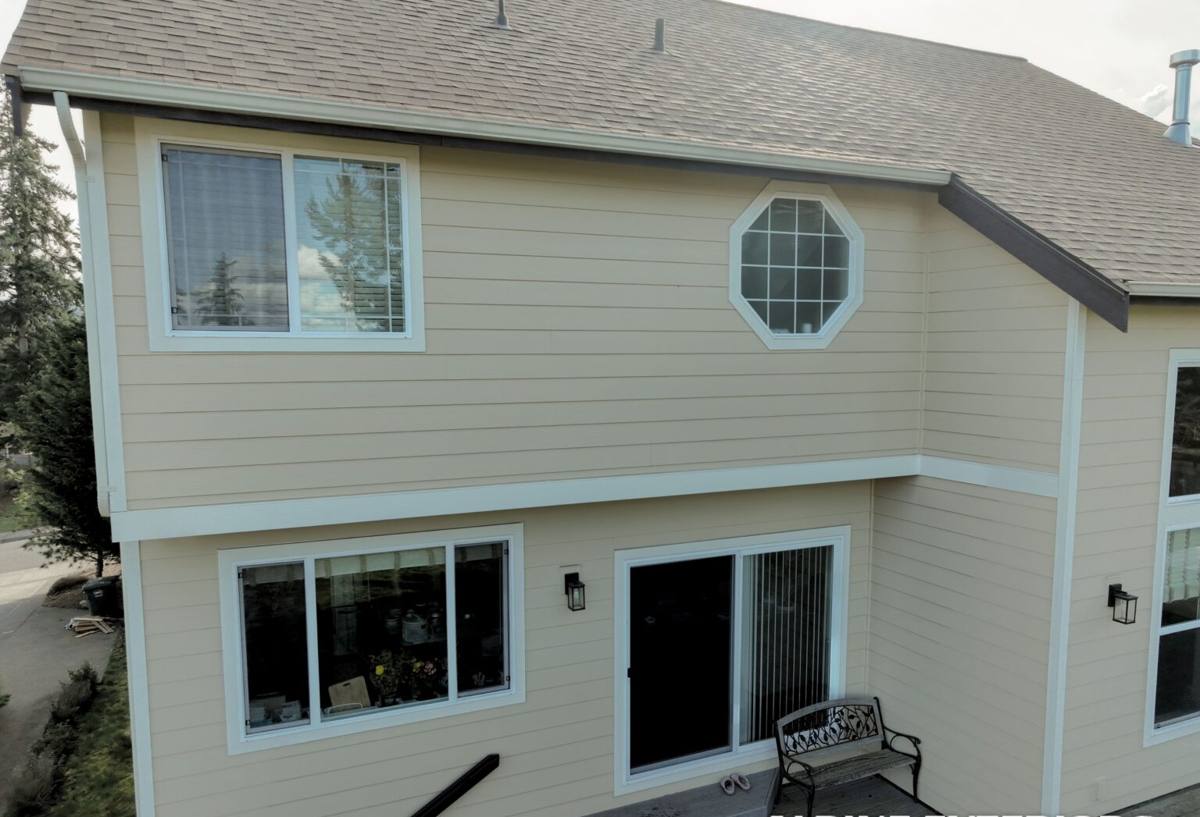
Why Coastal Exposure Ages a Roof Faster
Salt Air and Metal Fasteners
Salt in the air accelerates corrosion on anything metal — nail heads, flashing, gutter hardware, and the fasteners holding shingles or panels down. Once a fastener starts to corrode, it loses its grip and can back out slightly, which is often the first crack in an otherwise sound roof. This happens faster on homes closer to the water, and Sandy Point's waterfront and near-waterfront lots see it more than properties set back from the shoreline.
Wind-Driven Rain
Rain that comes in sideways off open water behaves differently than rain falling straight down. It gets pushed up under shingle tabs, into vent flashing, and around chimney and skylight edges that would stay dry in calmer conditions. A roof can look intact from the ground and still be letting water in at these transition points during a windy coastal storm.
A Long Moss Season
Whatcom County's wet, mild climate already favors moss growth, and Sandy Point's shaded lots and persistent damp air stretch that season out even further. Moss doesn't just look bad — it holds moisture against the roofing material, lifts shingle edges as it grows, and channels water sideways instead of letting it run off the way the roof was designed to shed it.
Common Repair Issues We See in Sandy Point
- Lifted or cupped shingle tabs along roof edges facing the water, from repeated wind-driven rain exposure
- Corroded or backed-out fasteners on older roofs, especially near valleys and ridge lines
- Moss colonies at the north-facing slopes and under tree canopy, with associated granule loss and soft decking underneath
- Failed flashing around chimneys, skylights, and roof-to-wall transitions where caulking has dried and cracked
- Clogged or sagging gutters that back water up under the first course of shingles
- Soft or spongy decking discovered during repair, where a slow leak went unnoticed for a season or more
What a Correct Repair Actually Involves
A proper roof repair isn't just patching the spot where water is showing up inside the house. Interior staining often shows up several feet from the actual entry point, since water travels along rafters and decking before it drips. A repair done right starts with tracing the leak to its actual source, not just covering the visible symptom.
On a coastal roof, that also means checking the surrounding area for related wear — if one section of flashing has failed from salt exposure, nearby flashing on the same slope is usually not far behind. We'd rather tell you that up front than have you call us back in eight months for the same problem two feet away.
Our Repair Process
- Inspect the roof from both the exterior and, where accessible, the attic or crawlspace to confirm the true source of any leak
- Check decking condition around the affected area — soft or delaminated decking gets replaced, not covered over
- Remove and replace damaged shingles, flashing, or underlayment with materials matched to your existing roof where possible
- Reseal and re-fasten with corrosion-resistant hardware suited to coastal exposure
- Clear moss and debris from the repair area and adjacent slopes so growth doesn't immediately undermine the fix
- Walk the full roof, not just the repair site, and flag any other areas showing early wear so you can plan ahead instead of getting surprised
Repair vs. Replacement: How We Help You Decide
Not every problem calls for a full re-roof, and not every repair is worth doing in isolation if the roof is already near the end of its service life. We look at the roof as a whole before recommending either path.
| Factor | Leans Toward Repair | Leans Toward Replacement |
|---|---|---|
| Age of roofing material | Under 15 years, or well-maintained architectural shingles | Original roof is 20+ years old with widespread granule loss |
| Extent of damage | Isolated to one slope, flashing point, or vent | Multiple slopes showing wear, or damage found in more than one repair visit |
| Decking condition | Solid decking found under the damaged area | Soft or delaminated decking across multiple sections |
| Moss history | First significant moss issue, caught early | Repeated moss damage with granule loss beneath the growth |
| Overall goal | Extend the life of a roof that's otherwise sound | Reduce long-term maintenance calls and improve coastal resistance |
We'll always give you our honest read on which category your roof falls into, along with the reasoning behind it, so the decision is yours to make with real information rather than a sales pitch.
Materials and Fasteners We Favor for Coastal Homes
For repairs on Sandy Point roofs, we lean toward corrosion-resistant fasteners and flashing rated for coastal or marine-adjacent exposure rather than standard-grade hardware. It costs a bit more up front, but standard fasteners are one of the first things to fail near the water, and replacing them twice ends up costing more than doing it right the first time. We also pay close attention to underlayment quality on any repair section, since a leak-prone roof usually has underlayment that's already past its useful life even if the shingles on top still look presentable.
We don't push products based on what's easiest to install or most profitable to sell. Our recommendations come down to how a given material actually holds up against salt air and sustained moisture — some products that perform well inland show more maintenance issues in this specific environment, and we'll tell you that directly rather than let you find out the hard way.
Moss Treatment as Part of Repair
Any repair on a moss-affected roof should include moss removal and treatment, not just a patch around it. Leaving moss in place after a repair means the same conditions that caused the original problem are still active. We physically clear moss growth rather than relying only on chemical treatments, since dead moss left on the roof still holds moisture. Depending on the roof's exposure and tree cover, we'll also talk through a realistic moss-prevention schedule so you're not dealing with the same issue again in a year or two.
Signs You Likely Need a Roof Repair Call
- Water stains on ceilings or upper walls, especially after a windy rainstorm off the water
- Visible moss patches, particularly on shaded or north-facing slopes
- Shingle granules collecting in gutters or at downspout outlets
- Curling, cupping, or lifted shingle edges visible from the ground
- Daylight visible through the roof deck from inside the attic
- Flashing that looks rusted, cracked, or separated from the roofline around chimneys and vents
- A musty smell in an upper room or attic that wasn't there before
Why a Crew That Already Works Sandy Point Matters
Roofing crews unfamiliar with this stretch of Whatcom County sometimes underestimate how much of a role salt exposure and moss play here compared to more sheltered inland neighborhoods. A repair approach that works fine in a dry, tree-free subdivision can fall short on a Sandy Point roof facing open water. Knowing which slopes typically take the worst of the wind-driven rain, which fastener grades actually hold up, and how aggressive the moss season really gets in this area changes how we approach even a simple repair.
We also know that access matters here — narrow lanes, waterfront setbacks, and seasonal occupancy patterns on some properties mean scheduling and site logistics aren't always straightforward. Working this area regularly means we plan for that instead of being caught off guard by it.
What to Expect When You Call Us
We start with a straightforward roof inspection, explain what we find in plain terms, and give you options rather than a single take-it-or-leave-it recommendation. If it's a small, contained repair, we'll say so. If we find signs of a bigger issue — soft decking, widespread flashing failure, a roof nearing the end of its lifespan — we'll walk you through why, show you what we're seeing, and let you decide how to move forward. There's no pressure to sign up for more work than the roof actually needs.
If you're dealing with a leak, spotting moss creeping across your roofline, or just want an honest read on how your roof is holding up against Sandy Point's coastal conditions, we're happy to take a look. Reach out for a free, no-pressure estimate using the form below.