 Birch Bay Exterior
 New-Construction Windows for Sandy Point Homes
Building a new home in Sandy Point puts you in one of the more exposed pockets of Whatcom County. The homes here sit close to the water, catch wind straight off the Salish Sea, and deal with salt-laden air, driving rain, and a long stretch of damp, low-light months every year. Windows going into a new build here have to be selected and installed with that exposure in mind from day one — not treated as an afterthought once the framing is closed in.
New construction is actually the best possible time to get windows right. Unlike a replacement job, where a crew is working around existing siding and finished walls, new construction gives us access to the open stud bay, the raw weather-resistive barrier, and the flashing plane before anything covers it up. Get that sequencing wrong here, and it's hidden behind siding and trim for the next twenty-plus years. Get it right, and the window openings become one of the most durable parts of the whole building envelope.
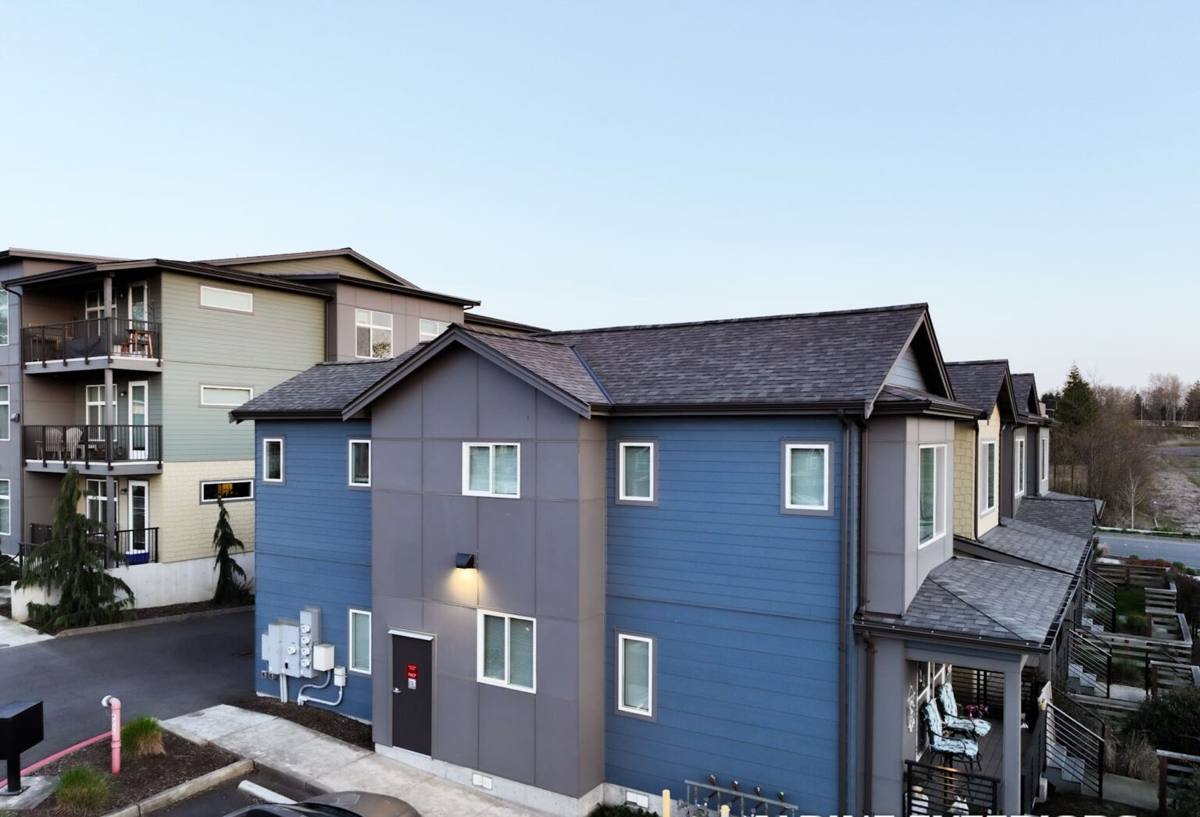
What Sandy Point's Climate Demands From New Windows
Sandy Point's location means new-construction windows are working against a specific combination of stresses that inland Whatcom County homes don't see nearly as hard:
- Salt air corrosion — airborne salt accelerates corrosion on fasteners, hardware, and unprotected metal components faster than it would a few miles inland.
- Wind-driven rain — storms off the water push rain sideways and upward into gaps that would stay dry in a calmer setting, which puts real pressure on flashing and sealant details, not just the glass and frame.
- Long moss and algae season — Western Washington's wet months keep moisture sitting on horizontal surfaces, including window sills and sash tracks, for extended periods, which invites moss, algae, and mildew growth if drainage isn't clean.
- Sustained humidity — consistent moisture in the air keeps wood trim and lower-grade sealants working harder, longer, than they would in a drier climate.
None of this means Sandy Point is a bad place to build. It means the window package and the install details need to be chosen for this specific exposure, not for a generic Pacific Northwest spec.
New Construction vs. Replacement: Why the Distinction Matters
New-construction windows are built with a nailing flange (also called a nail fin) around the perimeter of the frame. That flange gets integrated directly into the weather-resistive barrier and flashing system during framing, before siding goes on. Replacement windows, by contrast, are typically block-frame units designed to fit into an existing rough opening without disturbing the surrounding wall finish.
On a new build in Sandy Point, using true new-construction windows with a proper flange installation gives us a continuous, layered drainage plane — house wrap, sill pan, flange, flashing tape, and siding all overlapping in the correct shingle-style order so water is directed out and down, never trapped behind the window. This is the single biggest advantage of building new: we get to do the flashing sequence correctly the first time, in the open, instead of retrofitting protection around a window that's already sealed into a finished wall.
Where New-Construction Windows Fail If Rushed
Most window failures we see on coastal builds don't come from a bad window unit — they come from a rushed or incomplete installation around a perfectly good one. Missing sill pan flashing, reversed flashing tape lap order, gaps in the weather-resistive barrier at the corners, or standard fasteners used where corrosion-resistant ones were needed are common, quiet mistakes. None of them show up on day one. They show up as staining, soft trim, or interior moisture two or three winters later — right about the time driving rain off the water finds the weak point.
What a Correct Installation Involves
For a Sandy Point new build, our install sequence is built around keeping water out and letting anything that does get in drain back out, rather than pool against wood framing.
Flashing and Drainage
Every opening gets a sloped sill pan before the window is set, so any water that reaches the sill is directed outward rather than sitting against the framing. Flashing tape is applied in the correct shingle-lap order — sill first, then jambs, then head — so each layer sheds water onto the one below it. The head flashing includes a drip cap detail to break the water's path before it can run down behind the window.
Fasteners and Hardware
Because salt air accelerates corrosion, we use corrosion-resistant fasteners at window openings rather than standard carbon steel screws or nails, which can rust and stain siding or trim well before the window itself shows any wear.
Sealants and Backer Rod
Exterior sealant joints are backed with closed-cell backer rod and finished with a sealant rated for exterior, high-moisture exposure — not a general-purpose caulk that hardens and cracks under a few winters of wind-driven rain.
Weep Holes and Drainage Paths
Sliding and single-hung windows have weep holes built into the sill track by design. During install and again at final walkthrough, we confirm those paths are clear so seasonal debris and pollen don't dam them up and trap water inside the frame — a small detail that matters more here, given how long the wet season runs.
Choosing the Right Window Products for This Exposure
There isn't one "correct" window brand for a coastal build — there's a correct match between frame material, glass package, and the exposure the home will face. We walk through these trade-offs honestly rather than defaulting to whatever is easiest to install.
| Frame Material | Salt-Air / Moisture Performance | Maintenance | Typical Fit for Sandy Point |
|---|---|---|---|
| Vinyl | Doesn't corrode; UV-stable modern formulations hold up well in coastal sun and salt exposure | Low — occasional cleaning | Strong general-purpose choice for most openings |
| Fiberglass | Excellent dimensional stability; resists expansion/contraction from temperature and moisture swings | Low | Good for larger openings or spots with heavy wind load |
| Wood-Clad | Attractive but the wood core needs the exterior cladding and seals to stay fully intact to avoid moisture intrusion | Higher — finish and seals need periodic attention | Best reserved for protected elevations, not full water exposure |
| Aluminum | Strong but a poor thermal performer unless thermally broken; can be prone to condensation in this climate | Low | Occasional use, not typical for full-house residential glazing here |
Glass Packages Worth Discussing
Dual-pane glass with a low-E coating and argon gas fill is the baseline we'd recommend for a Sandy Point new build — it manages both the marine humidity and the temperature swings common to this stretch of coastline. Homes with more direct wind exposure or facing open water sometimes benefit from a heavier-duty glass package for wind load and sound control; we'll flag that during the estimate if your lot's orientation calls for it, rather than upselling it on every job.
Our Process for New-Construction Window Installs
- Rough opening review — we verify openings are square, plumb, and sized correctly before any window arrives on site.
- Weather-resistive barrier check — we confirm the house wrap is properly lapped and continuous around each opening.
- Sill pan installation — sloped pan flashing set at every opening before the window goes in.
- Window set and shim — unit is leveled, plumbed, and squared, then fastened with corrosion-resistant hardware.
- Flashing tape sequence — jambs and head flashed in proper shingle-lap order over the nailing flange.
- Interior and exterior sealant — backer rod and exterior-grade sealant applied at all joints.
- Weep hole and drainage check — every operable window confirmed clear before we leave the site.
- Final walkthrough — operation, locks, and seals checked on every unit before sign-off.
A Practical Checklist for Homeowners and Builders
If you're managing a new build in Sandy Point and want to sanity-check any window installer's work, ask about these specifics:
- Is a sloped sill pan being installed under every window opening, not just the exposed elevations?
- Are fasteners corrosion-resistant, given the salt air this close to the water?
- What flashing tape brand and lap sequence is being used, and does it carry a warranty compatible with the window manufacturer's?
- Are weep holes confirmed clear at final walkthrough, not just at initial installation?
- Does the glass package meet current Washington State Energy Code requirements for U-factor?
Why a Crew That Already Works Sandy Point Matters
A lot of window installation advice is written for a generic climate — dry summers, mild winters, no salt air. That advice doesn't fully hold up on a lot exposed to Sandy Point's wind and moisture. A crew that regularly works Whatcom County's coastal properties already knows to spec corrosion-resistant fasteners as standard, not an upgrade; already knows which sealants actually hold through a full wet season here instead of just a lab test; and already understands how sun, salt, and rain interact on this specific stretch of coastline. That's the kind of judgment that shows up years later, not on move-in day — either in windows that are still performing, or in ones that needed early repair because the install cut corners the climate wouldn't forgive.
What New-Construction Windows Typically Cost
Pricing on a new build depends on the number of openings, sizes, frame material, and glass package chosen — there's no single number that fits every house. In broad terms, here's how the major cost drivers break down.
| Cost Factor | Why It Moves the Price |
|---|---|
| Frame material | Vinyl is typically the most budget-friendly; fiberglass and wood-clad run higher |
| Window size and count | Larger openings and more total windows increase both material and labor cost |
| Glass package | Upgraded low-E coatings, gas fills, or wind-load-rated glass add cost over standard dual-pane |
| Opening complexity | Bay windows, custom shapes, and large sliding units take more labor than standard rectangular units |
| Site exposure | Full water-facing elevations may warrant upgraded flashing details or glass specs |
We'll always walk through these factors specific to your plans rather than quoting a flat per-window number that doesn't reflect your actual exposure and design.
If you're building new in Sandy Point and want windows installed the way this climate actually requires, we're happy to walk your plans and give you a free, no-pressure estimate — just fill out the form below.