 Birch Bay Exterior
 Why Ferndale Roofs Wear Differently Than Roofs Inland
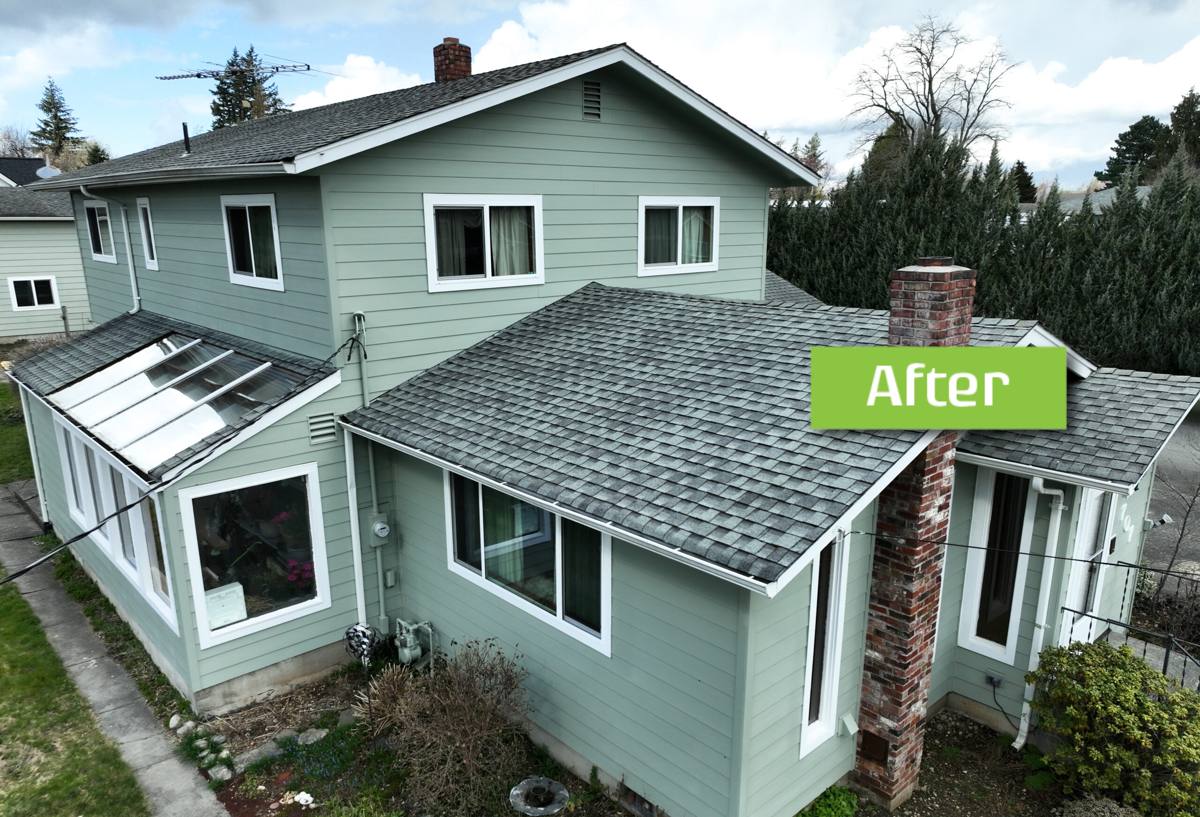
Ferndale sits close enough to the water that homes here take a different kind of beating than a roof twenty miles inland. Salt-laden air off the coast accelerates corrosion on fasteners, flashing, and any metal component that isn't rated for it. Driving rain, often pushed sideways by wind, finds every weak seam and undersized flashing detail a roof has. And Whatcom County's long, damp shoulder seasons mean moss and algae have months at a time to take hold on north-facing slopes and shaded valleys. None of this is unusual for western Washington, but it does mean a roof replacement done to a generic national standard often underperforms here within a few years. The right approach accounts for salt exposure, wind-driven rain, and moss pressure from the first shingle nail to the last ridge cap.
Signs Your Ferndale Roof Needs Replacing, Not Just Repairing
A lot of roofs get patched for years past the point where patching makes sense. Knowing the difference saves money in both directions — you don't want to replace a roof that has a few good years left, and you don't want to keep dumping repair money into one that's structurally done.
Age and material lifespan
Standard asphalt composition shingles in this climate typically run 18-25 years before granule loss and moisture cycling catch up with them, depending on the original installation quality and how much shade and moss exposure the roof gets. If your roof is in that range and due for its second or third repair in as many years, replacement usually pencils out better than continuing to chase leaks.
Visible warning signs
- Shingles that are cupping, curling, or losing granules in visible patches
- Moss or algae growth that comes back within months of cleaning
- Soft or spongy spots on the decking when walked (a sign moisture has reached the wood)
- Daylight visible through the attic roof deck, or water stains on attic sheathing
- Flashing around chimneys, vents, or valleys that's rusted, lifted, or missing sealant
- Granules collecting in gutters, especially after wind or heavy rain events
What a Correct Roof Replacement Actually Involves
A roof replacement isn't just stripping old shingles and nailing down new ones. The parts homeowners can't see — decking condition, underlayment, and flashing details — are what determine whether the new roof lasts its full rated life in this climate.
Tear-off and deck inspection
We remove the existing roofing down to the deck rather than layering over it. This lets us actually see the plywood or OSB underneath, which is the only way to catch rot or delamination before it becomes a bigger problem hidden under a new roof.
Underlayment matched to exposure
Given how much wind-driven rain this area gets, we don't treat underlayment as an afterthought. Self-adhered ice-and-water barrier goes in the vulnerable spots — eaves, valleys, and around penetrations — with synthetic underlayment across the rest of the field for the water resistance a felt underlayment can't match over the roof's lifespan.
Flashing done right, not just resealed
Reused flashing is one of the most common shortcuts in roof replacement, and it's one of the first things to fail near the coast. We install new step flashing, counter-flashing, and valley metal sized and sealed for this climate, rather than caulking over what's already there.
Ventilation that actually balances
Proper intake at the eaves and exhaust at the ridge keeps moisture from condensing inside the attic and keeps shingles from cooking from underneath in summer. A lot of older Ferndale homes have exhaust vents but little to no intake, which shortens roof life regardless of how good the shingles are.
Choosing a Roofing Material for This Climate
There's no single "best" roofing material — the right choice depends on your budget, how long you plan to stay in the home, and how much maintenance you want to take on. Here's how the common options stack up for coastal Whatcom County conditions.
| Material | Typical Lifespan Here | Moss/Algae Resistance | Maintenance Burden |
|---|---|---|---|
| Standard asphalt composition shingle | 18-22 years | Moderate — benefits from periodic cleaning | Low to moderate |
| Algae-resistant (copper-granule) shingle | 20-25 years | Better resistance to streaking and growth | Low |
| Metal roofing (standing seam) | 40+ years | Good, sheds moss more easily on steep slopes | Low, but fastener quality near salt air matters |
| Cedar shake | 20-30 years with upkeep | Requires active moss management | High |
We're generally cautious about cedar shake on homes with heavy shade and north-facing slopes in this area — it's a beautiful, traditional material, but it demands consistent moss removal and moisture management to hit its full lifespan, and that's an honest maintenance commitment worth going into with eyes open. For most Ferndale homeowners without unlimited maintenance time, an algae-resistant architectural shingle or a standing-seam metal roof offers the better balance of appearance, longevity, and upkeep.
Our Roof Replacement Process
- On-site assessment — we inspect the existing roof, attic ventilation, and decking condition, and take measurements for an accurate quote.
- Material selection — we walk through the honest trade-offs between shingle types, colors, and metal options for your specific roof exposure.
- Scheduling around weather — we plan tear-off days around forecast windows, since an open roof deck and driving rain don't mix.
- Tear-off and deck repair — old roofing comes off, decking is inspected, and any damaged sheathing is replaced before anything new goes down.
- Underlayment, flashing, and shingle installation — installed in the sequence and to the fastening pattern the manufacturer's warranty actually requires.
- Ventilation check and cleanup — we confirm intake and exhaust are balanced, then do a full magnetic sweep and debris cleanup of the property.
- Final walkthrough — we go over the finished roof with you before calling the job done.
Moss and Algae: Managing a Year-Round Reality
Whatcom County's damp shoulder seasons mean moss isn't a one-time problem you solve during a replacement — it's an ongoing condition of owning a roof here, especially on shaded or north-facing sections. A new roof gives you a clean start and, with the right shingle choice, better built-in resistance, but a little routine attention keeps it that way.
- Keep overhanging branches trimmed back to reduce shade and debris buildup
- Have moss physically removed (not scraped aggressively) rather than left to spread
- Avoid pressure washing shingles — it strips protective granules and shortens lifespan
- Clear gutters and valleys each fall so water doesn't pool against the moss line
- Consider zinc or copper strips near the ridge on moss-prone slopes as a preventive measure
Cost Factors in a Ferndale Roof Replacement
Every roof is different, and we don't quote sight-unseen numbers, but these are the main variables that move the price up or down.
| Factor | Effect on Cost |
|---|---|
| Roof size and number of slopes/valleys | More cuts, valleys, and penetrations mean more labor and flashing material |
| Current layer count and decking condition | Multiple existing layers or rotted decking add tear-off and repair time |
| Material choice | Standard shingle vs. algae-resistant shingle vs. metal changes both material and labor cost |
| Roof pitch and access | Steep or hard-to-access roofs require additional safety measures and time |
| Ventilation upgrades needed | Adding proper intake/exhaust venting is worth the modest added cost for roof longevity |
As a broad range, most Ferndale-area asphalt shingle replacements land somewhere in the mid-to-high five figures for an average-size home, with metal roofing running higher upfront in exchange for a much longer service life. We'll give you real numbers after we've actually looked at your roof.
Why a Crew That Already Works in Ferndale Matters
A roofing crew that regularly works Ferndale and the surrounding Birch Bay area already knows which details matter here — how much wind-driven rain a given roof orientation typically takes, where moss tends to build up fastest, and which flashing and fastener choices hold up against salt air instead of failing early. That's not something you get from a crew passing through on a one-off job. It also means we're not far away if a warranty question or a storm-related concern comes up after the work is done — we're a local outfit, not a name you found once and won't see again.
If your roof is showing its age or you just want an honest read on where it stands, we're happy to take a look. Request a free, no-pressure estimate using the form below and we'll walk the roof with you and give you a straight answer on what it actually needs.