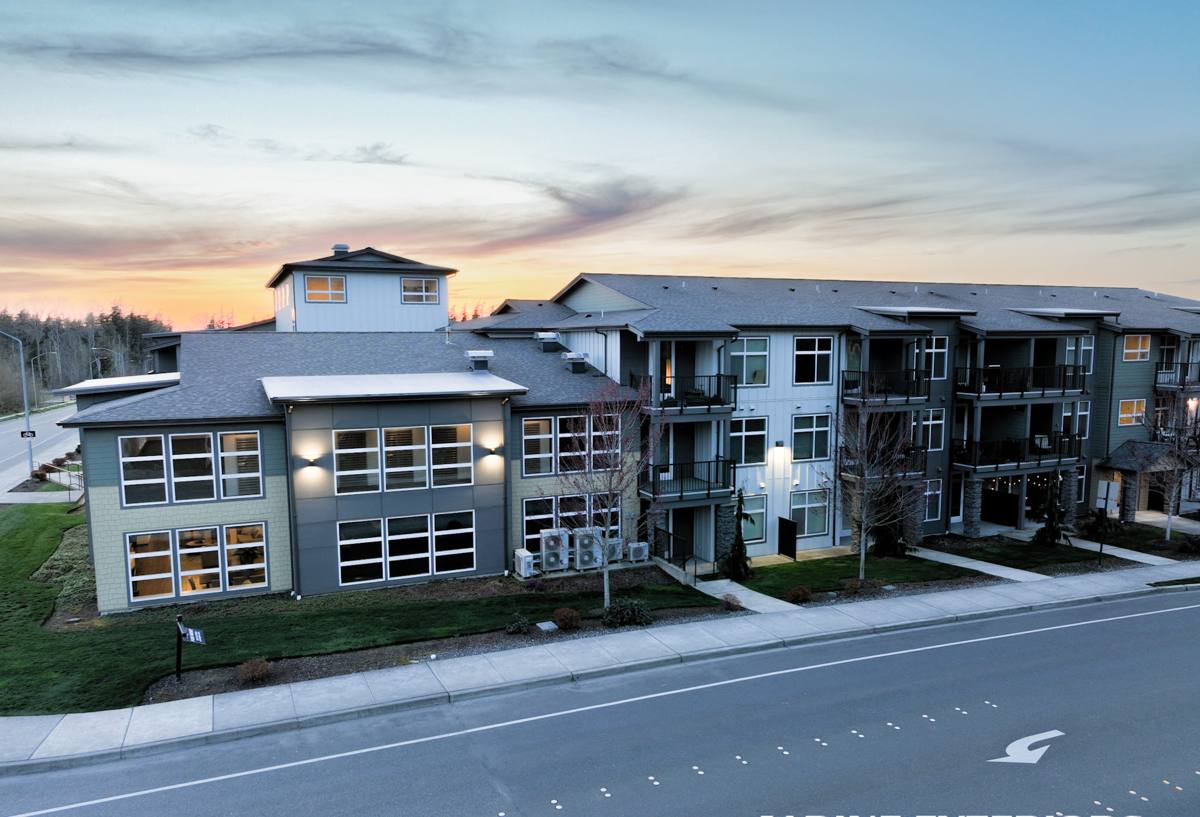
 Birch Bay Exterior
 Why Roofs in Custer Wear Differently Than Roofs Inland
Custer sits close enough to Birch Bay and the Strait of Georgia that homes here deal with a specific combination of stresses most inland Whatcom County roofs never see. Salt-laden air off the water works on exposed metal year-round, even on days when you can't smell the bay from your porch. Add in the driving, wind-pushed rain that comes through during fall and winter storms, and a roof here has to shed water sideways, not just downhill. Then there's the tree cover — a lot of Custer properties sit on larger, wooded lots with fir and cedar shading part or all of the roof, which means slower drying, more standing moisture, and a moss season that can run from October well into spring.
None of these factors is dramatic on its own. Together, over several years, they show up as granule loss, lifted shingle edges, rusted fasteners, and slow leaks that start small and get expensive if they're ignored. A roof repair out here isn't just patching a hole — it's addressing the specific way this climate attacks a roof, so the fix actually holds.
Signs Your Custer Roof Needs Attention Now
Most roof failures don't happen all at once. They start as small, easy-to-miss signals. If you're seeing any of the following, it's worth having someone look before the next big rain:
- Granules collecting in gutters or at downspout outlets after a storm
- Moss or dark algae streaking on north-facing or shaded slopes
- Shingle edges that look curled, lifted, or cupped rather than lying flat
- Rust staining around flashing, nail heads, or metal roof penetrations
- Water stains on an interior ceiling or upper wall, especially after wind-driven rain
- Daylight visible through the roof deck when viewed from inside the attic
- Gutters overflowing or fascia boards showing soft spots or paint failure
Any one of these can still mean a straightforward repair. It's when several show up together, or a leak has clearly been active for more than one season, that we start talking about the condition of the decking underneath and whether repair is still the right call.
The Repairs We Handle Most Often in This Area
Moss and Organic Growth
Moss doesn't just sit on top of shingles — it holds moisture against the surface and works root structures under the granule layer, which shortens the life of the material underneath. In shaded parts of Custer, we regularly repair sections where moss has lifted shingles enough for wind and rain to get underneath. Treatment and removal are part of the fix, but so is figuring out why that section stays wet longer than the rest of the roof.
Flashing and Penetration Leaks
Chimneys, vent pipes, skylights, and roof-to-wall transitions are the most common leak points on any roof, and they're where driving rain does the most damage here. Flashing that was installed correctly can still fail over time from thermal movement, sealant breakdown, or corrosion, especially with the salt exposure closer to the bay. Re-flashing a penetration correctly is usually a more durable fix than resealing the old flashing in place.
Wind and Storm Damage
Winter storms pushing in off the Salish Sea can lift shingles, tear ridge caps, and drive rain up under laps that are designed to shed water moving straight down, not sideways. After a significant blow, we often find damage that isn't visible from the ground — a few missing shingles or a lifted ridge cap that's letting water in but hasn't caused an obvious interior stain yet.
Gutter, Fascia, and Roof-Edge Wear
The edge of the roof takes constant abuse from both moisture and debris — fir needles and moss fragments clog gutters faster here than in more open, sunny areas. When gutters back up, water backs up under the drip edge and starts rotting fascia and the lower edge of the decking. This is one of the most preventable repair categories, and one of the most common because it's easy to overlook.
Repair or Replace? How We Make That Call Honestly
Not every roof problem needs a full replacement, and we don't default to recommending one. The decision comes down to a few honest questions: how old is the roofing material, how much of the roof is actually affected, and is the deck underneath still sound? Here's generally how we think through it:
| Factor | Favors Repair | Favors Replacement |
|---|---|---|
| Age of roofing material | Under 12–15 years, still within expected lifespan | Near or past manufacturer's expected service life |
| Extent of damage | Isolated to one slope, penetration, or edge area | Spread across multiple slopes or the whole roof |
| Decking condition | Solid, no soft spots or rot found on inspection | Soft, delaminated, or water-damaged sheathing |
| Leak history | First occurrence, caught early | Recurring leaks in different spots over time |
| Material availability | Matching shingle or panel still obtainable | Discontinued product, poor color/profile match |
When repair is the right call, we say so, and we explain why. When a roof has multiple issues stacking up, we'll walk you through what we're seeing and let you decide how to proceed — there's no pressure either direction.
Our Roof Repair Process, Start to Finish
1. Inspection and Diagnosis
We start on the roof itself, not just from the ground, because so many leak sources here — lifted shingles, failed flashing seals, moss undermining a seam — aren't visible from below. We also check the attic side when possible, since interior staining doesn't always show up directly above the actual leak point; water travels along rafters and sheathing before it drips.
2. Matching Materials
For a patch repair to look right and perform right, the replacement material needs to match the existing roof as closely as possible in type, profile, and color. When an exact match isn't available, we'll tell you upfront rather than installing something that will stand out or behave differently in weather.
3. The Repair
Depending on what we find, this might mean removing and replacing a run of shingles, re-flashing a penetration, resetting ridge caps, or rebuilding a section of rotted decking before reroofing over it. We don't seal over a problem we haven't actually diagnosed — a bead of sealant over a symptom tends to fail again within a season or two.
4. Cleanup and Walkthrough
We clear debris, old materials, and stray fasteners from the yard and gutters before we consider the job done, and we walk the repair with you so you know exactly what was fixed and why.
Materials and Methods We Rely On
Given the salt air and moisture this area sees, we're particular about a few things. For flashing, we favor corrosion-resistant metals over bare galvanized steel in exposed, coastal-influenced locations — it costs a little more up front but holds up far longer against the salt exposure common near Birch Bay. For sealants, we use products rated for the movement and UV exposure they'll actually face, not a generic caulk that looks fine for a year and then cracks.
We also steer away from quick "surface" fixes — tarring over a flashing joint, or layering roof cement over failed shingles — because they trap moisture rather than shed it, and they make the eventual real repair harder and more expensive. Our standard is to fix the actual failure point, even if that means a slightly larger repair than the homeowner expected walking in.
Keeping a Repaired Roof Healthy Between Visits
A good repair buys you years, but a bit of upkeep between visits stretches that further, especially with the tree cover and moisture common around Custer:
- Clear gutters and downspouts at least twice a year, more often under heavy fir or cedar cover
- Have moss-prone, shaded slopes treated on a regular schedule rather than waiting for visible growth
- Trim back overhanging branches that keep sections of the roof shaded and damp
- Check attic ventilation periodically — poor airflow traps moisture and accelerates decking and shingle wear from underneath
- Do a quick visual walk-around after any major windstorm, looking for lifted shingles or displaced ridge caps
What Affects the Cost of a Roof Repair Here
Repair costs vary a lot depending on what's actually wrong, but a few factors consistently move the price up or down:
| Cost Factor | Why It Matters |
|---|---|
| Type and location of damage | A single flashing repair costs far less than a multi-slope shingle replacement |
| Roof pitch and access | Steep or hard-to-reach roofs take longer and require more safety setup |
| Decking condition | Rotted sheathing found underneath adds material and labor beyond the surface fix |
| Material availability | Discontinued or specialty shingles/panels can add cost or require a larger match area |
| Season and weather window | Storm-damage repairs in wet weather sometimes need temporary protection first |
We give straight, itemized estimates before any work starts, so you know what you're paying for and why.
Why It Matters That We Already Work in Custer
A lot of Custer properties are on larger, wooded lots with well and septic systems rather than tight, curb-to-curb subdivisions. That means longer driveways, more tree cover, and roofs that don't get looked at as often simply because they're not visible from the street the way they would be in a denser neighborhood. Crews unfamiliar with the area sometimes miss how much shade and moisture a particular slope holds, or underestimate how much the salt air off Birch Bay accelerates corrosion on fasteners and flashing compared to roofs further inland in Whatcom County.
Working this area regularly means we've seen how different roof types actually hold up here over time, not just how they're rated on paper. That local pattern recognition is part of what keeps a repair from being a repeat visit.
If you've noticed a stain, a leak, or shingles that don't look right, we're glad to take a look. Fill out the form below for a free, no-pressure estimate on your Custer roof repair.