 Birch Bay Exterior
 Board & Batten Siding on a Peninsula That Doesn't Forgive Shortcuts
Point Roberts sits out on its own — a slice of Washington surrounded on three sides by water, exposed to wind and salt spray that most inland Whatcom County homes never have to deal with. Board and batten siding is a strong fit for the look many homeowners here want: clean vertical lines, a modern-farmhouse or coastal-cottage feel, and strong shadow lines that read well on both waterfront properties and homes set back in the trees. But the style only holds up long-term if the material underneath it and the installation details behind it are built for this specific environment. A board and batten look installed with the wrong material, or installed without the right prep, will show its age fast out here.
This page covers what board and batten siding actually needs to survive on a Point Roberts home, what a correct installation involves, and why we only use one material system to do it.
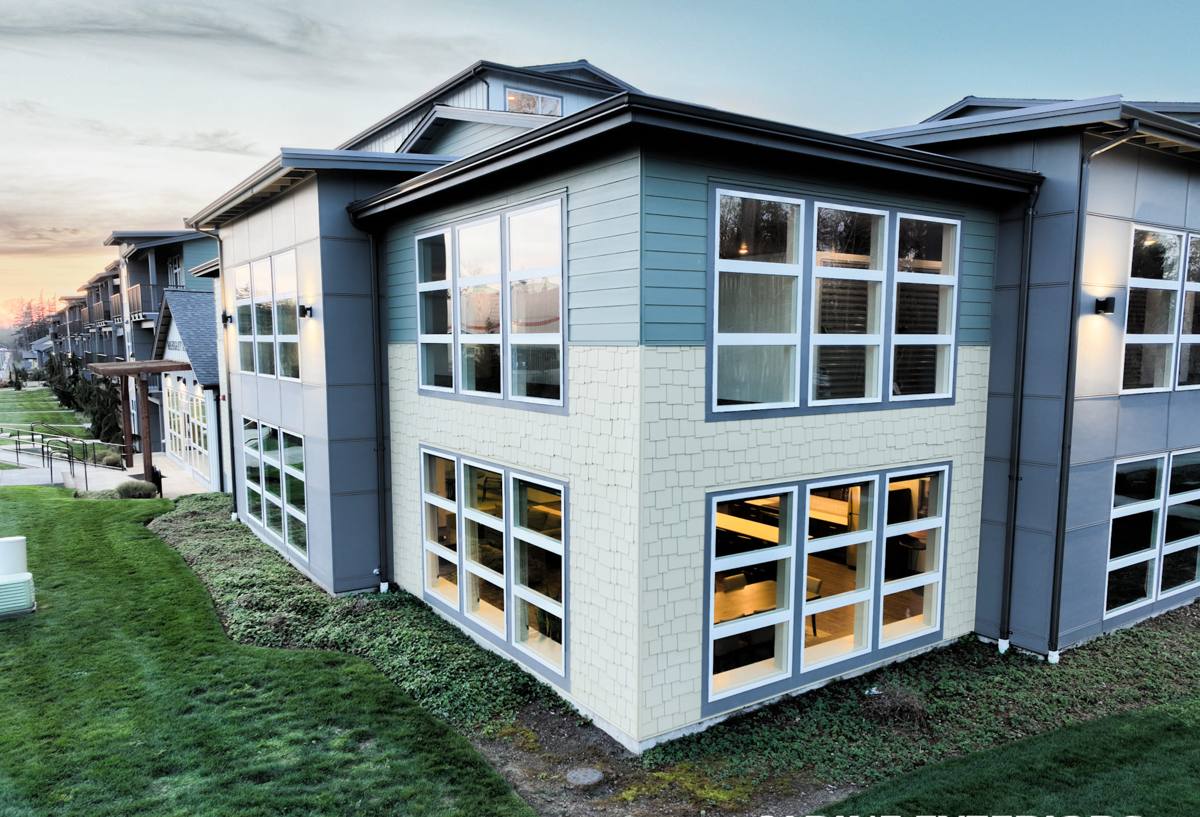
What Point Roberts' Climate Does to Siding
The Pacific Northwest coast throws a lot at exterior materials, and Point Roberts gets a concentrated version of it. Three factors matter most for board and batten siding specifically:
Salt Air
Airborne salt from the surrounding water accelerates corrosion on fasteners, staples, and any metal trim components, and it slowly breaks down finishes that aren't engineered to resist it. Board and batten siding has more seams and more exposed fastener locations per square foot than plain lap siding, which means more places for salt exposure to find a weak point if the wrong products are used.
Driving Rain
Wind-driven rain off the water doesn't fall straight down — it gets pushed sideways into wall assemblies, right at the vertical battens and panel joints where board and batten siding is most vulnerable to water intrusion if it isn't detailed correctly. A batten that isn't back-primed, or a joint that isn't flashed, becomes a water path in a hurry under these conditions.
A Long Moss and Mildew Season
Cool, damp conditions persist here for a good stretch of the year. Moss and mildew take hold on any siding material that holds moisture at the surface or in its substrate, and board and batten's vertical battens create horizontal ledges and shadowed areas where organic growth can get a foothold if the material and finish aren't resistant to it.
What a Correct Board & Batten Installation Actually Involves
Board and batten looks simple from the curb — vertical boards with battens covering the seams — but the installation details are what determine whether it lasts fifteen years or forty. On a Point Roberts home, we pay particular attention to:
- Drainage plane and rainscreen gap: A ventilated air gap behind the siding lets any moisture that does get past the cladding drain and dry out instead of sitting against the wall sheathing.
- Furring strip layout: Board and batten needs solid backing at every fastening point. Furring strips are laid out to match the batten spacing so every fastener lands in solid wood, not just sheathing.
- Fastener selection: Corrosion-resistant, coastal-rated fasteners driven at the correct spacing and depth — this matters more here than almost anywhere inland in the county.
- Joint and seam treatment: Butt joints get flashed, not just caulked. Caulk is a maintenance item; flashing is a permanent water management detail.
- Factory-finished edges: Field-cut panel edges get properly sealed per manufacturer spec so cut ends don't become the first failure point.
- Clearance details: Proper gaps at grade, roof lines, and trim so the siding never sits in standing water or against a surface that traps moisture against it.
Skip any one of these and the siding may look fine for a season or two before problems start showing up at the seams — which is exactly where they're hardest and most expensive to fix after the fact.
Why We Install James Hardie Fiber Cement — and Nothing Else — for Board & Batten
Board and batten siding can be built from several different materials, and we get asked about most of them. We've made a deliberate decision to install only James Hardie fiber cement for this application, including on Point Roberts homes, and it comes down to how each material actually performs against salt air, driving rain, and sustained moisture — not just how it looks on day one.
James Hardie's board and batten systems (built from HardiePanel vertical siding paired with HardieTrim battens) are engineered as fiber cement — a mix of cement, sand, and cellulose fiber that doesn't rot, doesn't support pest activity, and doesn't swell or warp the way wood-based products can when they take on repeated moisture. It's also non-combustible, which matters to a lot of homeowners in wildfire-adjacent regions of the Pacific Northwest regardless of coastal exposure. The ColorPlus factory finish process bakes color onto the panel under controlled conditions, which holds up to UV and salt exposure far better than a field-applied paint job, and it comes backed by a strong transferable warranty when the system is installed to Hardie's spec.
We don't install LP SmartSide, vinyl board and batten panels, Cemplank, Allura, or primed wood board and batten. Each of those has a legitimate place in the market, but each also comes with a real trade-off we're not willing to put our name on in this climate — whether that's a wood-based substrate's sensitivity to sustained moisture, a finish that requires more homeowner upkeep than most people expect, or a warranty structure that doesn't hold up the way Hardie's does. Standardizing on one system also means our crews know it inside and out — no guessing on fastener schedules, gapping, or finish requirements from one product to the next.
Material Comparison for Board & Batten Applications
| Factor | James Hardie Fiber Cement | Wood-Based / Engineered Wood | Vinyl Board & Batten |
|---|---|---|---|
| Moisture resistance | Engineered to resist swelling and rot | Vulnerable to sustained moisture over time | Won't rot, but seams can allow water behind panel |
| Salt air performance | Factory finish resists coastal UV and salt exposure | Field or factory finish wears faster under salt exposure | Can chalk, fade, and become brittle over time |
| Fire resistance | Non-combustible | Combustible | Can soften or deform under heat |
| Typical maintenance | Periodic wash, occasional caulk check | Regular inspection and refinishing | Low, but limited repair options if damaged |
| Warranty structure | Strong transferable manufacturer warranty | Varies widely by product and finish | Typically prorated over time |
Our Process for a Board & Batten Project on Point Roberts
- On-site assessment: We look at wall orientation, wind exposure, existing drainage, and any moisture damage on the current siding before recommending a scope of work.
- Tear-off and substrate check: Old siding comes off and we inspect the sheathing and framing underneath for rot or damage that needs to be addressed before new siding goes on — this is the step that gets skipped by crews trying to move fast, and it's the one that matters most long-term.
- Drainage plane and furring installation: Weather-resistive barrier, rainscreen gap, and furring strips get installed to spec.
- Panel and batten installation: HardiePanel and HardieTrim go up per manufacturer fastening schedule, with attention to joint flashing and clearances.
- Finish and detail work: Trim, corners, and penetrations (vents, fixtures, hose bibs) get sealed and detailed correctly.
- Final walkthrough: We go over the finished work with the homeowner and flag any maintenance items to watch for going forward.
Why Local Experience in Point Roberts Specifically Matters
Point Roberts is logistically its own animal — it's an exclave, reached by road through Canada, which means material deliveries, crew scheduling, and timelines need to account for that in a way a typical Whatcom County job doesn't. A crew that hasn't worked out there before will often underestimate how much lead time is needed to get materials and equipment on site, which turns into delays that land on the homeowner. We've built our scheduling and logistics around that reality rather than treating Point Roberts as an afterthought tacked onto a Birch Bay route.
There's also a performance side to local experience. Crews who've seen how salt air and driving rain actually affect siding on this stretch of coast make better calls in the field — where to add extra flashing, which wall elevations need tighter attention, how tight to run fastener spacing on the most exposed sides of a house. That judgment only comes from having done the work here before, not from following a generic install manual.
Maintaining Board & Batten Siding in This Climate
James Hardie fiber cement is low-maintenance compared to wood-based alternatives, but "low-maintenance" isn't "no-maintenance," especially with the moss and mildew pressure common to this area. A simple seasonal routine keeps the siding performing the way it's designed to:
- Rinse the siding with a garden hose once or twice a year to clear salt residue and organic buildup, especially on north-facing and shaded walls.
- Walk the exterior after major storms and check batten seams and trim joints for any caulk that's cracked or pulled away.
- Trim back vegetation and landscaping that shades siding and keeps it damp longer than it needs to be.
- Check gutters and downspouts are directing water away from the wall, not sheeting down across it.
- Watch for early moss or mildew spotting and address it before it spreads across a full wall section.
Getting Started
If you're weighing board and batten siding for a Point Roberts home, we're happy to take a look at the property, talk through what the specific wall exposures will need, and give you a straightforward estimate — no pressure, no hard sell. Use the form below to request a free estimate and we'll get in touch.