 Birch Bay Exterior
 Siding Installation in Nooksack: Built for Whatcom County's Marine Climate
Homes in and around Nooksack sit inside the same weather system that shapes the entire Birch Bay service area: damp marine air moving in off the Salish Sea, long stretches of driving rain, and a moss season that seems to start earlier every year. Siding here isn't just a cosmetic choice. It's the one layer standing between a wood-framed house and a climate that stays wet for months at a time. When it's installed wrong, or with the wrong product, the damage doesn't show up right away — it shows up two or three years later, as soft trim, bubbling paint, or a north wall that never quite dries out.
This page covers what a correct siding installation looks like for a Nooksack-area home, why we install James Hardie fiber cement exclusively, and how our process is built around the realities of this specific climate — not a generic national playbook.
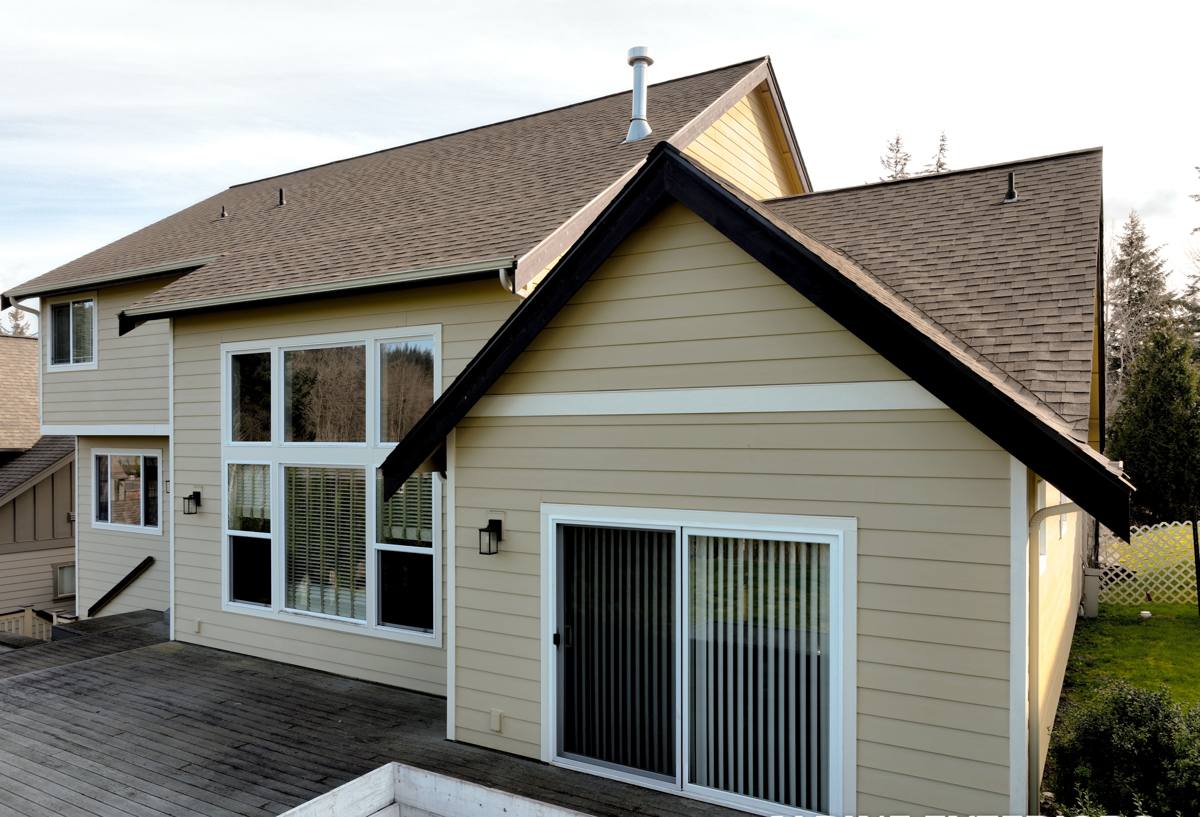
What This Climate Actually Does to Siding
Whatcom County's exterior surfaces deal with a specific combination of stressors, and most siding failures we get called out to inspect trace back to one or more of these:
- Moisture load: long rainy seasons keep siding wet for days at a stretch, and any gap in the water-resistive barrier or flashing becomes a slow leak instead of a quick one.
- Salt-tinged marine air: proximity to the Salish Sea means airborne salt and moisture accelerate corrosion on fasteners, trim caps, and unprotected cut edges.
- Moss and algae growth: shaded, north-facing walls and anything under tree cover stay damp long enough for moss and mildew to colonize the surface, which holds even more moisture against the siding.
- Temperature swings: siding that expands and contracts with daily and seasonal temperature changes needs proper gapping and fastening, or it will buckle, crack, or pull away from the wall over time.
None of these are exotic problems — they're the normal cost of living in a marine climate. But they mean a siding product and installation method that works fine in a dry inland climate can fail here in a fraction of the time.
Why We Install James Hardie Fiber Cement — and Nothing Else
Birch Bay Exterior Co installs James Hardie fiber cement siding exclusively. We don't install vinyl, LP SmartSide, Cemplank, Allura, or primed wood species like spruce or cedar. That's not a marketing position — it's a standard we settled on after weighing how each of those products actually performs in this climate over a 20-, 30-, or 40-year timeline, not just how they perform on day one.
The trade-offs we're not willing to build around
Wood-based and engineered-wood siding products can look excellent when new, but they rely on paint film and factory sealing to keep moisture out of the substrate. In a climate with this much sustained rain and humidity, any nick, uncaulked joint, or worn paint edge becomes an entry point for moisture into the wood fiber itself — which is exactly the kind of slow, hidden damage that's expensive to catch early. Vinyl siding avoids the rot question but expands and contracts significantly with temperature, can distort or crack in impact-prone areas, and offers limited color and profile options for homeowners who want a specific architectural look.
Where James Hardie earns its place
Fiber cement is cement, sand, and cellulose fiber — it does not rot, does not support insect damage, and is non-combustible. James Hardie backs its siding with a factory-applied ColorPlus finish that's baked on and warranted separately from the substrate, so homeowners aren't relying on field-applied paint as the only moisture barrier. Just as important for this region, Hardie engineers specific product lines — its HZ5 line, in particular — for harsh, wet climates, with a lap profile and moisture management designed around exactly the conditions Whatcom County sees.
| Factor | James Hardie Fiber Cement | Vinyl / Engineered Wood |
|---|---|---|
| Moisture behavior | Non-combustible cement substrate; does not rot or swell | Wood-based products can absorb moisture at damaged edges; vinyl doesn't rot but isn't rigid |
| Finish | Factory-baked ColorPlus finish, warranted separately | Field-applied paint (wood) or molded-in color (vinyl) that fades unevenly |
| Fire resistance | Non-combustible | Combustible (wood); vinyl can deform/melt near heat sources |
| Climate engineering | Region-specific HZ product lines | Generally one-size-fits-all nationally |
| Long-term maintenance | Periodic cleaning; no repainting cycle if factory finish is intact | Repainting cycles (wood); brittleness over time (vinyl) |
What a Correct Siding Installation Actually Involves
The siding panel itself is only part of the system. Most of the failures we see on older Nooksack-area homes didn't start with a bad product — they started with a rushed or incomplete installation underneath it. A correct job includes:
The water-resistive barrier and flashing
Every wall needs a continuous, properly lapped weather-resistive barrier underneath the siding, with flashing integrated at every window, door, and penetration so water is directed out and away from the sheathing, never behind it. This is the layer that actually keeps a house dry — the siding is the second line of defense, not the first.
Fastening and gapping to spec
James Hardie publishes specific fastening patterns, nail types, and clearance requirements — including gaps at butt joints and around trim to allow for expansion — and those specs change slightly depending on climate zone and wall assembly. Installing Hardie siding like it's any other lap siding, without following the manufacturer's climate-specific instructions, is one of the fastest ways to void the warranty and shorten the product's real-world life.
Trim, caulking, and cut-edge sealing
Every field-cut edge on a fiber cement board needs to be sealed per manufacturer spec before installation, and trim details around windows, corners, and rooflines need to shed water rather than trap it. This is detail work that takes time — and it's usually the first thing a rushed crew skips.
Ventilation behind the cladding
A rainscreen or drainage gap behind the siding lets any moisture that does get past the outer layer drain and dry out instead of sitting against the sheathing. In a climate this wet, that gap is not optional — it's the difference between a wall that dries between rain events and one that stays damp all winter.
Our Process for Nooksack-Area Homes
- On-site assessment: we walk the exterior, check existing siding and trim condition, look for moss, staining, or soft spots that indicate moisture already in the wall, and check attic and crawlspace ventilation where relevant.
- Scope and product selection: we recommend the James Hardie lap, shingle, or panel profile and ColorPlus color that fits the home's exposure and the homeowner's design goals.
- Tear-off and substrate check: we remove existing siding down to the sheathing, inspect for hidden rot or damage, and repair or replace anything compromised before anything new goes up.
- Weather barrier and flashing installation: a continuous, correctly lapped barrier and integrated flashing at every opening, done before a single piece of siding is hung.
- Siding installation to manufacturer spec: proper fastening, gapping, and cut-edge sealing throughout, following James Hardie's published instructions for this climate zone.
- Final detailing and walkthrough: trim, caulking, and touch-up finished, then a walkthrough with the homeowner before we call the job done.
Signs a Nooksack-Area Home Needs New Siding
- Visible moss or dark streaking that keeps coming back within a season or two of cleaning
- Soft or spongy spots when you press on siding or trim, especially near the bottom of walls
- Paint that's peeling, bubbling, or chalking unevenly rather than just fading
- Warped, cupped, or separating boards, particularly on north- or west-facing walls
- Visible gaps at seams, corners, or window trim where caulking has failed
- Musty smell or visible staining on interior walls that back up to exterior siding
Any one of these on its own might just need a repair. Several together, especially on a home that hasn't had siding work in a decade or more, usually means it's worth a full assessment rather than another round of patching.
What Drives the Cost of a Siding Job
| Factor | Why It Matters |
|---|---|
| Home size and wall complexity | More corners, dormers, and cutouts mean more trim detail and labor time |
| Substrate condition | Hidden rot found during tear-off adds repair scope before new siding can go on |
| Siding profile chosen | Lap, shingle, and panel styles have different material and labor requirements |
| Trim and accessory scope | Full trim replacement costs more upfront but avoids mismatched old/new trim |
| Access and site conditions | Steep grades, tight setbacks, or multi-story walls affect staging and labor |
We give homeowners a real number after walking the property, not a phone estimate — too much of the real cost depends on what's actually under the existing siding.
Why a Crew That Already Works This Area Matters
A crew that regularly works Whatcom County exteriors already knows which details can't be skipped here: the flashing sequence that actually holds up through a wet winter, the gapping tolerances that account for temperature swings between summer and the coldest stretches of the year, and the moss-prone spots on a typical local roofline and wall assembly. That's not something you get from a national install crew passing through — it's built from doing this work, on homes like this one, in this exact climate, over and over.
It also means accountability. A local crew has a reputation in the community to protect and is around for warranty follow-up if a question comes up two or five years down the road — not just for the week the job takes.
Get an Estimate for Your Nooksack-Area Home
If your home's siding is showing its age, or you're planning ahead before the next wet season sets in, we're happy to take a look and give you an honest assessment — no pressure, no obligation. Use the form below to request a free estimate for James Hardie siding installation on your Nooksack-area home.