 Birch Bay Exterior
 Decks Built for Nooksack's Weather, Not Just Its View
A deck in the Nooksack area lives outside year-round, and Whatcom County doesn't make that easy. Between the salt-laden air that drifts in off the bay, long stretches of driving rain, and a moss season that can run from October clear through April, a deck built the way it might be built inland won't hold up the same way here. We've built and repaired decks throughout this part of the county long enough to know which shortcuts fail first — and we build accordingly, from the footings up.
This page covers what a custom deck project for a Nooksack property actually involves: material choices that make sense in this climate, how we handle moisture and drainage so the structure doesn't rot from underneath, what local code requires, and why working with a crew that already knows this area saves you time and callbacks.
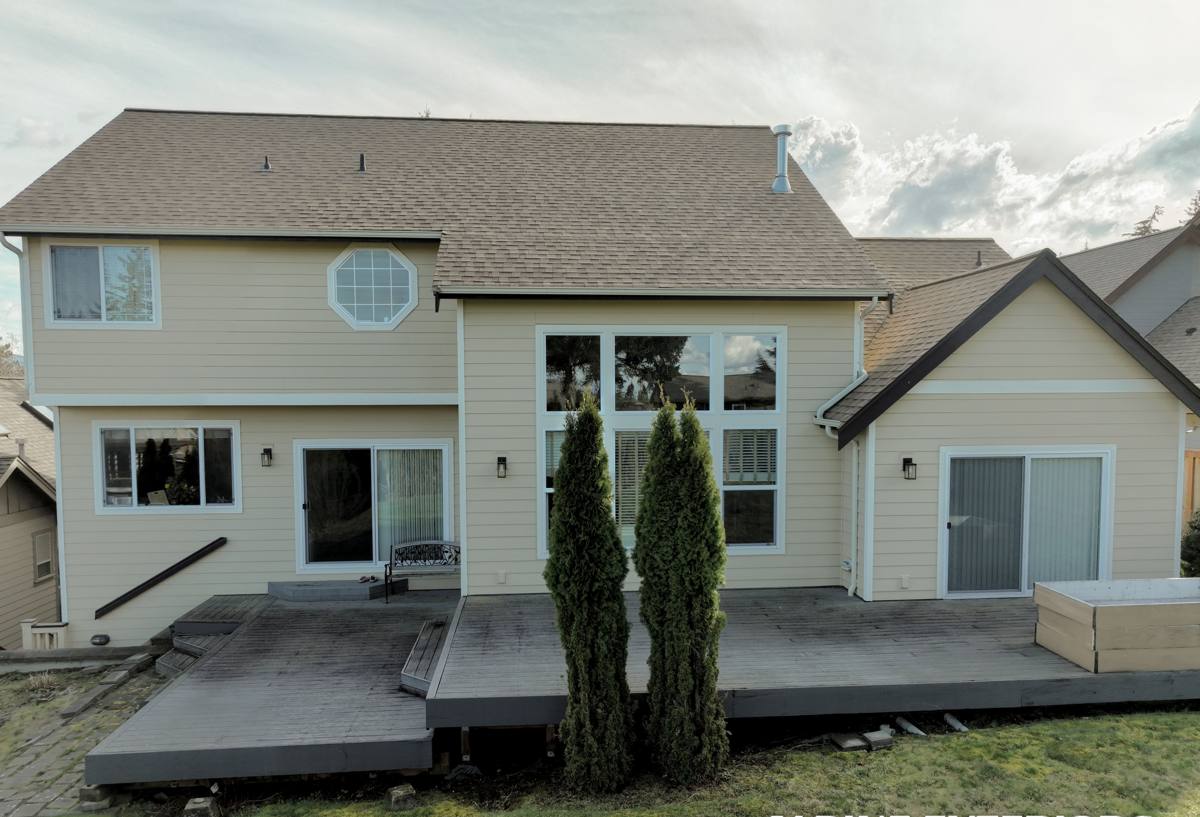
What This Climate Does to a Deck Over Time
Nooksack sits inland from the water but still gets the same weather pattern that defines Whatcom County: wet, mild winters with sustained rainfall rather than short storms, humid air that doesn't dry out quickly, and enough salt content in coastal breezes to accelerate corrosion on anything metal. None of that is unusual for this region — but it changes how a deck should be designed and which materials belong in it.
The three things we design around
- Standing moisture — decks with poor drainage or tight board spacing trap water against framing, which is where rot actually starts, not on the visible surface.
- Salt-air corrosion — uncoated or low-grade fasteners and hardware corrode faster here than in drier inland climates, even a few miles from the water.
- Moss and algae — shaded decks, north-facing decks, and anything under tree cover grow a moss film that's slippery and, left alone, holds moisture against the decking itself.
A deck that ignores these three things might look fine for a season or two. The problems show up two to five years in, usually as soft spots near the ledger board, rust streaks around fasteners, or a slick green film that never fully dries.
Choosing the Right Decking Material
There's no single "best" decking product — there's a best fit for how the deck is used, how much shade it gets, and how much upkeep the homeowner actually wants to do. We walk through this honestly with every Nooksack customer rather than pushing one material.
| Material | How It Handles This Climate | Maintenance | Typical Lifespan |
|---|---|---|---|
| Pressure-treated fir/hem-fir | Affordable, but absorbs moisture readily and needs a real sealing schedule to resist rot and moss | Annual cleaning, re-sealing every 1–2 years | 10–15 years with upkeep |
| Cedar | Naturally rot- and insect-resistant, ages to a silver-gray patina, but still needs sealing to fight moss in shaded spots | Cleaning and sealing every 1–2 years | 15–20 years with upkeep |
| Composite decking | Doesn't absorb water the way wood does, resists rot, but still needs surface cleaning where moss can gain a foothold | Periodic washing, no sealing required | 25–30 years |
| PVC/capped polymer | Fully moisture-resistant surface, best option for shaded or damp Nooksack lots, holds color well against UV and salt air | Occasional washing | 25–30+ years |
Cost follows that order too — pressure-treated is the least expensive up front, PVC the most. For a lot with heavy tree cover or a north-facing deck that stays damp most of the year, we typically steer homeowners toward composite or PVC, because the labor savings on maintenance offset the higher material cost within a few years. For a sunnier, more open lot, a well-sealed cedar deck still performs well and costs less.
What a Correctly Built Deck Actually Involves
The decking boards get all the attention, but the structure underneath is what determines whether a deck lasts 10 years or 30. In a climate that stays wet for months at a time, the framing details matter more here than they would in a dry climate.
Ledger board and house connection
The ledger board — where the deck attaches to the house — is the single most common failure point on older decks we're called out to inspect. It has to be properly flashed to keep water from working its way behind the siding and into the house framing. We flash every ledger connection with corrosion-resistant flashing, not caulk alone, and we check that the flashing laps correctly with the home's existing weather barrier.
Footings and posts
Footings need to reach below the local frost depth and bear on solid, undisturbed soil — this is a Whatcom County code requirement, not a suggestion, and it's inspected. Post bases should sit on standoff hardware that keeps the post end off standing water rather than embedded directly in concrete, which traps moisture against the wood.
Joists and hardware
We use stainless steel or heavy hot-dip galvanized fasteners and joist hangers rated for the coastal/marine environment common throughout this part of the county — standard electro-galvanized hardware corrodes noticeably faster in salt-air conditions, even well inland from the water itself. Joist tops get protected with a self-adhering flashing tape before decking goes down, which keeps rainwater from soaking into the end grain and top face of every joist.
Drainage and Moisture Management
Most deck rot doesn't start from rain falling on top — it starts from water that has nowhere to go once it gets underneath. Given how much rain this region sees over a typical winter, drainage isn't optional.
- Decking boards are spaced to let water pass through rather than pool on the surface.
- Framing is graded slightly away from the house so water sheets off rather than collecting at the ledger.
- Low decks or decks over living space get an underside drainage system so the space below stays usable and dry.
- Post bases and any ground contact points are kept clear of soil, mulch, or landscaping that holds moisture against the wood.
These details cost very little to get right during construction and are genuinely difficult and expensive to fix after the fact, once decking and framing are already in place.
Dealing With Moss Before It Starts
Moss on a deck isn't just cosmetic — it's a moisture reservoir sitting directly on the wood or composite surface, and it turns walking surfaces slick in wet weather. Shaded lots, deck areas under overhangs, and anything facing north are the highest-risk spots we see around Nooksack.
We manage this at the design stage where possible — sun exposure and airflow both matter more than people expect — and then with material and finish choices. A grooved or heavily textured composite surface holds more moisture in the grooves than a smoother board profile; on shaded decks we generally recommend a smoother-surfaced composite or PVC board specifically because it sheds moss growth more easily and is simpler to keep clean.
Permits and Local Code
Deck projects in unincorporated Whatcom County generally require a building permit once the deck exceeds a certain height or size, along with guardrail and stair requirements if the deck sits above a certain elevation. Setback requirements from property lines also apply and vary by lot. We handle the permit process as part of the project — pulling the permit, meeting inspection requirements at footing and framing stages, and building to the guardrail and stair-rail specs the county requires — so the homeowner isn't left tracking that down mid-project.
How We Approach a Nooksack Deck Project
- Site visit and consultation — we look at sun exposure, drainage, tree cover, and how the deck connects to the house before recommending materials.
- Design and material selection — we walk through the cost, maintenance, and lifespan trade-offs honestly, based on your specific lot conditions.
- Permitting — we handle the county permit application and coordinate required inspections.
- Construction — footings, framing, flashing, and hardware are installed to the standards above, not just to code minimums.
- Final walkthrough — we go over the finished deck with you, including basic care and what to watch for seasonally.
Why a Crew That Already Works in Nooksack Matters
A deck built by a crew unfamiliar with this specific climate tends to make the same mistakes: standard hardware instead of corrosion-resistant fasteners, decking spaced too tight, no thought given to drainage under low sections. Those choices don't fail on day one — they fail in year three or four, after the crew that built it is hard to reach.
Working locally in Birch Bay and throughout Whatcom County means we already know the frost depth for footings, the county's permit and inspection process, and which decking profiles actually hold up against a wet, moss-prone winter here versus a dry-climate spec sheet. It also means we're a short drive away if a warranty question or minor issue comes up after the build — not a call center for a company based somewhere else.
Deck Maintenance Checklist for This Climate
Whatever material you choose, a little seasonal upkeep goes a long way in this climate. Here's what we recommend to every Nooksack homeowner:
- Sweep debris and leaves off the deck regularly through fall — trapped organic matter feeds moss growth.
- Rinse or gently pressure-wash the surface each spring to clear winter moss and grime before it sets in.
- Check and re-seal wood decking on the schedule appropriate to the species (roughly every 1–2 years).
- Inspect fasteners and hardware annually for rust or corrosion, especially near the ledger board.
- Keep gutters and downspouts clear so roof runoff isn't dumping extra water directly onto or under the deck.
- Trim back vegetation that shades the deck heavily or blocks airflow underneath.
If you're planning a new deck or replacing one that's showing its age, we're happy to take a look and put together a straightforward, no-pressure estimate — just fill out the form below and we'll get in touch.