 Birch Bay Exterior
 Metal Roofing Built for Blaine's Coastal Conditions
Blaine sits right up against the water, which means homes here take on a different kind of weather stress than roofs just a few miles inland. Salt-laden air off the bay, wind-driven rain that comes in sideways during winter storms, and long stretches of damp, shaded weather that feed moss growth all add up over the life of a roof. A roofing material that works fine in a drier part of the state can wear out faster here, and the fixes that work elsewhere don't always hold up under these specific conditions.
Metal roofing has become a popular choice for homeowners in this part of Whatcom County precisely because it handles these stresses well when it's installed correctly. This page walks through what Blaine homes actually need from a metal roof, what a proper installation looks like, and how our process works from first call to final walkthrough.
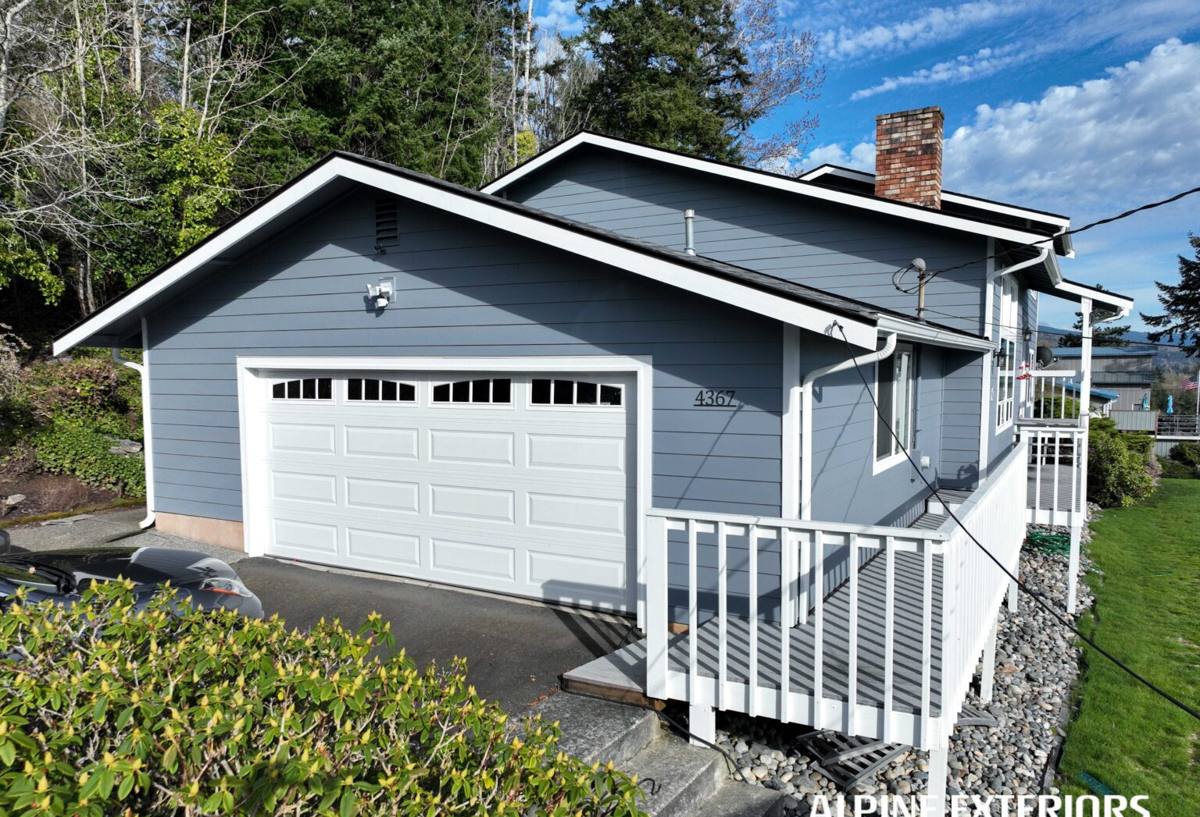
What Blaine's Climate Does to a Roof Over Time
Before talking about materials, it helps to understand what's actually working against a roof in this area:
Salt Air and Corrosion
Homes closer to Semiahmoo Bay and the Blaine waterfront are exposed to airborne salt that settles on exterior surfaces. Over years, this accelerates corrosion on unprotected metal fasteners, flashing, and lower-grade panel coatings. It doesn't ruin a roof overnight, but it shortens the life of materials that weren't chosen with that exposure in mind.
Wind-Driven Rain
Storms coming off the Strait of Georgia and the Salish Sea don't just drop rain straight down — they push it sideways, forcing water up under laps, around penetrations, and into any gap that a calmer climate wouldn't expose. Roofing systems here need to be detailed for wind-driven rain, not just vertical rainfall.
Moss and Shade
Tree cover and the region's damp, mild winters give moss a long growing season. On asphalt shingles, moss roots into the surface and lifts granules, which shortens the shingle's life. On a properly installed metal roof, moss has a much harder time getting a foothold, though north-facing slopes and shaded valleys still need attention.
Why Metal Roofing Fits This Environment
We don't push metal roofing as the right choice for every home — it's a bigger upfront investment than asphalt shingles, and the right material depends on your roof's shape, your budget, and how long you plan to stay in the house. But for Blaine's specific conditions, metal has real advantages worth understanding:
- Smooth, continuous panel surfaces give moss and moisture far less to grip onto than a shingled surface
- Quality steel and aluminum panels are factory-coated to resist salt-air corrosion far better than bare or low-grade metal
- Steep-slope metal sheds wind-driven rain more effectively when seams and flashing are detailed correctly
- A correctly installed metal roof typically outlasts asphalt shingles by decades, which matters when you're weighing lifetime cost against upfront price
- Metal handles the freeze-thaw and heavy rain cycles of a Whatcom County winter without the granule loss or curling that shingles eventually show
Standing Seam vs. Exposed Fastener Panels
Not all metal roofing is built the same way, and the two most common systems behave differently in a coastal climate like Blaine's:
| Feature | Standing Seam | Exposed Fastener |
|---|---|---|
| Fastener exposure | Concealed clips, no exposed screws | Screws penetrate the panel face |
| Salt-air durability | Higher — fewer failure points for corrosion to start | Lower — exposed fasteners are the first thing to corrode or back out |
| Wind-driven rain performance | Very good — seams interlock and shed water upward | Good, but gaskets under screws wear and need periodic checks |
| Upfront cost | Higher | More affordable |
| Maintenance | Minimal | Occasional fastener and gasket inspection |
Exposed fastener panels are still a legitimate option, especially on outbuildings, shops, or budget-conscious projects, and we install both. But for a primary residence in a salt-exposed location like Blaine, standing seam is generally the better long-term investment because there are fewer points where corrosion or a failed gasket can eventually let water in.
What a Correct Metal Roof Installation Actually Involves
The material itself is only part of the story — most metal roof failures we're called to look at trace back to installation shortcuts, not the panels themselves. A correct job on a Blaine home includes:
Underlayment Built for Wind-Driven Rain
We use a synthetic underlayment rated for high-wind, high-moisture exposure, with self-adhering membrane at eaves, valleys, and any low-slope transitions where wind-driven rain is most likely to be forced upward under the panels.
Flashing and Penetration Details
Chimneys, vents, skylights, and wall transitions are where most leaks actually start. Every penetration gets properly formed flashing and sealant appropriate for metal, not generic caulk that will fail in a few seasons of coastal weather.
Fastening and Panel Layout
Panels are laid out and fastened according to the manufacturer's wind-load specifications, accounting for the higher exposure a near-coastal Blaine property sees compared to a more sheltered inland lot.
Ventilation
A metal roof still needs a properly vented attic or roof assembly underneath it. Poor ventilation traps moisture, which undermines even the best roofing material from below.
Our Process for a Blaine Metal Roofing Project
- On-site assessment — we walk the roof, check the existing deck and ventilation, and note any problem areas like shaded valleys prone to moss or spots showing early corrosion
- Honest scope and estimate — you get a clear breakdown of panel type, underlayment, flashing work, and any deck repair needed, with no pressure to upsell beyond what your roof actually needs
- Permitting — most reroofing projects in Whatcom County require a building permit; we handle that paperwork as part of the job
- Tear-off and deck inspection — old roofing is removed and the deck is checked for rot or soft spots before anything new goes down
- Installation — underlayment, flashing, and panels are installed to manufacturer spec and detailed for local wind and rain exposure
- Final walkthrough — we review the finished roof with you and go over anything you should watch for or maintain going forward
Cost Factors for Metal Roofing in Blaine
Every roof is different, so we don't quote firm numbers without seeing the job, but these are the main factors that move the price up or down:
| Factor | How It Affects Cost |
|---|---|
| Panel type (exposed fastener vs. standing seam) | Standing seam costs more due to material and labor for concealed fastening |
| Roof pitch and complexity | Steep or multi-plane roofs take longer to detail correctly |
| Deck condition | Rot or soft decking found during tear-off adds repair cost |
| Coating and corrosion protection | Higher-grade coatings cost more upfront but pay off in salt-air durability |
| Number of penetrations | More vents, skylights, and chimneys mean more flashing work |
| Tear-off vs. overlay | Full tear-off costs more than an overlay but is usually the sounder long-term choice |
Living With a Metal Roof in Blaine
One of the appeals of metal roofing here is how little ongoing maintenance it needs compared to shingles, but "low-maintenance" doesn't mean "no maintenance." A short annual check keeps a metal roof performing the way it should through Blaine's wet winters:
- Clear debris and needles from valleys and gutters before fall storms hit
- Check shaded, north-facing sections for early moss growth and remove it gently — don't pressure wash metal panels
- Look at exposed fasteners (if you have an exposed-fastener roof) for backing out or gasket wear
- Inspect flashing around chimneys and vents for sealant that's cracked or pulled away
- After major windstorms, do a visual check for lifted or loose panel edges
Most of this is a quick visual check rather than a project, but catching a small issue — a loose fastener, a bit of moss starting in a valley — before it turns into a leak is where the real savings are.
Why It Matters That We Already Work in Blaine
A roofing crew that mostly works drier, inland jobs doesn't always think about salt exposure or wind-driven rain the way a job on the Blaine waterfront demands. Being based in Birch Bay and working regularly throughout this stretch of Whatcom County means we're already familiar with the specific conditions that wear down roofs here — the moss patterns, the storm direction, and the kind of corrosion that shows up on homes closer to the water. That's not a substitute for doing the installation details right, but it does mean fewer surprises and a roof that's built for the weather it actually has to handle, not a generic version of it.
If you're weighing metal roofing for a home in Blaine, we're happy to take a look and give you a straight answer about what your roof needs — no pressure, no inflated scope. Fill out the form below for a free estimate.