 Birch Bay Exterior
 Lummi Island's Climate Is Harder on Siding Than Most Homeowners Realize
Homes on Lummi Island sit right where the marine air off the Salish Sea meets steep, tree-shaded lots and long stretches of overcast, wet weather. That combination is tough on exterior walls in three specific ways: salt-laden air that accelerates corrosion and finish breakdown, driving wind-driven rain that finds every gap in flashing and trim, and a moss and mildew season that runs far longer here than it does inland. Add in the shade from mature evergreens that many island properties are built around, and you get siding that stays damp longer after every storm — which is exactly the condition organic growth and rot need to take hold.
None of this means siding on Lummi Island is doomed to fail. It means the material and the installation both have to be matched to the environment, not just to a color swatch or a price point. That's the lens we bring to every siding replacement here, and it's why the conversation about "what siding should go on this house" looks different on the island than it does a few miles inland.
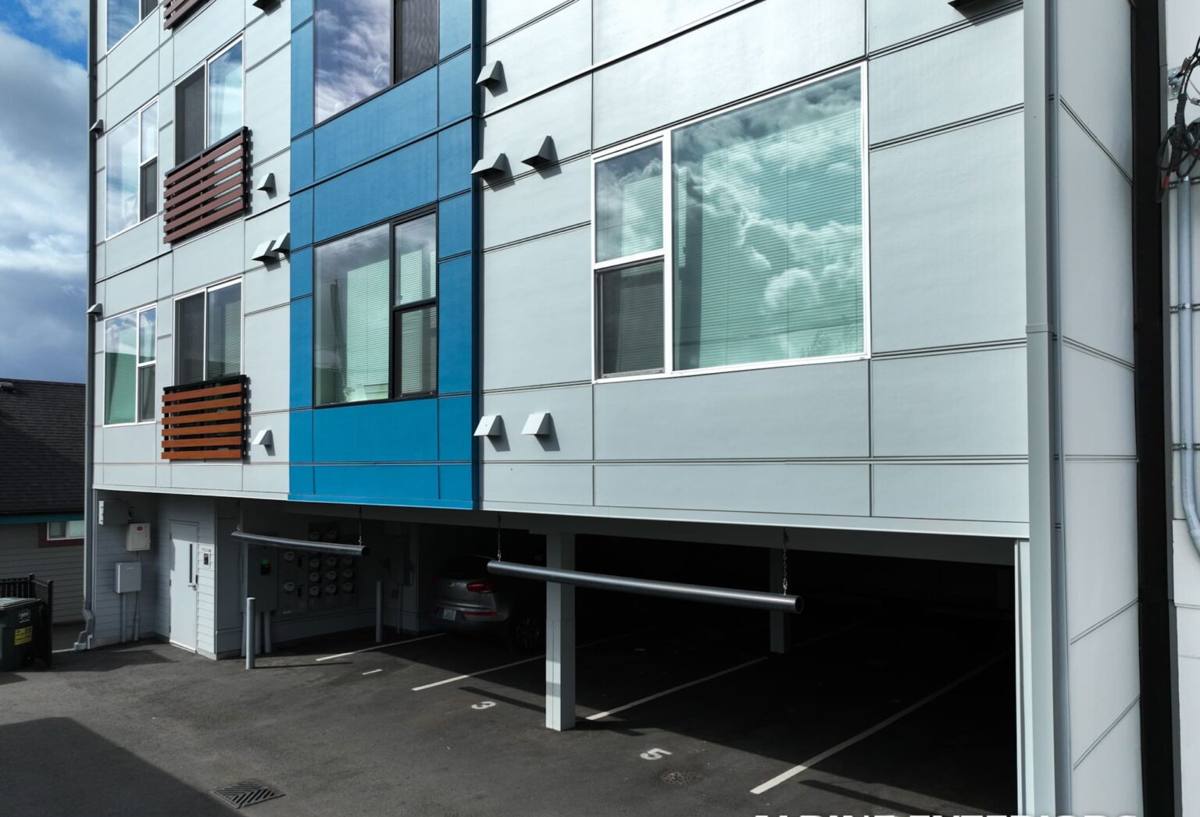
What a Correct Siding Replacement Actually Involves
Siding replacement is not simply stripping old panels and nailing up new ones. On a marine-exposed property, the work that happens underneath the new siding matters as much as the siding itself. A correct job includes:
- Full tear-off and inspection of the sheathing underneath — not just the visible siding, since trapped moisture behind old panels is common on shaded, wet-climate homes
- Repair or replacement of any rotted or soft sheathing before anything new goes up
- A proper water-resistive barrier installed in the correct shingle-lap sequence, so water is directed out and down rather than trapped
- Correctly detailed flashing at every window, door, deck ledger, and roof-to-wall transition — the spots where nearly all real-world siding failures actually start
- Manufacturer-specified fastening, clearances, and gaps so the new siding can handle wet-dry cycling without cupping, buckling, or holding water against the wall
Skip any one of these steps and the new siding may look fine for a season or two, but the underlying problem it was meant to solve is still there. On Lummi Island in particular, where a wall can stay damp for days after a system rolls through, cutting corners on the water-management details is where most premature siding failures actually originate — not the siding material itself.
Why We Standardized on James Hardie Fiber Cement
We install James Hardie fiber cement siding exclusively — we don't offer vinyl, LP SmartSide, Cemplank, Allura, primed spruce, or cedar. That's a deliberate professional standard, not a sales preference, and it's rooted in what we see holding up on exposed, moisture-heavy properties around Whatcom County and its islands.
Fiber cement is non-combustible, dimensionally stable in wet-dry swings, and doesn't rely on a coating alone to keep water out — the material itself is resistant to moisture damage in a way that engineered wood products aren't. Hardie's ColorPlus factory finish is baked on under controlled conditions and holds color and adhesion far better in salt air and shade than field-applied paint, which matters on an island where moss and algae staining show up fast on anything that stays damp. And Hardie's HZ product lines are engineered for specific climate zones — including the wetter, cooler Pacific Northwest profile — rather than being a one-size-fits-all product.
Other siding materials aren't "bad" — they simply come with trade-offs (moisture sensitivity at cut edges, more frequent repainting, or coating systems that are less forgiving of installation error) that we don't think make sense to put on a home exposed to this much salt air and rain. We'd rather stand behind one system we know performs here than offer several and hope each one works out.
Siding Material Comparison for Marine and Island Climates
| Factor | James Hardie Fiber Cement | Vinyl | LP SmartSide / Wood-Based |
|---|---|---|---|
| Moisture behavior | Resists swelling and rot; not moisture-sensitive at the core | Won't rot, but can warp or crack in temperature swings | Engineered wood core is vulnerable if cut edges or seams aren't sealed and maintained |
| Salt air / corrosion resistance | Stable; factory finish holds up well | Generally stable but can fade and become brittle over time | Coating requires more diligent upkeep near salt air |
| Moss and algae staining | Factory ColorPlus finish resists staining and holds color | Can stain; harder to keep looking uniform over time | Painted surface shows moss/mildew staining faster in shaded, damp spots |
| Fire resistance | Non-combustible | Combustible | Combustible |
| Typical repainting needs | Factory finish rated for many years before repaint is needed | Never painted, but can't be easily refinished if faded | Requires more frequent repainting/caulk maintenance |
This is a general comparison, not a claim that any of these products fail outright — it's meant to show why the trade-offs tilt toward fiber cement on a property that deals with this much sustained moisture and salt exposure.
Working on an Island Changes How the Job Runs
Lummi Island is ferry-served, and that one fact touches almost every part of how a siding project has to be planned. Material deliveries, dumpster or debris hauling, and crew scheduling all have to work around ferry sailings rather than a simple drive-up job. A contractor who hasn't planned around this before will either underbid the logistics and eat the cost in delays, or pass surprise costs on to you mid-project. A crew that already works the island builds ferry timing, tide-dependent access on some properties, and weather windows into the schedule from day one — so the timeline you're quoted is the timeline you actually get.
This is also why we stage materials and tear-off/haul-away in a way that minimizes the number of trips back and forth, and why we're upfront about how weather on the water can shift a schedule by a day or two during storm-heavy stretches of the year.
Our Siding Replacement Process
- On-site assessment: we inspect the existing siding, look for signs of trapped moisture or sheathing damage, and check flashing details around windows, doors, and roof lines
- Written scope and estimate: a clear breakdown of tear-off, repairs anticipated, materials, and the Hardie product line/color recommended for your home's exposure
- Logistics and scheduling: material delivery and crew scheduling planned around ferry sailings and the weather forecast
- Tear-off and sheathing repair: old siding removed, sheathing inspected, and any soft or rotted areas replaced before moving forward
- Water-resistive barrier and flashing: installed in correct sequence at every penetration and transition
- Hardie siding installation: installed to manufacturer specification for fastening, clearance, and joint treatment
- Final walkthrough: we review the finished work with you before considering the job complete
Signs Your Lummi Island Home May Need Siding Replacement
- Visible moss, algae, or dark staining that keeps coming back after cleaning
- Soft, spongy, or crumbling spots when you press on the siding
- Paint that's peeling, bubbling, or failing repeatedly in the same spots
- Cracked, warped, or separating panels, especially near corners and trim
- Gaps opening up around window and door trim
- Water stains or damp patches on interior walls that back up to exterior siding
- A noticeable rise in heating costs, which can point to a compromised weather barrier
Any one of these on its own might be minor. Several together, especially on a wall that gets a lot of shade or wind-driven rain, usually means it's time for a real inspection rather than another round of patching.
Cost Factors to Expect
Every home is different, but the main cost drivers on a Lummi Island siding replacement tend to be the same handful of things: total square footage, how much of the existing sheathing needs repair once the old siding comes off, the complexity of the roofline and trim (more corners and transitions mean more flashing detail work), and the Hardie product line and finish you choose. Logistics tied to ferry access and site conditions can also factor into scheduling and cost, which is why we walk through this in the written estimate rather than quoting a number sight unseen.
Why Hiring a Crew That Already Works Lummi Island Matters
A contractor who only occasionally works the island is learning the ferry schedule, the weather patterns, and the moisture behavior of these homes on your project's dime. A crew that already works here has already worked out how to stage materials, how long jobs realistically take once ferry timing is factored in, and what these homes' shaded, salt-exposed walls tend to need. That experience shows up in fewer surprises, a schedule that holds up, and a finished job that's built for the specific way weather behaves on this stretch of the coast — not a generic install dropped onto an island property.
If your Lummi Island home's siding is showing its age, or you just want a straight answer on whether it needs replacing now or can hold a few more years, we're happy to take a look. There's no pressure and no cost to get our honest assessment — request a free estimate using the form below.