 Birch Bay Exterior
 Why Lynden Siding Has to Work Harder Than the Brochure Suggests
Lynden sits inland from Birch Bay, but it doesn't escape the weather pattern that defines this corner of Whatcom County. Moist marine air moves off the Salish Sea and settles across the valley, and it doesn't leave in a hurry. Add long stretches of driving rain through fall and winter, humid summer mornings, and shaded north-facing walls that never fully dry out, and you get a climate that's genuinely tough on exterior materials — not because any one storm is dramatic, but because the moisture exposure is constant and cumulative.
That combination is exactly what grows moss on roofs, siding, and fences across this region, and it's what causes softer siding materials to swell, delaminate, or hold water against the wall assembly year after year. A siding product that looks fine in a showroom in Arizona can behave very differently after five winters in Lynden. The right material and the right installation details matter more here than in drier climates, because there's less margin for error.
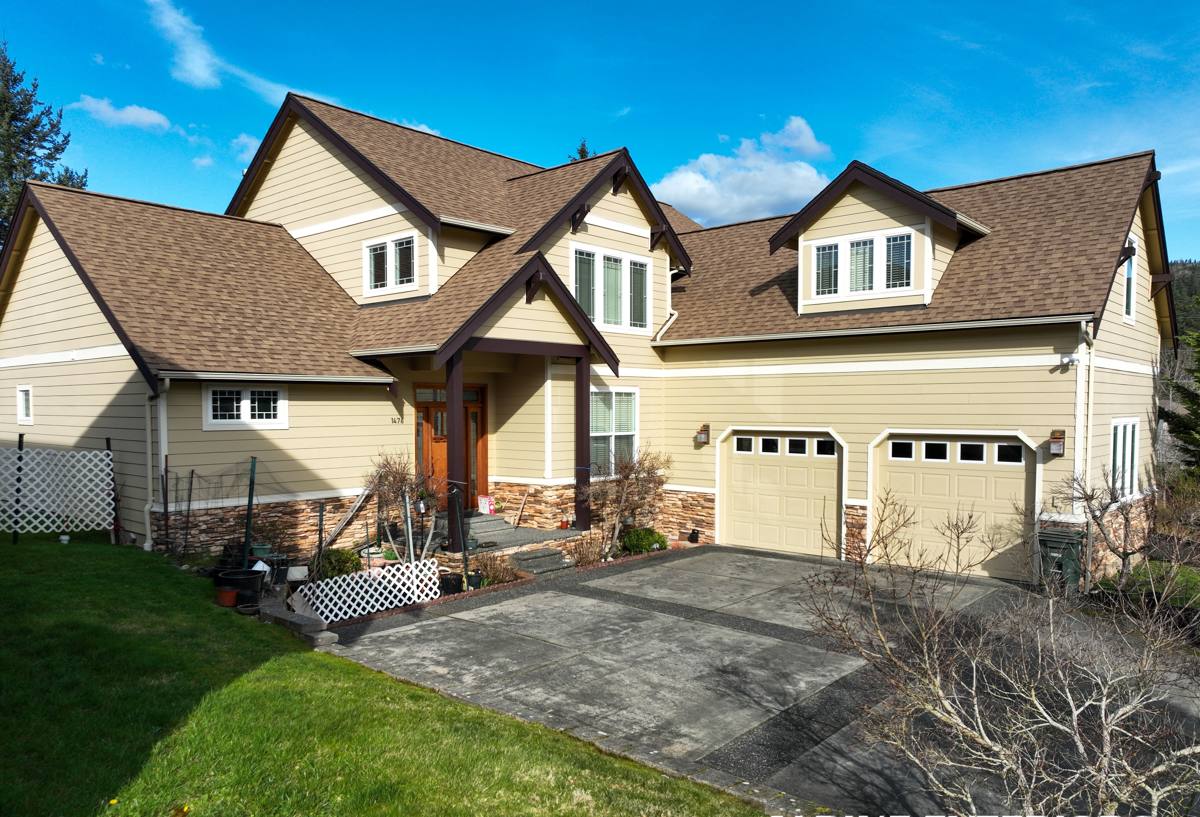
What Correct Fiber Cement Installation Actually Involves
Fiber cement siding is only as good as the assembly behind it. A homeowner comparing quotes should know that the visible plank is the last step, not the whole job. The details that actually determine how a wall performs over 20-plus years happen before a single piece of siding goes up.
Water Management Behind the Siding
Correct installation starts with a weather-resistive barrier installed shingle-style so water sheds downward and outward, never into a seam. Flashing goes over every window and door head, at deck ledgers, at roof-to-wall intersections, and anywhere two planes meet. Rainscreen or drainage gap approaches are worth discussing on walls that see heavy, prolonged moisture — which describes a fair number of Lynden exposures, especially shaded and north-facing walls.
Fasteners, Clearances, and Joints
James Hardie publishes specific fastener patterns, nailing zones, and minimum clearances for a reason — deviating from them is one of the most common causes of premature siding failure, regardless of the product brand. Correct practice includes:
- Corrosion-resistant fasteners driven at the manufacturer's specified spacing and depth, never overdriven
- A minimum clearance between siding and grade, roofline, and horizontal surfaces so water can't wick upward
- Butt joints caulked or flashed per manufacturer instructions, not just butted and painted over
- Field-cut edges sealed before installation, since raw cut edges are more absorbent than factory edges
- House wrap and flashing integrated in the correct shingle-lap order, so every layer drains onto the layer below it
Skip any one of these and the siding can still look correct for a year or two. The problems show up later, as trapped moisture, and by then the fix is far more expensive than doing it right the first time.
Why We Only Install James Hardie
We don't install every siding product on the market, and that's a deliberate choice, not a limitation of what we're capable of doing. We install James Hardie fiber cement exclusively because it's the product we're willing to put our name behind in this climate.
Non-Combustible and Dense
Hardie fiber cement is cement-based, not wood-based, which means it doesn't feed a fire the way wood siding or wood-fiber composite products can, and it doesn't have the moisture-swelling behavior of wood at a cut edge. It's a denser, more dimensionally stable material overall, which matters when a wall spends months of the year damp.
Climate-Engineered Product Lines
Hardie makes region-specific formulations under its HZ5 and HZ10 designations, engineered for wetter, harsher climates rather than a one-size-fits-all mix. For a Whatcom County home, that regional engineering is not a marketing detail — it's the reason the product holds up to repeated wet-dry cycles instead of slowly degrading.
ColorPlus Factory Finish
Hardie's ColorPlus finish is baked on at the factory under controlled conditions, with a more durable finish than most siding can achieve with field-applied paint. That matters in a climate where a fresh paint job doesn't always get the dry curing window it needs. It also carries its own finish warranty separate from the substrate warranty.
A Warranty Structure That's Actually Transferable
Hardie backs its siding with a strong, transferable limited warranty on the substrate, plus a separate finish warranty on ColorPlus products. Transferability matters to resale value — a documented, reputable warranty is something a buyer's inspector and a lender both recognize.
Fiber Cement vs. the Alternatives: What the Trade-Offs Actually Are
We get asked why we don't install vinyl, LP SmartSide, or primed wood siding. Each has a legitimate place in the market — we simply don't think they hold up the way we want a Lynden home to hold up, for the reasons below.
| Material | Strength | Trade-off in this climate |
|---|---|---|
| Vinyl siding | Low upfront cost, low maintenance | Can warp or crack in temperature swings; seams and J-channels are common water entry points; doesn't hold paint if you ever want a color change |
| LP SmartSide / wood-strand composite | Lighter weight, easier to cut | Wood-based core is more vulnerable to swelling and edge deterioration if moisture reaches a cut edge or damaged panel |
| Primed spruce / cedar | Natural appearance, repairable | Requires ongoing repainting and caulk maintenance; higher risk of rot in a wet, shaded exposure |
| James Hardie fiber cement | Non-combustible, dimensionally stable, factory finish, strong transferable warranty | Higher upfront material and labor cost; installation is less forgiving of shortcuts |
That last row is the honest trade-off: Hardie costs more upfront and demands a crew that follows the installation manual closely. We think that trade is worth it for a home that has to stand up to Whatcom County winters for decades, not just look good on install day.
How We Approach a Lynden Siding Project
Assessment First
We start by looking at the whole wall assembly, not just the surface. That means checking for existing moisture damage, evaluating what's behind the current siding, noting shaded or low-airflow walls that see more sustained dampness, and identifying flashing details around windows, doors, and rooflines that will need attention during the tear-off.
Tear-Off and Prep Done Right
Old siding comes off in a way that lets us actually inspect sheathing and framing underneath, rather than nailing new material over hidden rot. Any damaged sheathing gets addressed before house wrap goes back on — this is the step that gets skipped on rushed jobs and causes the most expensive problems years later.
Installation to Manufacturer Spec
We install to James Hardie's published specifications: correct nailing zones, correct clearances, correct joint treatment, and flashing integrated in the right order at every penetration. This is also where being a crew that regularly works in this region pays off — we're not guessing at how much clearance a wet Lynden winter demands, we're building to what we've seen hold up.
Cleanup and Final Walkthrough
We walk the finished job with the homeowner, cover care and maintenance specifics for the product installed, and leave the site cleaned up — old siding, packaging, and debris removed.
What to Check Before You Hire Anyone for This Job
Fiber cement installation quality varies enormously between crews, even when the material itself is identical. Before signing a contract, it's worth asking these questions of any contractor:
- Are they factory-certified or specifically trained on James Hardie installation, not just "experienced with siding in general"?
- Will the quote specify fastener type, nailing pattern, and clearance details, or just "install siding"?
- Do they inspect and address sheathing condition during tear-off, or just cover over what's there?
- Is flashing detail at windows, doors, and roof intersections spelled out in the scope of work?
- Are they licensed and insured to work in Washington, and can they provide proof without hesitation?
- Do they explain warranty terms — both material and labor — in writing before work starts?
A contractor who answers these clearly and specifically, without vague reassurance, is a contractor who actually understands the installation manual rather than just the sales brochure.
Maintenance in a Whatcom County Climate
Correctly installed Hardie siding is genuinely low-maintenance, but "low" isn't "none." A yearly walk-around is worth the time in this region:
- Check caulked joints at trim, windows, and butt joints for cracking or separation, and re-caulk as needed
- Rinse off moss, algae, or mildew buildup on shaded walls before it stains the finish or holds moisture against the surface
- Keep gutters clear so overflow doesn't run down the siding face repeatedly during heavy rain events
- Keep plantings and mulch pulled back from clearance zones at the base of the wall
- Watch for any signs of impact damage and have it repaired promptly rather than letting a small gap become a water entry point
None of this is unusual maintenance for a well-built home. It's the same kind of upkeep good siding has always needed — the difference is that Hardie's factory finish and stable substrate mean you're maintaining the finish, not fighting the material itself.
Why Local Experience Matters for This Specific Job
Fiber cement installation isn't regionally different in its published specifications — the manual is the manual. What's different is judgment: knowing which walls in a given exposure need extra attention to drainage, recognizing what moss and moisture damage actually look like on a Whatcom County home before it's severe, and having seen how different details perform after several wet seasons rather than assuming they will. A crew that works this area regularly has that judgment built in. That's the difference between a siding job that looks right at handoff and one that's still performing correctly a decade later.
If you're planning a siding project in Lynden or elsewhere in the Birch Bay area, we're happy to walk your home, look at what's there now, and give you a straightforward, no-pressure estimate for James Hardie fiber cement siding done to spec. Use the form below to get started.