 Birch Bay Exterior
 Why Ferndale Roofs Wear Differently Than Roofs Inland
Ferndale sits close enough to the water that roofs here take on a different kind of stress than roofs even twenty miles inland. The combination of salt-laden air off the Strait of Georgia and Birch Bay, near-constant winter rain, and a moss season that can run eight months or longer means Ferndale roofs are almost never fully dry and almost never fully clean. That's not a knock on any particular roof or builder — it's just the environment. A roof repair approach that works fine in Spokane or even Bellingham's drier pockets can fall short here if it doesn't account for how long materials stay wet and what grows on them while they do.
We work on roofs throughout Whatcom County, but Ferndale's mix of older farmhouses, newer subdivisions near town, and homes closer to the water each present their own repair patterns. Knowing what's common in this specific area — which shingle brands were popular in which building era, which roof lines tend to trap moisture, where ice dams show up in a hard winter — means less time spent diagnosing and more time spent fixing the actual problem.
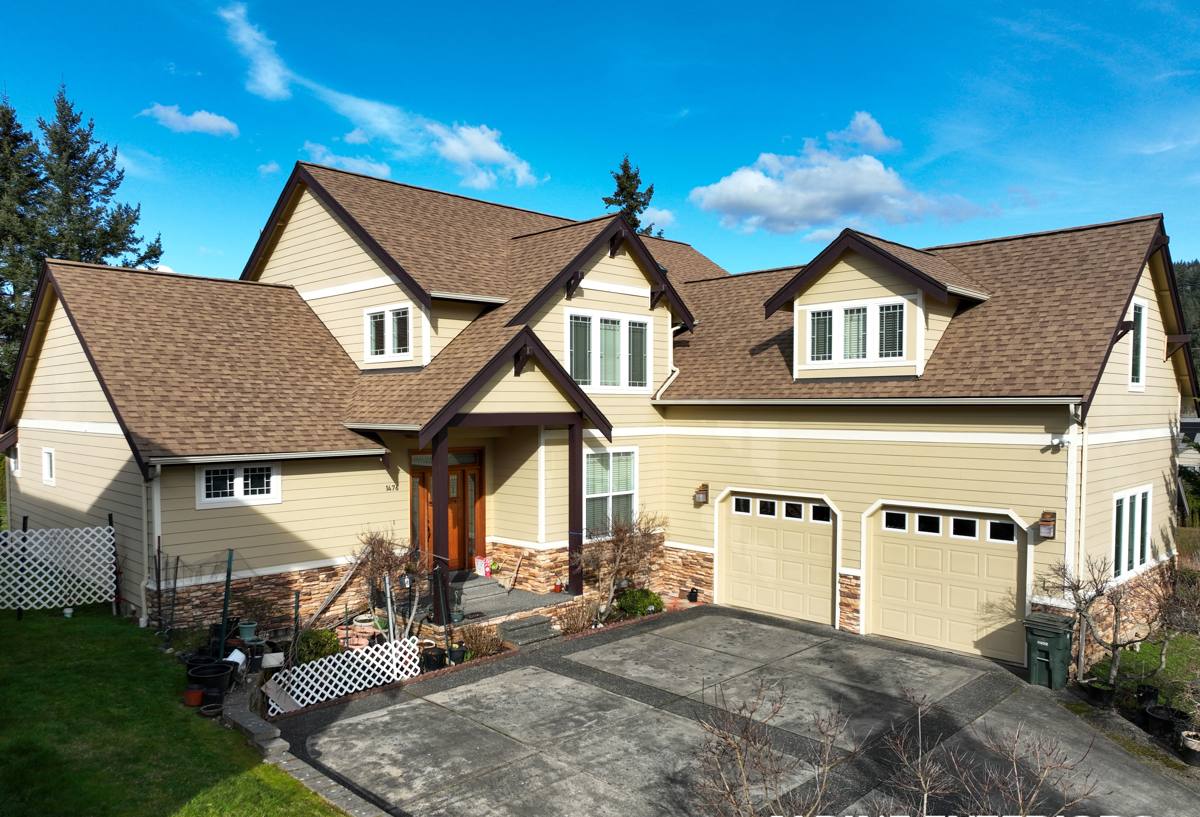
What Whatcom County Climate Does to a Roof Over Time
Salt Air and Metal Fatigue
Salt air accelerates corrosion on anything metal — flashing, fasteners, gutters, vent caps, and metal roofing panels themselves. Galvanized fasteners that would last decades in a dry climate can start rusting through in half that time this close to the water. When we're repairing a roof in Ferndale, we're checking fastener condition and flashing metal type as a matter of course, not as an afterthought, because a repair that reuses corroding hardware is a repair that fails early.
Driving Rain and Wind-Driven Water
Rain in this area rarely falls straight down. Wind off the water pushes it sideways, which means water finds its way under shingle edges, around vent boots, and into seams that would stay dry in a calmer climate. This is why so many "mystery leaks" in Ferndale homes trace back not to a hole in the roof field but to a flashing detail or shingle overlap that was fine for vertical rain and inadequate for driving rain.
Moss, Algae, and the Long Wet Season
Whatcom County's moss season is long because the conditions that grow moss — shade, moisture, and mild temperatures — persist here most of the year. Moss does more than look bad. It holds water against the roof surface, lifts shingle edges as it grows, and works its root structure into granule layers and seams. Left unaddressed, a moss problem turns small leaks into structural rot at the deck level. Any honest roof repair plan in this area has to treat moss as a cause to address, not just a symptom to scrape off.
Table: Common Ferndale Roof Damage by Cause
| Cause | What It Looks Like | What Happens If Ignored |
|---|---|---|
| Salt-air fastener corrosion | Rust streaks below nail heads, loose flashing | Flashing pulls free, water enters at seams |
| Wind-driven rain | Interior stains near vents, chimneys, valleys | Sheathing rot, insulation damage |
| Moss and algae growth | Green/black patches, lifted shingle edges | Granule loss, trapped moisture, deck rot |
| Ice dam backup (cold snaps) | Water stains at eaves, icicles | Water forced under shingles into fascia and soffit |
| UV and freeze-thaw cycling | Cracked, curling, or brittle shingles | Accelerated aging, increased leak risk |
What a Correct Roof Repair Actually Involves
A proper repair starts with finding the real source of the problem, not just the spot where water is showing up inside the house. Water travels — a stain on a bedroom ceiling can trace back to a flashing failure several feet away at the roofline. We inspect the full roof section involved, not just the immediate area, because a repair that patches the visible symptom while missing the actual entry point just delays the next call.
Steps We Take On Every Repair
- Inspect from both the roof surface and, where accessible, the attic or interior side to confirm the actual water path
- Check surrounding flashing, vent boots, and seams — not just the failed spot — since driving rain often finds more than one weak point at once
- Assess the roof deck for soft spots or rot before covering anything back up
- Match materials appropriately so the repair blends and performs the same as the surrounding roof
- Address moss or debris in the repair area so it doesn't undo the fix within a season or two
- Confirm proper drainage and ventilation aren't contributing factors, since a poorly ventilated attic traps moisture that works against any roof from underneath
Skipping any of these steps is how "repairs" turn into repeat visits. A patch over a rotted deck section, for example, might look fine for a few months and then fail once the underlying wood gives way.
Repair vs. Replacement: An Honest Read
Not every roof problem in Ferndale needs a full replacement, and we're not going to tell a homeowner they need one when a targeted repair will hold up. The honest answer depends on the age of the roof, how widespread the damage is, and how much of the underlying structure is still sound.
| Factor | Favors Repair | Favors Replacement |
|---|---|---|
| Roof age | Under 15 years, materials still flexible | Nearing or past expected lifespan for the material |
| Damage extent | Isolated to one section or detail (flashing, valley, vent) | Widespread granule loss, multiple leak points |
| Deck condition | Solid, no rot found during inspection | Soft or rotted decking in multiple areas |
| Moss history | Manageable with cleaning and maintenance | Chronic moss with recurring lifted shingles |
| Cost pattern | Repairs have been infrequent and inexpensive | Repeated repairs in the same areas, rising costs |
Broadly, a single targeted repair on a residential roof often falls in the low hundreds to low thousands of dollars depending on scope, materials, and access — a full replacement is a much larger investment. We'll give you a straight assessment of which situation you're actually in, along with the reasoning behind it, before any work starts.
Why Vent Boots, Flashing, and Valleys Deserve Extra Attention Here
In a climate with as much driving rain as this one, the roof field itself — the flat expanse of shingles or panels — is rarely the weak point. It's the transitions: where a chimney meets the roof, where two roof planes form a valley, where a vent pipe pokes through. These details rely on flashing and sealant doing their job year after year in wet, salty, moss-prone conditions. Rubber vent boots in particular tend to crack and shrink faster here than in drier climates, and once they crack, they're a direct entry point for water every time it rains. We check these details closely on every repair call, because a homeowner calling about one leak often has a second, smaller one starting nearby that hasn't shown up inside yet.
Our Process for Ferndale Roof Repair Calls
1. Assessment and Honest Diagnosis
We start with a full inspection of the affected area and surrounding roof sections, checking flashing, seams, moss coverage, and deck condition. You get a clear explanation of what's actually wrong — not a vague "you need a new roof" or an upsell.
2. A Straightforward Estimate
Before any work begins, you'll know the scope of the repair, the materials involved, and the cost. If we find something during the inspection that changes the picture — hidden rot, for example — we'll explain it and get your go-ahead before proceeding.
3. The Repair Itself
We work efficiently but don't cut corners on flashing, fastener quality, or matching materials properly. Given how much salt air and rain this area sees, using the right fastener and flashing metal isn't optional — it's the difference between a repair that lasts and one that doesn't.
4. Cleanup and Follow-Through
We clear debris and old materials from the site and let you know what maintenance, if any, would help extend the life of the repair — including moss prevention steps suited to Ferndale's growing season.
Maintenance Habits That Extend a Ferndale Roof's Life
- Keep gutters clear year-round — clogged gutters back water up under the roof edge, which is especially damaging during heavy driving rain
- Address moss early with proper removal methods rather than aggressive scraping, which can damage granules and shorten shingle life
- Trim back overhanging branches where possible, since shade is one of the main drivers of moss growth in this climate
- Have flashing and vent boots checked every few years, since these fail well before the roof field typically does
- Don't ignore small interior stains — in this climate, they rarely stay small
Why Hiring a Crew That Already Works This Area Matters
A roofer who mainly works drier inland regions can still do competent work, but they're often learning Whatcom County's specific failure patterns on your roof instead of already knowing them. A crew that regularly works Ferndale and the surrounding Birch Bay area already knows which flashing details tend to fail first in salt air, how aggressive moss removal needs to be without damaging shingles, and how wind-driven rain behaves differently on a roof facing the water versus one set back and sheltered. That local pattern recognition shortens the diagnosis process and reduces the chance of a repair addressing the wrong problem.
It also means we're not guessing at appropriate material choices for this climate. Some products that perform well in drier parts of the state are more sensitive to constant moisture exposure, and we factor that into what we recommend for a repair here — always explained honestly in terms of trade-offs like maintenance needs and moisture tolerance, not sales pressure toward one brand or another.
Get a Straight Answer About Your Roof
If you're dealing with a leak, visible moss buildup, or damaged flashing on your Ferndale home, we're happy to take a look and give you an honest read on what it needs — repair or otherwise. Reach out for a free, no-pressure estimate using the form below.