 Birch Bay Exterior
 Roofing in Cottonwood Beach Has Its Own Set of Problems
Cottonwood Beach sits close enough to the water that homes here take a different kind of beating than roofs a few miles inland in Whatcom County. Salt-laden air off the water accelerates corrosion on anything metal. Driving rain, pushed sideways by wind off the Strait, finds its way into laps and seams that would stay dry on a calmer site. And the deep shade from mature evergreens on many lots keeps roof surfaces damp long after a storm has passed, feeding a moss season that runs most of the year. None of this is unusual for the area — it's just what a roof in this specific pocket of Birch Bay has to deal with, and it's why a correct installation here looks a little different from a standard job.
This page covers new roof installation specifically for Cottonwood Beach homes: what the local conditions demand, what a properly installed roof actually involves, how we run the job from estimate to cleanup, and what to look for in a crew that's going to do it right.
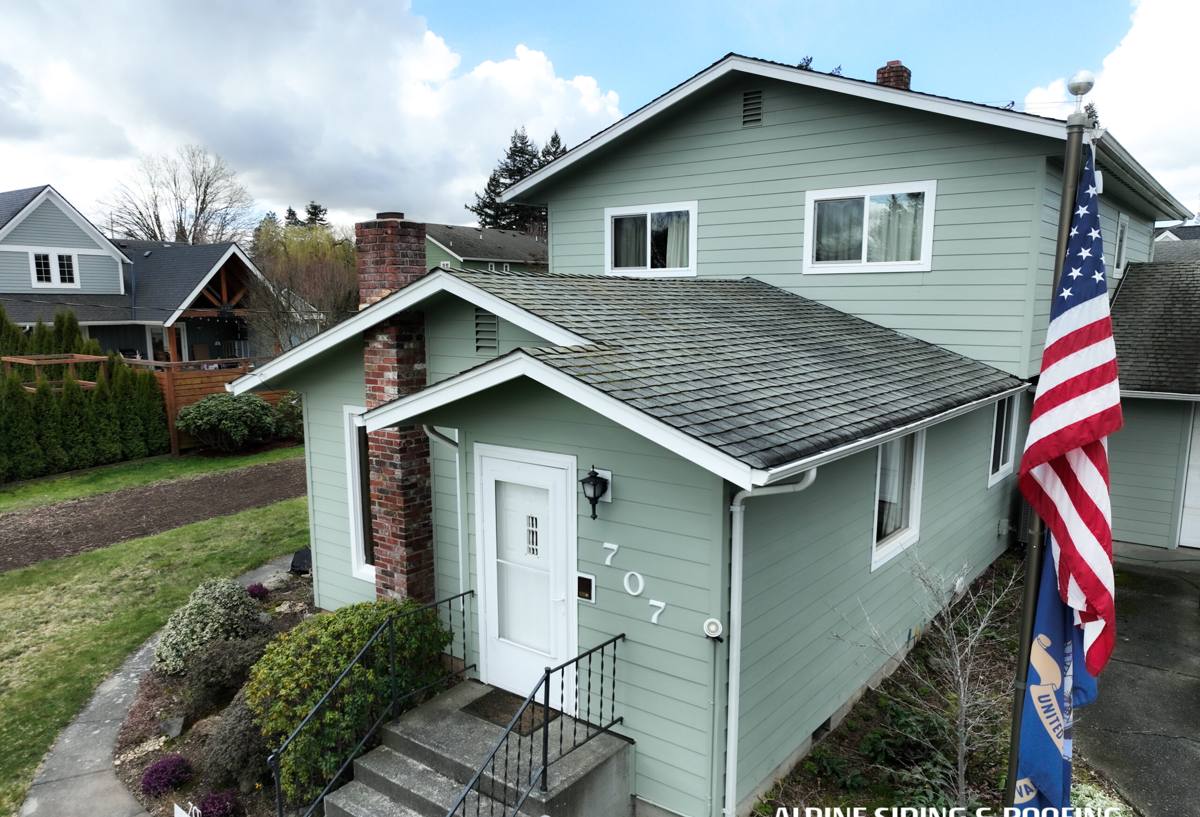
What Salt Air, Rain, and Moss Actually Do to a Roof
Salt Air and Metal Corrosion
Fasteners, flashing, drip edge, and vent components are all metal, and salt air speeds up oxidation on anything that isn't rated for coastal exposure. Standard galvanized fasteners can start showing rust streaks years before they should. The fix isn't complicated — it's specifying corrosion-resistant fasteners and flashing metals for the job from the start, rather than using whatever is standard stock a few towns inland.
Driving Rain and Wind-Driven Water
Wind off the water doesn't let rain fall straight down — it drives it sideways and up under laps, around penetrations, and into any gap that a calmer climate would never test. That means underlayment coverage, flashing detail at valleys and walls, and seal quality at every penetration matter more here than they would on a sheltered inland roof. A roof that would pass fine in a low-wind area can still leak in Cottonwood Beach if those details are rushed.
Moss, Shade, and Moisture Retention
Tree cover keeps parts of many Cottonwood Beach roofs shaded and damp well after the sun comes out elsewhere. Moss doesn't just look bad — it holds moisture against the roofing surface, works into laps and granule layers, and can lift shingle edges over time. A new roof installed without accounting for airflow and drainage in shaded sections is signing up for an early moss problem, regardless of how good the material is.
Choosing a Roofing System for This Site
There's no single "best" roof for Birch Bay — the right choice depends on the home's exposure, roof pitch, tree cover, and budget. Here's how the common options stack up against the local conditions specifically:
| Roofing Type | Salt Air Behavior | Moss Resistance | Typical Lifespan Here |
|---|---|---|---|
| Architectural asphalt shingle | Good with coastal-rated fasteners/flashing | Moderate — needs clean gutters and airflow | 20–30 years |
| Standing seam metal | Requires coastal-grade coating/alloy | Strong — sheds moss more easily | 40–50+ years |
| Composite/synthetic shake | Good — non-corrosive material | Moderate to strong depending on profile | 30–50 years |
| Cedar shake | Fair — needs regular maintenance near salt air | Weak without ongoing treatment | 20–30 years with upkeep |
We'll walk through these trade-offs with you honestly, including where a cheaper material might cost more in maintenance over time near the water. For most Cottonwood Beach homes, the decision comes down to how much shade the roof sees, how exposed it is to wind off the water, and how much upkeep the homeowner wants to take on long-term.
What a Correct Installation Actually Involves
Tear-Off and Deck Inspection
We remove the old roofing down to the deck rather than layering over it. That's the only way to actually see what's underneath — and on homes near the water, it's common to find soft or delaminated decking sections near valleys, chimneys, or wherever moss has been sitting the longest. Any damaged decking gets replaced before anything new goes down; installing new roofing over a compromised deck just hides the problem.
Underlayment and Ice/Water Protection
Given the wind-driven rain this area sees, we don't treat underlayment as an afterthought. Self-adhered membrane goes in at eaves, valleys, and around penetrations — the spots where wind-driven water is most likely to test the roof — with synthetic underlayment across the rest of the field for consistent water resistance.
Flashing and Fastener Selection
This is where coastal exposure changes the job most. We use flashing and fastener materials suited to salt air rather than standard-grade stock, particularly around chimneys, skylights, and wall intersections where corrosion shows up first. Cutting a corner here doesn't fail today — it fails in year six or seven, quietly, as a slow leak that's hard to trace.
Ventilation for Shaded Roof Sections
Proper intake and exhaust ventilation keeps roof decking dry and reduces the moisture that feeds moss growth, especially on the shaded, tree-covered sections common on Cottonwood Beach lots. We check existing ventilation during the estimate and correct it as part of the install where it's inadequate — not as an upsell, but because it directly affects how long the new roof lasts.
Final Details
Drip edge, ridge venting, pipe boot seals, and cleanup all get the same attention as the visible field of the roof. A roof is only as good as its weakest detail, and most leaks start at a transition point, not in the open field.
How Our Process Works
- On-site estimate: We inspect the existing roof, deck condition, ventilation, and exposure specific to your property and walk you through honest material options and pricing.
- Written scope: You get a clear, itemized proposal — no vague line items, no pressure to decide on the spot.
- Scheduling: We plan around weather windows realistic for this area, since a rushed install during a wet stretch does nobody any favors.
- Tear-off and deck check: Old roofing comes off, decking is inspected and repaired as needed.
- Installation: Underlayment, flashing, ventilation corrections, and the roofing system go in to spec, with coastal-appropriate materials where the site calls for it.
- Final walkthrough: We review the completed roof with you, cover warranty details, and answer any questions before we consider the job done.
Signs a Cottonwood Beach Roof Needs Replacement, Not Another Repair
- Granule loss visible in gutters or downspouts after normal rain
- Persistent moss or dark streaking that returns shortly after cleaning
- Soft spots or sagging visible from the ground or attic
- Daylight visible through the roof deck from inside the attic
- Curling, cracked, or missing shingles, especially on wind-exposed slopes
- Rust staining around flashing, vents, or fasteners
- Repeated leaks in the same area despite prior patching
- Roof age approaching or past the manufacturer's expected service life
One or two of these on their own might just mean a repair. Several together, especially on a roof that's already 15-20 years old, usually mean replacement is the more cost-effective path.
Why Hiring a Crew That Already Works This Area Matters
A roofing crew that hasn't worked near the water before will often specify materials and details based on inland norms — standard fasteners, standard ventilation assumptions, standard underlayment coverage. None of that is wrong in general; it's just not matched to what a Cottonwood Beach roof actually faces. A crew with local experience already knows which slopes tend to hold moss, which flashing details need upgrading for salt exposure, and how the wind pattern off the water tends to drive rain into a roof. That knowledge shows up as fewer callbacks and a roof that performs the way it's supposed to for its full expected life, not just on a clear day.
Maintenance After Installation
A well-installed roof in this area still benefits from basic upkeep. Keeping gutters clear prevents water backing up under eaves. A light moss treatment or gentle cleaning on shaded sections every year or two keeps growth from taking hold. And a quick visual check after major windstorms catches lifted flashing or displaced shingles before they turn into a leak. We're happy to walk you through a simple maintenance routine specific to your roof and its exposure after installation.
If you're weighing a new roof for a Cottonwood Beach home, we're glad to take a look and give you a straightforward, no-pressure estimate — what your roof actually needs, what it'll cost, and why. Use the form below to get started.