 Birch Bay Exterior
 Why Cherry Point Roofs Wear Differently
Cherry Point sits right up against the water on the Strait of Georgia side of Whatcom County, and that location shapes everything about how a roof ages here. Homes in this stretch of Birch Bay take a steady diet of salt-laden air, wind-driven rain that comes in sideways off the water, and long stretches of gray, damp weather that keep roof surfaces wet for days at a time. Add in the tree cover common to this part of the county and you get a fourth factor: moss, and lots of it, for most of the year.
None of that means a roof in Cherry Point needs to be exotic or over-built. It means the details that get skipped on an easier job — proper underlayment, correct flashing sequencing, ventilation that actually moves air — can't get skipped here. A roof that would hold up fine forty miles inland can fail early in this microclimate if it's installed the same way.
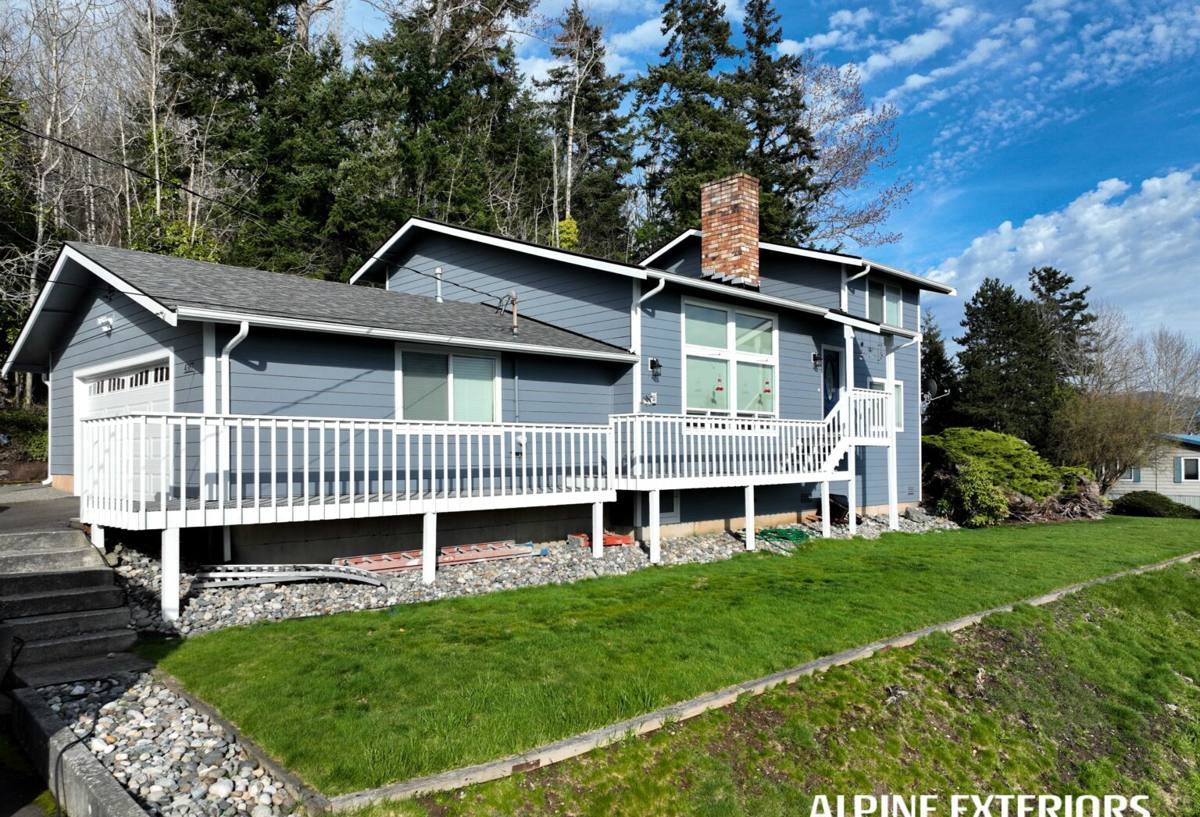
What Salt Air, Rain, and Moss Actually Do to a Roof
Salt Air and Metal Components
Coastal salt exposure accelerates corrosion on exposed metal — nail heads, flashing, vent boots, and gutter hardware. Standard electro-galvanized fasteners that would last decades elsewhere can start showing rust streaks and weakening well before a roof's shingles are due for replacement. This is why fastener and flashing choice matters more here than in a lot of inland Whatcom County neighborhoods.
Wind-Driven Rain
Rain that comes in nearly horizontal off open water doesn't behave like rain falling straight down. It can work its way up under shingle tabs, around poorly lapped flashing, and through undersized nail penetrations. A roof built for typical rainfall assumptions, without extra attention to lap direction, fastener placement, and underlayment coverage at vulnerable points, is more likely to develop hidden leaks that show up as staining or rot long after the water first got in.
Moss and Organic Growth
Whatcom County's mild, wet climate is close to ideal for moss, and Cherry Point's tree cover and shade patterns can make it worse on north-facing slopes and shaded valleys. Moss isn't just cosmetic. As it establishes, it lifts shingle edges, holds moisture against the roof deck, and slowly breaks down the granule surface that protects asphalt shingles from UV and weather. Left unchecked for years, moss growth shortens roof life significantly.
Signs a Cherry Point Roof Needs Replacing, Not Patching
Not every roofing problem calls for a full replacement, and we won't sell one when a repair will do. But certain conditions are strong signals that patching is a short-term fix on a roof that's fundamentally past its service life:
- Granule loss heavy enough that you can see bare, shiny asphalt on multiple slopes
- Shingles that are cupping, curling, or cracking across large sections rather than one isolated spot
- Soft or spongy decking felt underfoot during inspection, especially near valleys or eaves
- Persistent moss or algae staining that returns within a season of cleaning
- Daylight visible through the attic sheathing, or recurring leaks in more than one location
- A roof original to a home built more than 20–25 years ago, especially one facing the water
If a roof is showing two or more of these at once, repairs tend to become a cycle — fix one leak, another shows up nearby — because the underlying material is failing broadly, not in one weak spot.
What a Correct Roof Replacement Looks Like Here
Tear-Off and Deck Inspection
Every legitimate replacement starts with a full tear-off down to the deck. This is the only point where we can actually see the condition of the sheathing, check for soft or delaminated spots from past leaks, and confirm the framing underneath is sound. In a moisture-heavy area like Cherry Point, skipping this step and roofing over an existing layer just traps whatever damage is already there.
Underlayment Built for Wind-Driven Rain
We treat underlayment as a real second layer of defense, not a formality. That means synthetic or self-adhering underlayment with attention to lap direction and coverage at eaves, valleys, and any low-slope transitions where wind-driven rain is most likely to find a way in.
Flashing and Fastener Choices for Salt Exposure
Flashing at chimneys, walls, skylights, and valleys gets re-formed and re-installed rather than reused, and we favor corrosion-resistant fastener and flashing options for homes with direct water exposure. This is one of the few places where spending a little more up front measurably extends the life of the roof around it.
Ventilation That Actually Moves Air
Balanced intake and exhaust ventilation keeps the underside of the deck dry and reduces the moisture buildup that feeds moss and rot from below. A lot of older Cherry Point homes were built with ventilation that was adequate by the standards of the time but is undersized for how these roofs perform today. Replacement is the natural point to correct that.
Final Details
Drip edge at eaves and rakes, properly sealed and sequenced valley work, and a clean tie-in at any existing gutters round out the job. These are small line items, but they're exactly the details that separate a roof that sheds wind-driven rain cleanly from one that slowly lets it in.
Material Options for a Coastal Whatcom County Home
There's no single "right" roofing material for Cherry Point — the right choice depends on the home's exposure, roof pitch, budget, and how the owner wants it to look. Here's an honest breakdown of the common options we install and how each holds up in this climate:
| Material | Typical Lifespan | Coastal/Moss Considerations |
|---|---|---|
| Architectural asphalt shingle | 25–30 years | Good value; algae-resistant granule options help slow moss and streaking in shaded, damp areas |
| Standing seam metal | 40–50+ years | Sheds moss and moisture well due to smooth surface; requires corrosion-resistant fasteners and coatings near the water |
| Synthetic/composite shingle | 30–50 years | Resists moisture absorption and rot better than organic materials; higher upfront cost |
| Cedar shake | 20–30 years with upkeep | Traditional look but needs regular treatment and cleaning to manage moss in this climate; higher maintenance burden |
We'll walk through which of these fits your home's roof pitch, sun exposure, and budget during the estimate — there's rarely one obvious answer, and we'd rather explain the trade-offs than steer you toward whatever is easiest for us to install.
Our Process, Start to Finish
- On-site inspection: We walk the roof and attic, note deck condition, ventilation, and any problem areas specific to your home's exposure.
- Written estimate: A clear scope of work and material options, explained in plain terms — no pressure to decide on the spot.
- Scheduling around weather: Roof replacement is weather-dependent work, and we plan around Whatcom County's wetter stretches to protect your home during tear-off.
- Tear-off and deck repair: Old roofing removed, deck inspected and repaired as needed before anything new goes down.
- Installation: Underlayment, flashing, ventilation, and the finish material installed to manufacturer specification and to the added standard this coastal exposure calls for.
- Site cleanup and walkthrough: Full cleanup, including magnetic sweep for nails, and a final walkthrough so you know exactly what was done.
Why Local Experience in This Specific Area Matters
A crew that mostly works drier, more sheltered neighborhoods can still do competent work, but they're often applying general best practices rather than lessons learned from this specific stretch of coastline. Working regularly in Birch Bay and around Cherry Point means we've seen which flashing details actually hold up to years of salt exposure, which north-facing slopes tend to grow moss fastest, and where wind-driven rain typically finds the weak points on this style of home. That kind of pattern recognition doesn't come from a manual — it comes from doing the work here repeatedly and following up on it years later.
It also affects scheduling and honesty about timing. We know how Whatcom County's weather windows work through the fall and winter, and we won't promise a tear-off date that puts your home at risk of sitting open during an incoming system.
Maintenance That Extends the Life of a New Roof
A correctly installed roof still benefits from basic upkeep, especially in a moss-prone, salt-exposed area like this one:
- Keep gutters clear so water isn't backing up under the eaves
- Have moss growth treated or removed before it establishes rather than after
- Trim back overhanging branches that keep sections of roof shaded and damp
- Schedule a periodic visual inspection, particularly after major windstorms off the water
- Address small leaks immediately rather than waiting for a dry stretch to "see if it's still leaking"
None of this is complicated, but it's the difference between a roof that reaches the top end of its expected lifespan and one that needs early intervention because small problems were left to grow.
Get a Straight Answer for Your Cherry Point Roof
If you're weighing repair versus replacement, or just want an honest read on how much life is left in your current roof, we're happy to take a look. We'll give you a clear, no-pressure estimate and explain exactly what we find — no upsell, no scare tactics, just what your home actually needs. Fill out the form below to schedule a free estimate.