 Birch Bay Exterior
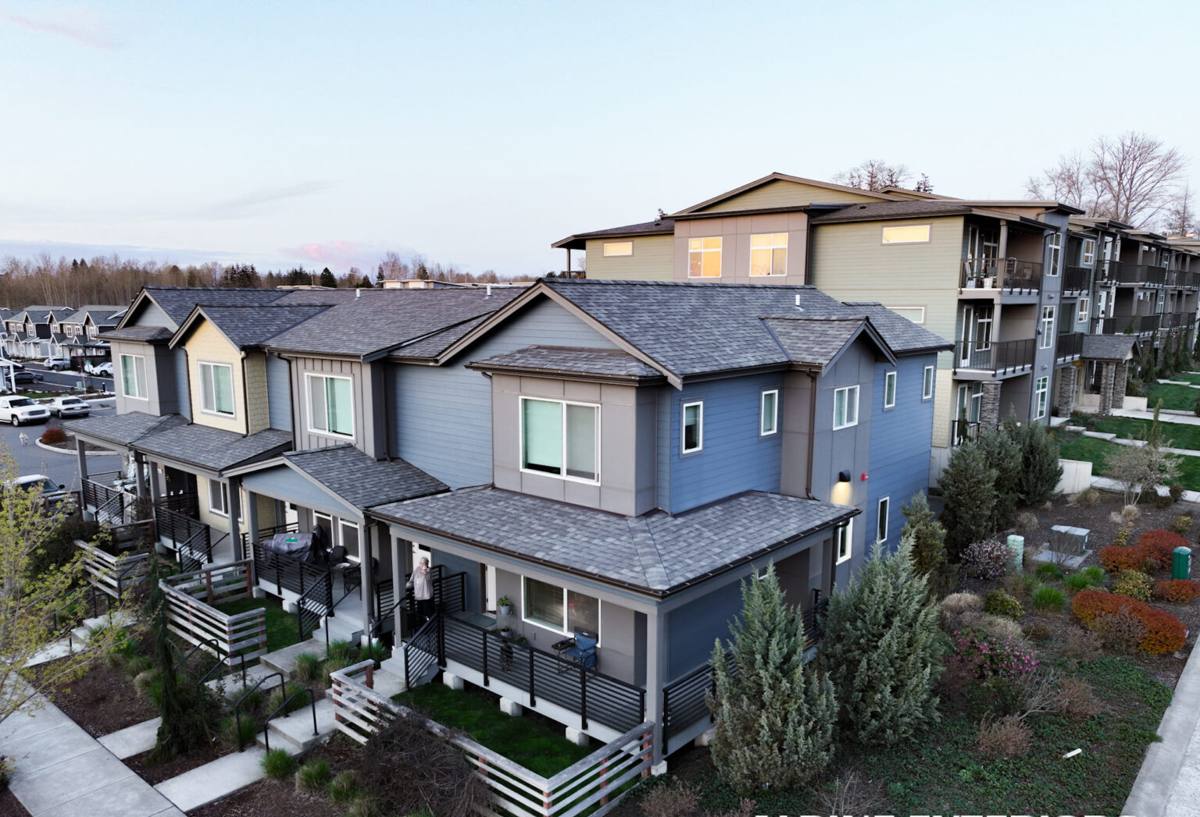
 Cherry Point sits on an exposed stretch of Whatcom County coastline, and that location shapes what a window has to do here that it wouldn't have to do a few miles inland. Salt-laden air off the water works on hardware and seals year-round. Storms off the Strait push rain sideways into wall assemblies rather than letting gravity carry it straight down. And the shade, dampness, and mild temperatures that define this part of Washington support a moss and mildew season that can run most of the year on north- and west-facing walls. Windows here are doing double duty — holding back weather and holding in heat — and a unit or installation that isn't built for that combination shows it within a few winters.
Energy efficiency and weather resistance aren't separate problems on this stretch of coastline; they're the same problem looked at two ways. A window that leaks air around a poorly sealed frame is also a window that's letting moisture find a path into the wall. A window with a warm, tight seal is also a window that isn't feeding the drafts and cold spots that drive up heating bills through a Whatcom County winter. We treat the two together on every Cherry Point job, because treating them separately is how homeowners end up paying twice.
What "Energy-Efficient" Actually Means for a Cherry Point Home
Energy-efficient windows aren't a single product — they're a combination of frame material, glass package, and installation quality working together. Get one piece wrong and the other two can't fully make up for it. A high-performance glass package installed with a sloppy air seal still drafts. A well-sealed frame with builder-grade single-pane glass still loses heat fast. On a home this close to the water, we also have to weigh how each material choice holds up to salt air and sustained moisture, not just how it performs on an energy label.
In practice, that means we look at three things together on every Cherry Point estimate: how well the frame and glass package actually retain heat, how the frame material will hold up to years of marine exposure with reasonable upkeep, and whether the installation — flashing, sealing, insulation around the rough opening — will keep water out regardless of how good the window itself is.
Why the Local Climate Changes the Job
A lot of general window-buying advice assumes a moderate, drier climate where wind-driven rain and salt exposure aren't major factors. That advice doesn't fully apply on this part of the Whatcom County coast.
Salt Air and Hardware
Locks, hinges, balances, and fasteners are usually the first components to show wear near the water. Lower-grade hardware corrodes faster here than it would inland, and once a lock or balance starts sticking, homeowners often compensate by leaving a window slightly unlatched — which quietly defeats the seal it was designed to hold. We factor hardware quality into every window recommendation for this area, not as an upsell but because it's genuinely a different consideration this close to the water.
Wind-Driven Rain
Storms in this area don't just drop rain straight down — they push it sideways into siding, trim, and window openings. That means flashing and sealant details that would be adequate in a calmer climate can fail here, letting water track behind the frame and into the wall cavity. This is almost always an installation issue rather than a window issue, which is why we spend more time on flashing sequence than on which brand logo is on the frame.
Moss, Mildew, and a Long Wet Season
Shade, dampness, and mild temperatures combine to give this part of Whatcom County a moss and mildew season that runs long compared to drier parts of the state. Wood trim and sills that stay damp for extended periods are more prone to rot if they're not properly sealed and maintained. That's part of why frame material selection matters as much as glass performance on a Cherry Point job.
Signs Your Current Windows Are Losing You Money
- Noticeable draft or cold air near the window frame, especially during winter storms off the Strait
- Condensation forming between panes, which usually means a failed seal on an older insulated glass unit
- Visible fogging or a milky appearance in the glass that doesn't clear
- Wood sills or trim that feel soft, spongy, or show staining consistent with ongoing moisture
- Windows that are difficult to open, close, or lock — often a sign of corroded or worn hardware
- Heating costs that seem high relative to the size of the home, with no other obvious cause
- Visible daylight or a noticeable air draw around the frame when a window is closed
Frame Materials: The Honest Trade-Offs for This Location
There's no single "best" frame material for every home — the right call depends on budget, how exposed the specific wall is, and how much upkeep the homeowner wants to take on. We walk through these trade-offs on-site rather than defaulting to whichever material is fastest for us to install.
| Frame Material | Coastal Durability | Maintenance | Notes for Cherry Point |
|---|---|---|---|
| Vinyl | Good — won't rust or corrode | Low | Solid value option; quality varies significantly between manufacturers, so we're selective about which lines we install |
| Fiberglass | Very good — dimensionally stable, resists moisture-driven expansion | Low | Often our lead recommendation on directly exposed, weather-facing walls |
| Aluminum | Fair — can corrode over time near salt air unless properly coated | Low to moderate | More common on larger commercial-style openings than typical residential retrofits here |
| Wood (exterior-exposed) | Requires consistent upkeep to perform well in this moisture and moss environment | High | We recommend clad wood — a protected exterior with a wood interior — over unclad wood on any weather-facing opening in this area |
| Wood-clad (vinyl or fiberglass exterior) | Good — exterior cladding shields the wood from direct moisture exposure | Low on the exterior, standard interior upkeep | A reasonable way to get a wood interior look without taking on full exterior wood maintenance |
For most Cherry Point homes, we lead with vinyl or fiberglass on weather-facing elevations because they hold up to sustained salt air and moisture with the least ongoing maintenance. That's a professional standard based on how these materials behave in this specific climate, not a claim that other materials can't work — a wood-clad or interior-wood option can still make sense on a more protected elevation or when the interior look is a priority, and we'll say so when it applies.
Glass Packages and What They Actually Change
The glass package does most of the work on the energy-efficiency side of the equation. A few components show up repeatedly on quotes, and it's worth knowing what each one actually does:
- Double or triple pane — more panes and more sealed air (or gas-filled) space between them means less heat transfer through the glass
- Low-E coating — a thin, invisible coating that reflects heat back into the home in winter and blocks excess solar heat in summer, without noticeably darkening the glass
- Gas fill (argon or krypton) — an inert gas between panes that conducts heat more slowly than plain air, improving insulation
- Warm-edge spacers — the material separating the panes at the glass edge; a poor spacer creates a cold edge that drives condensation and heat loss right where the seal is most vulnerable
None of these matter if the seal on the insulated glass unit fails early, which is why we also pay attention to manufacturer warranty terms on the glass unit itself — not just the frame — when we recommend a product line.
What a Correct Installation Involves
Assessment and Measurement
We start by evaluating the existing opening — checking for square, level, and any hidden moisture or rot in the framing before quoting anything. On older Cherry Point homes, this step often turns up wear around the opening that needs addressing before a new window goes in, and we'd rather find that upfront than mid-installation.
Removal Without Collateral Damage
Old windows come out carefully, with attention to protecting the surrounding siding and trim. This is also when we get a direct look at the condition of the rough opening and sheathing behind the old unit.
Flashing Sequenced for Wind-Driven Rain
This is the step that matters most in this location. Flashing has to be layered correctly — sill pan first, then side flashing, then head flashing — so that any water that does get past the window sheds outward and down, never backward into the wall. Given how directly this area gets hit by wind-driven rain, we don't shortcut this sequence regardless of how straightforward the window itself is to install.
Insulation and Air Sealing
The gap between the window frame and the rough opening gets properly insulated and sealed — not just caulked on the exterior face. A gap that's packed too tightly or left with gaps entirely both undermine the energy performance of an otherwise good window.
Exterior Sealing and Trim
Exterior sealant and trim integration finish the weatherproofing and tie the new window into the existing siding cleanly. On a coastal job, we pay close attention to sealant quality here too — lower-grade sealants break down faster under sustained salt air and UV exposure.
Practical Checklist Before You Sign a Contract
- Ask what glass package is actually being quoted — pane count, Low-E coating, and gas fill should all be specified, not assumed
- Confirm the flashing sequence the crew plans to use, especially on weather-facing walls
- Ask whether the rough opening will be inspected for hidden moisture or rot before installation, not after
- Get separate warranty terms in writing for the glass unit, the frame, and the installation labor
- Confirm current Washington contractor licensing and insurance before any work begins
- Ask how the crew's approach changes, if at all, for a home this close to the water
Our Process, Start to Finish
- On-site assessment — we inspect existing windows, openings, and framing condition, and talk through what's actually driving your energy loss or drafts
- Honest recommendation — frame material and glass package matched to your budget, the wall's sun and rain exposure, and how much upkeep you want to take on
- Written estimate — clear pricing and a realistic installation timeline before anything is ordered
- Removal and opening prep — old units come out carefully, with any hidden framing or moisture issues addressed before the new window goes in
- Installation, flashing, and sealing — set, shimmed, flashed, and sealed to a sequence built for wind-driven coastal weather
- Final walkthrough — we check operation, seals, and finish work with you before calling the job done
What Actually Drives Cost
We won't quote a number without seeing the openings in person, but the factors that move price on a Cherry Point window project are fairly consistent: number of windows, size and glass area per opening, frame material, glass package (pane count, coatings, gas fill), whether the rough opening needs repair before installation, and access or removal complexity on upper stories. A single straightforward replacement in a standard opening sits at the lower end of that range; a full-home upgrade with larger openings, a premium glass package, or opening repairs sits higher. We'll walk through which of those factors apply to your home specifically before you commit to anything.
Why a Crew That Already Works Cherry Point Matters
Manufacturer installation instructions are written for average conditions in a moderate climate. Cherry Point isn't average — the combination of salt air, sustained wind-driven rain, and a long wet season stacks the deck against a rushed or generic installation more than it would somewhere calmer and drier. A crew that has actually flashed windows against this specific exposure knows where the manufacturer's minimum guidance is enough and where it isn't — how much lap a flashing course needs on a wall that takes rain straight off the water, which sealants hold up over years of salt exposure instead of just the first season, and when a sill or trim detail needs extra attention because moss and moisture will find any shortcut eventually.
That local experience doesn't show up in a sales pitch. It shows up years later, in whether the windows are still sealing tightly and holding heat, or starting to draft and stain at the sill. We'd rather build that outcome in from the start than have a homeowner discover the difference the hard way.
If your Cherry Point home has drafty windows, foggy glass, or you're planning ahead for an energy upgrade, it's worth having someone look at the actual openings before you start comparing quotes. We offer free, no-pressure estimates for energy-efficient window projects in Cherry Point and the surrounding Birch Bay area — use the form below to get a time on the schedule.