 Birch Bay Exterior
 Board & Batten Siding for Semiahmoo Homes
Semiahmoo sits close enough to the water that homes here take a different kind of weather beating than houses a few miles inland in Whatcom County. Board and batten siding — the vertical-board-with-raised-seam look that's become popular on Pacific Northwest homes, cabins, and modern farmhouse-style builds — is a great fit for this area when it's built out of the right material and installed correctly. It's also one of the siding styles most likely to fail early when it's not. This page covers what board and batten actually needs to survive Semiahmoo's climate, what a correct installation looks like, and how we approach the job when a homeowner in this area calls us.
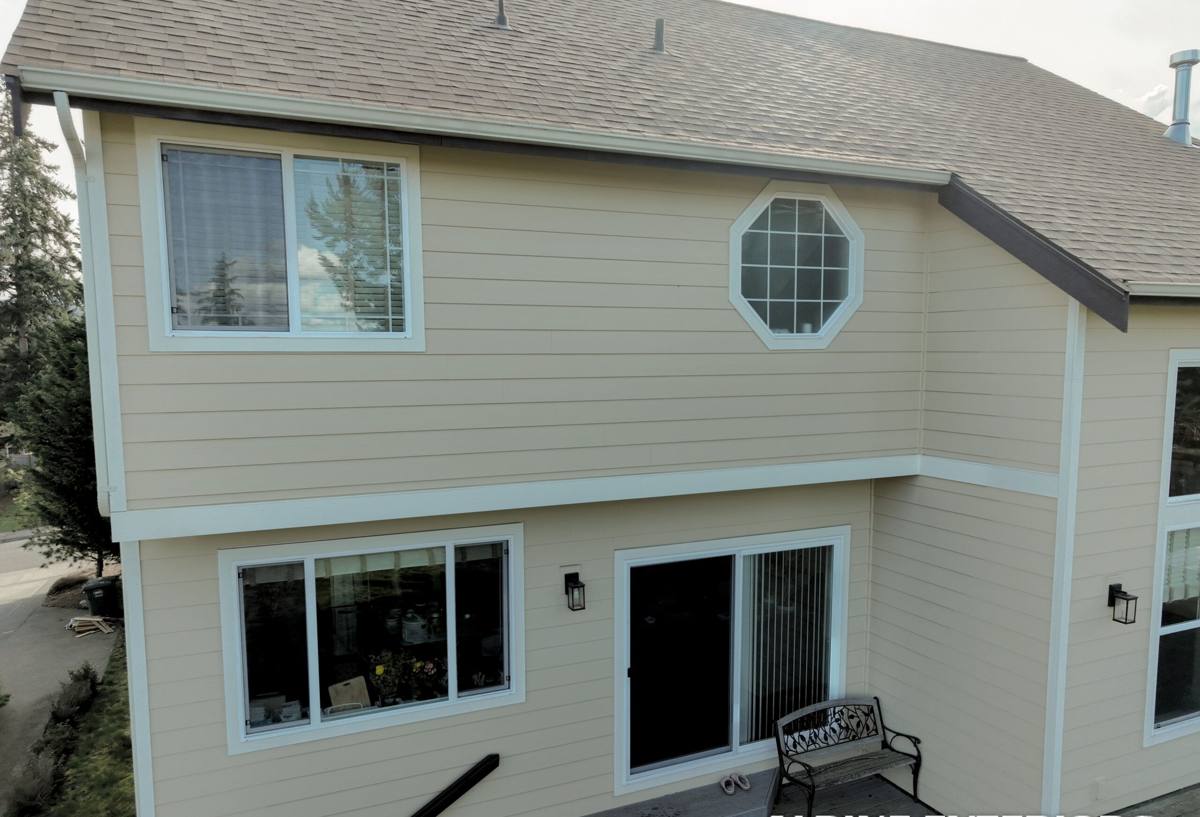
What Semiahmoo's Climate Does to Siding
Being close to Birch Bay and the Strait of Georgia means Semiahmoo properties deal with a combination most inland Washington homes don't: salt-laden air, driving wind-blown rain that hits siding at an angle instead of falling straight down, and a long moss and algae season thanks to the mild, damp Pacific Northwest climate. None of that is a dealbreaker for board and batten siding — but it does change what "correct installation" means.
Salt air is corrosive to exposed fasteners and accelerates the breakdown of coatings that aren't built for coastal exposure. Driving rain finds every gap in flashing and every under-caulked seam, especially around the vertical battens where water can get trapped if the assembly isn't detailed right. And moss doesn't just look bad — it holds moisture against the siding face for months at a time, which is exactly the condition that causes rot, delamination, and paint failure in lesser materials.
Why Board & Batten Style Matters Here
The vertical board and batten look works well with the mix of traditional and modern coastal homes around Birch Bay and Semiahmoo — it reads clean, it photographs well, and it holds up visually against the region's cloudy, muted light better than busier siding profiles. But the style itself has a structural quirk: those raised battens create more seams, more fastener penetrations, and more edges where water can get behind the panel if the install isn't tight. A style that looks simple on the wall is actually less forgiving of installation shortcuts than lap siding, which is one reason we're particular about how we build it.
Why We Only Install James Hardie for This Style
We install James Hardie fiber cement exclusively — no vinyl board and batten, no LP SmartSide, no primed wood, no Cemplank or Allura. For a coastal microclimate like Semiahmoo, that's not a brand preference, it's a practical call.
- Vinyl board and batten can look convincing from the curb, but it's a thin plastic panel that expands and contracts with temperature swings, and near salt water it tends to chalk and fade faster than inland installations. It also doesn't hold paint if a homeowner ever wants to change the color.
- LP SmartSide and other engineered wood products use a wood-strand core. That core performs fine in a lot of climates, but in a location with this much sustained moisture and moss growth, any breach in the factory coating — a fastener miss, a cut edge left unsealed, a scuff from a ladder — gives water a path into wood fiber, and that's where problems start.
- Primed wood or cedar board and batten is beautiful, but it needs a maintenance schedule most homeowners don't keep up with: recaulking seams, repainting on a cycle, and watching for the first signs of rot at board ends and battens. In a moss-prone, high-moisture area, that cycle gets shorter, not longer.
James Hardie board and batten siding is fiber cement — sand, cement, and cellulose fiber — which doesn't absorb moisture the way wood-based products do, doesn't corrode or pit like metal, and doesn't rely on a thin plastic skin to keep water out. It's also non-combustible, which matters given how many summers in this part of Washington now come with wildfire smoke and regional burn concerns. Hardie's ColorPlus factory finish is baked on rather than field-applied, which means better color consistency and a UV- and salt-resistant coating from day one, backed by a real transferable warranty rather than a "should be fine" promise.
What a Correct Installation Involves
Board and batten looks simple — vertical panels, battens over the seams — but a correct install has several layers most homeowners never see once the siding's up:
Weather-Resistive Barrier and Flashing First
Before any board goes up, the wall needs a properly lapped weather-resistive barrier and correctly installed flashing at every window, door, and penetration. In a driving-rain environment like Semiahmoo, this layer is what actually keeps the wall assembly dry — the siding is the second line of defense, not the first.
Fastener Placement and Type
Fiber cement board and batten needs to be fastened per manufacturer spec — correct nail or screw type, correct spacing, correct penetration depth, and blind-nailed where the assembly allows it. In coastal air, we use fasteners rated for that exposure so they don't become the weak point of an otherwise solid installation.
Gapping and Sealant
Board and batten needs deliberate expansion gaps at panel ends, and those gaps get treated with the right sealant — not just caulked over and hoped for. Battens need to be positioned so they shed water off the seam rather than channeling it into it.
Rain Screen Considerations
On many Semiahmoo-area homes, especially those with direct water exposure or west-facing walls, we'll discuss a rain screen (a ventilated gap behind the siding) as part of the assembly. It gives any moisture that does get past the siding face a way to drain and dry instead of sitting against the wall sheathing.
Cost Factors for Board & Batten Siding Projects
Every home is different, so we don't quote a number without seeing the house, but these are the variables that actually move the price on a Semiahmoo board and batten job:
| Factor | Why It Matters |
|---|---|
| Existing siding removal | Tear-off of old wood, vinyl, or damaged siding adds labor and disposal cost, and often reveals sheathing that needs repair |
| Wall complexity | Board and batten on a simple gable elevation costs less per square foot than around bump-outs, dormers, and multiple roof intersections |
| Water exposure of the elevation | Walls facing prevailing wind and rain off the water may warrant additional flashing detail or a rain screen assembly |
| Panel and batten sizing | Board width and batten spacing affect material quantity and the amount of fastening and sealant work required |
| Color selection | Factory ColorPlus finishes and custom color-matching can affect lead time and material cost versus standard color offerings |
| Underlying sheathing condition | Rot or moisture damage found during tear-off needs to be repaired before new siding goes on — this is common on older coastal homes |
How Our Process Works
We walk the exterior with the homeowner first, looking specifically at water exposure, existing damage, and how the roofline, trim, and window details will interact with a board and batten profile. From there we put together a written estimate that spells out material, prep work, and any flashing or rain screen recommendations specific to that elevation — not a flat per-square-foot number with no detail behind it.
On the job, we don't install over rot or unresolved moisture issues. If tear-off reveals damaged sheathing, we address it before a single Hardie panel goes up, because siding installed over a compromised wall is siding that will fail regardless of the material. We follow James Hardie's published fastening, gapping, and flashing specifications exactly, because that's what keeps the manufacturer's warranty valid and what actually keeps water out in this climate.
Maintenance: What Board & Batten Actually Needs After Install
One advantage of fiber cement is a much lighter maintenance load than wood or vinyl, but "low maintenance" isn't "no maintenance," especially this close to the water. A simple annual routine keeps a board and batten job performing the way it should:
- Rinse the siding down once or twice a year to clear salt residue, especially on elevations facing the water
- Check for moss or algae buildup at shaded, north-facing walls and treat early rather than letting it establish
- Walk the perimeter after major windstorms and check caulking at trim, corners, and penetrations
- Keep gutters clean and downspouts directed away from the wall base so water isn't sheeting down the siding face
- Trim back vegetation and shrubs so airflow can reach the lower courses of siding and battens
- Have any impact damage or visible gapping at seams looked at promptly rather than waiting for the next paint cycle
Why Local Experience in Semiahmoo Matters
A crew that's already worked homes in this specific area knows which elevations take the worst of the water exposure, how moss behaves on shaded walls near Birch Bay, and where flashing details tend to get skipped by installers used to drier inland conditions. That's not something you get from a general contractor doing their first job on this stretch of coastline — it's something you get from repetition in this exact climate. We'd rather spend an extra hour on flashing and rain screen details during the estimate than have a callback two winters from now because a shortcut was taken somewhere it shouldn't have been.
If you're considering board and batten siding for a home in Semiahmoo or elsewhere around Birch Bay, we're happy to take a look and put together a free, no-pressure estimate — just fill out the form below and we'll set up a time to walk the exterior with you.