 Birch Bay Exterior
 Bellingham's Marine Climate Is Hard on Siding
Bellingham sits close to the Salish Sea, in one of the wettest, dampest stretches of Whatcom County. That location is beautiful, but it's not gentle on the outside of a house. Homes here deal with a mix of stresses that most siding products were never engineered to handle at once: salt-tinged air drifting in off the water, driving rain that hits walls sideways during winter storms, and long, shaded, moisture-heavy stretches that keep siding damp for days at a time. Add in the tree cover common to Whatcom County neighborhoods, and you get conditions that push cheaper or poorly installed siding toward premature failure.
Salt Air and Coastal Moisture
Proximity to saltwater doesn't just affect metal and hardware — it accelerates the breakdown of paint films, caulking, and any siding material with seams that can trap moisture. Salt air keeps surfaces slightly damp longer than dry inland air would, which matters a lot when you're deciding what to put on the outside of a Bellingham home.
Driving Rain and Wind-Driven Water
Storms coming off the water don't just fall straight down — wind pushes rain sideways into wall assemblies, testing every seam, joint, and fastener penetration. A siding system that isn't detailed correctly behind the surface will eventually let that water in, even if the face of the siding looks fine.
A Long Moss and Algae Season
Whatcom County's mild, wet winters and heavily wooded lots mean many Bellingham homes stay shaded and damp for much of the year. That's exactly the environment moss, algae, and mildew need to take hold on exterior surfaces. Siding that can't shed water quickly or that develops a porous, weathered surface over time becomes an easier place for growth to establish itself.
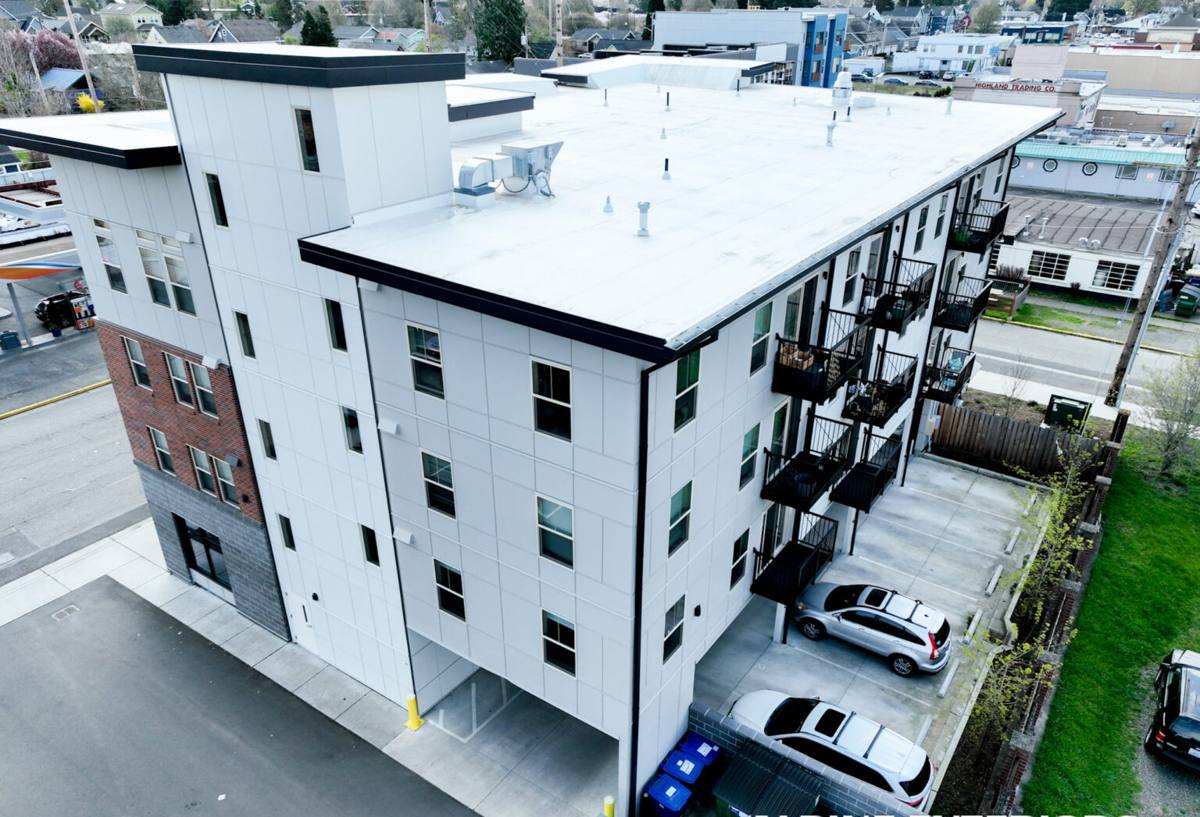
Why We Only Install James Hardie Fiber Cement
Birch Bay Exterior Co. installs one siding system: James Hardie fiber cement. We don't install vinyl, LP SmartSide, primed spruce, cedar, or other fiber cement brands. That's not a marketing line — it's a standard we hold because of what we've seen these products do, and not do, in a coastal, wet, moss-prone climate like Bellingham's.
Vinyl siding is inexpensive and low-maintenance in mild, dry climates, but it's a plastic product that expands and contracts with temperature swings, can warp or crack under wind-driven debris, and its seams and J-channels give moisture more places to collect in a climate this wet. Wood and primed spruce siding look good on day one, but they require an ongoing paint and caulk maintenance schedule that most homeowners underestimate — skip a cycle or two in a damp Whatcom County winter and rot can start behind the finish before it's visible from the ground. LP SmartSide is an engineered wood product, which means its long-term performance depends heavily on edges, cut ends, and seams staying sealed; in a marine climate with sustained moisture exposure, that's a maintenance commitment we're not willing to ask homeowners to take on.
Fiber cement, and James Hardie's version of it specifically, is cement, sand, and cellulose fiber — it doesn't rot, it doesn't feed pests, and it holds paint and factory finish far longer than wood-based products because it doesn't move with humidity the way wood does. That stability is exactly what a marine climate rewards.
| Material | Moisture Resistance | Maintenance Burden | Typical Lifespan |
|---|---|---|---|
| James Hardie Fiber Cement | Excellent — won't rot, warp, or feed pests | Low — occasional wash, no repainting with ColorPlus finish | Multiple decades when installed to spec |
| Vinyl | Fair — seams and channels can trap water; can warp with heat or impact | Low, but limited repair options if damaged | Variable, shorter in harsh coastal exposure |
| Wood / Primed Spruce | Poor without consistent upkeep — absorbs moisture, prone to rot | High — regular painting and caulk maintenance required | Shorter without diligent upkeep |
| LP SmartSide (engineered wood) | Moderate — performance depends on sealed edges and seams | Moderate to high — edge and seam maintenance is critical | Depends heavily on maintenance follow-through |
What a Correct Fiber Cement Installation Actually Involves
Fiber cement siding is only as good as the assembly behind it. Most siding failures we're called out to inspect on older homes aren't a problem with the siding material itself — they're a problem with how it was installed. In a climate like Bellingham's, the details behind the surface matter as much as the surface itself.
Weather Barrier and Drainage Gap
Every installation starts with a properly lapped weather-resistant barrier over the sheathing, with all penetrations, seams, and window and door openings flashed to shed water downward and outward. Behind the siding itself, a drainage gap gives any moisture that does get past the surface a way to drain and dry out instead of sitting against the wall assembly — an important detail given how much wind-driven rain this area sees.
Flashing, Fastening, and Clearances
Flashing above windows, doors, and any horizontal trim needs to direct water away from the wall, not just cover the gap. Fasteners have to be placed and driven according to Hardie's specifications — over-driven or under-driven nails are one of the most common causes of early siding problems. Siding also needs proper clearance from grade, roof lines, and decks so it isn't sitting in standing water or constant splash-back.
Joints, Caulking, and Trim
Butt joints and trim transitions are where a lot of installations cut corners. Done right, joints are backed, sealed with a quality sealant rated for exterior use, and finished so water runs off rather than collecting. Loose or missing caulking at these joints is one of the first things we check when we inspect an older or poorly installed home.
Choosing the Right Hardie Product Line for This Climate
James Hardie engineers its siding for specific climate zones, and Bellingham falls into the wetter, marine HZ5 zone designation the company builds for. That matters because the product's moisture engineering — not just the paint color — is matched to the kind of weather Whatcom County actually sees.
For most Bellingham homes, we work with:
- HardiePlank lap siding — the most common choice, offering a traditional lapped look with strong water-shedding performance
- HardiePanel vertical siding — often used for accent sections, gables, or modern-style exteriors
- HardieTrim boards — matched trim that resists the same moisture and moss pressure as the field siding, so trim doesn't become the weak point
- ColorPlus factory finish — a baked-on finish applied under controlled conditions, which holds color and resists fading and moisture intrusion better than field-applied paint
The ColorPlus finish is worth calling out on its own. Field-painted siding depends on paint adhesion holding up against Bellingham's humidity and salt air year after year. A factory-cured finish is more consistent and, in our experience, holds up longer in this climate before it needs attention.
Our Bellingham Installation Process
- On-site assessment — we walk the exterior, check existing siding and sheathing condition, note moisture exposure on each elevation, and identify any rot or damage that needs to be addressed before new siding goes on.
- Tear-off and sheathing check — old siding comes off and the sheathing underneath is inspected; any soft or water-damaged sheathing is replaced before we move forward, not covered up.
- Weather barrier and flashing — a new weather-resistant barrier is installed with correct laps and flashing at every window, door, and penetration.
- Siding installation — Hardie siding is installed to manufacturer fastening and clearance specifications, with attention to the elevations that take the most wind-driven rain.
- Trim, joints, and sealant — trim is fitted, joints are backed and sealed, and all transitions are finished to shed water.
- Final walkthrough — we inspect the completed job with the homeowner before calling it done.
What Fiber Cement Siding Costs in Bellingham
Every home is different, and we'll only give you real numbers after we've seen your house, but a few factors consistently drive cost up or down on Bellingham projects specifically:
| Cost Factor | Why It Matters Locally |
|---|---|
| Condition of existing sheathing | Homes with hidden moisture damage from years of coastal exposure may need sheathing repair before siding goes on |
| Number of stories and roof lines | Complex rooflines and multi-story walls add flashing detail and labor time |
| Trim and architectural detail | Homes with more trim, gables, and accent siding require more precise cutting and sealing |
| Siding profile and finish selection | Lap width, panel style, and ColorPlus color selection affect material cost |
| Access and site conditions | Mature landscaping, tree cover, and tight lots common in Bellingham neighborhoods can affect staging and labor time |
Living With Fiber Cement in a Moss-Prone Climate
One of the real advantages of correctly installed Hardie siding in this climate is how little it asks of you afterward. It won't rot, it won't feed insects, and the ColorPlus finish means you're not on a repainting schedule the way you would be with wood or primed products. That said, no siding is completely maintenance-free in a climate with this much shade and moisture. A little seasonal attention goes a long way:
- Rinse siding periodically, especially on shaded, north-facing, or tree-covered walls where moss and algae are most likely to establish
- Keep gutters clear so overflow isn't running down the siding face
- Trim back vegetation and tree limbs that keep sections of wall in constant shade and dampness
- Check caulking at trim joints and penetrations every year or two, since sealant is the one component that does age over time
- Address any impact damage or chipped finish promptly so moisture doesn't get behind the surface
None of this is heavy work — it's the kind of light seasonal upkeep that keeps a correctly installed system performing the way it's designed to for the long haul.
Why Local Installation Experience Matters
Manufacturer specifications are the same everywhere, but how those specifications get applied changes with the site. A crew that installs siding regularly in Bellingham and the surrounding Whatcom County area already knows which elevations on a given lot take the worst of the driving rain, how much shade a tree-lined property is going to hold onto through the year, and where moss tends to establish first on homes in this area. That local pattern recognition shows up in small decisions — extra attention to a north wall, a flashing detail at a tricky roofline, a trim choice that sheds water better on a shaded lot — that don't show up in a generic installation manual.
It also matters when something needs a second look down the road. A local crew that stands behind its own work in this specific climate is a very different proposition than a crew that installed your siding once and is now three states away.
If you're planning a siding project in Bellingham, we're glad to come take a look at your home, walk you through what we're seeing, and put together a free, no-pressure estimate — no obligation, just an honest read on what your house needs.